Upgrading to bucket seats and harnesses is one of the most effective ways to tighten up the connection between you and the car. Done properly, it improves control, consistency and safety on road and track. Done badly, it is uncomfortable, fatiguing and potentially dangerous.
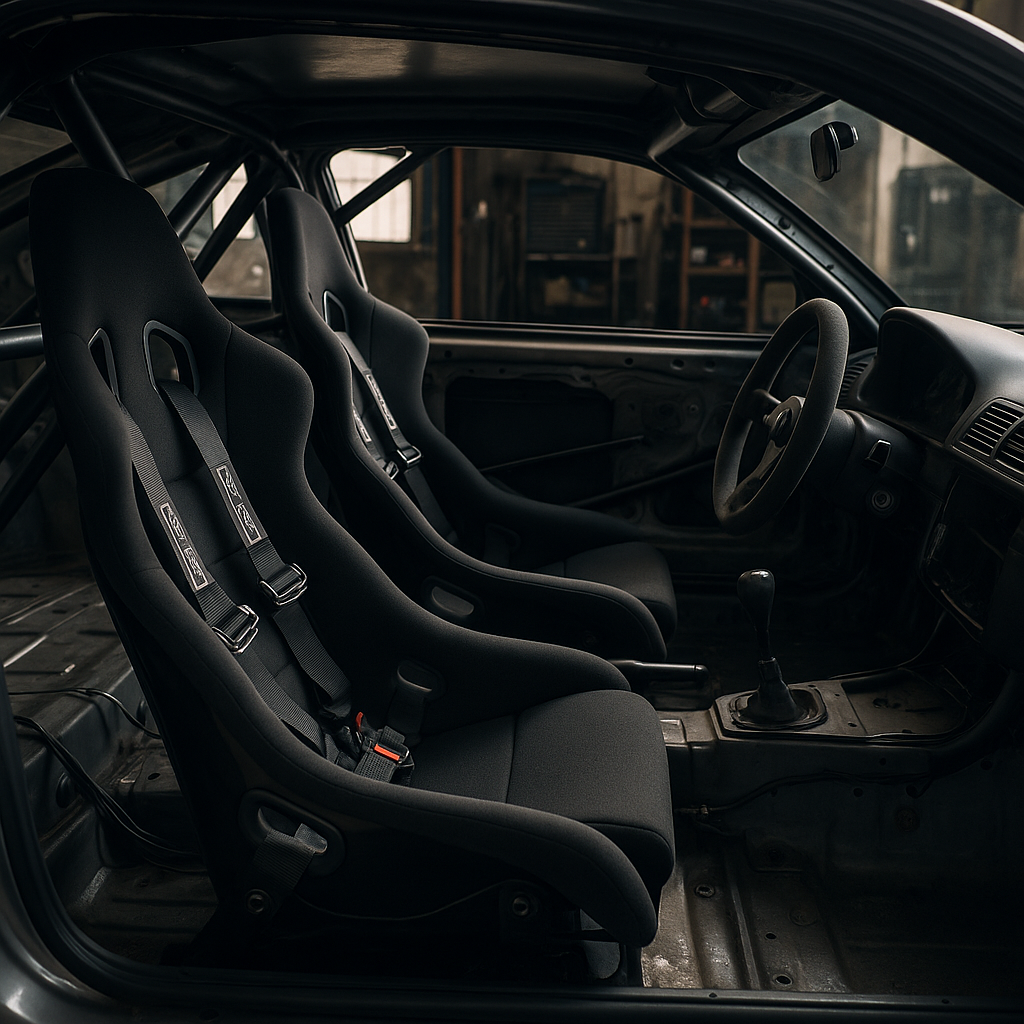
Why upgrade to bucket seats and harnesses?
Standard seats are a compromise between comfort, cost and packaging. Once you start driving harder – track days, sprints, fast road – you quickly find their limits. You brace yourself on the steering wheel in corners, slide around under braking and end up tense and tired.
Correctly installed bucket seats and harnesses lock your pelvis and torso in place so your hands and feet can focus purely on control inputs. That means more precise steering, more consistent braking pressure and less fatigue over a session or a long road drive. They also give you a repeatable driving position, which is critical for building pace and confidence.
Choosing the right bucket seat shell type
The shell is the core of the seat. Most aftermarket options fall into three main types: fibreglass, carbon and steel frame.
Fibreglass shell bucket seats
Fibreglass shells are the default choice for many track cars. They offer good stiffness, relatively low weight and sensible cost. A stiff shell means the bolsters actually hold you in place rather than flexing. Look for a seat with adequate shoulder support, deep enough thigh bolsters and a shell width that matches your hips and ribcage. Too wide and you will move around; too tight and you will not last a session.
Carbon shell bucket seats
Carbon fibre shells cut weight further while increasing stiffness. The benefits are most obvious in serious track or competition builds where every kilogram matters and the car runs high lateral loads. They are expensive and often overkill for a lightly modified road car, but if you are chasing lap time and already on sticky tyres and proper suspension, they are a logical next step.
Steel frame reclining and fixed seats
Steel frame seats are usually heavier and more flexible, but they can be a good compromise for dual use cars. Some offer aggressive bolstering with a reclining backrest, making access to the rear seats easier while still giving better support than OEM. For hard track use, a one piece shell is usually preferable, but a quality steel frame seat can work well in a fast road car that sees occasional circuit work.
FIA approval and lifespan
If you plan to compete, you will almost certainly need FIA approved seats and harnesses. FIA homologation means the components have passed specific impact and load tests. Check the label on the seat shell for its homologation number and expiry date. For many disciplines, seats and harnesses have a finite homologation life, after which they are no longer accepted in scrutineering, even if they look fine.
For pure track day or road use, FIA approval is not legally required, but it is still a strong indicator of build quality. Even if you are not racing, it makes sense to choose components that are proven to cope with crash loads.
Side mount vs base mount seat fitting
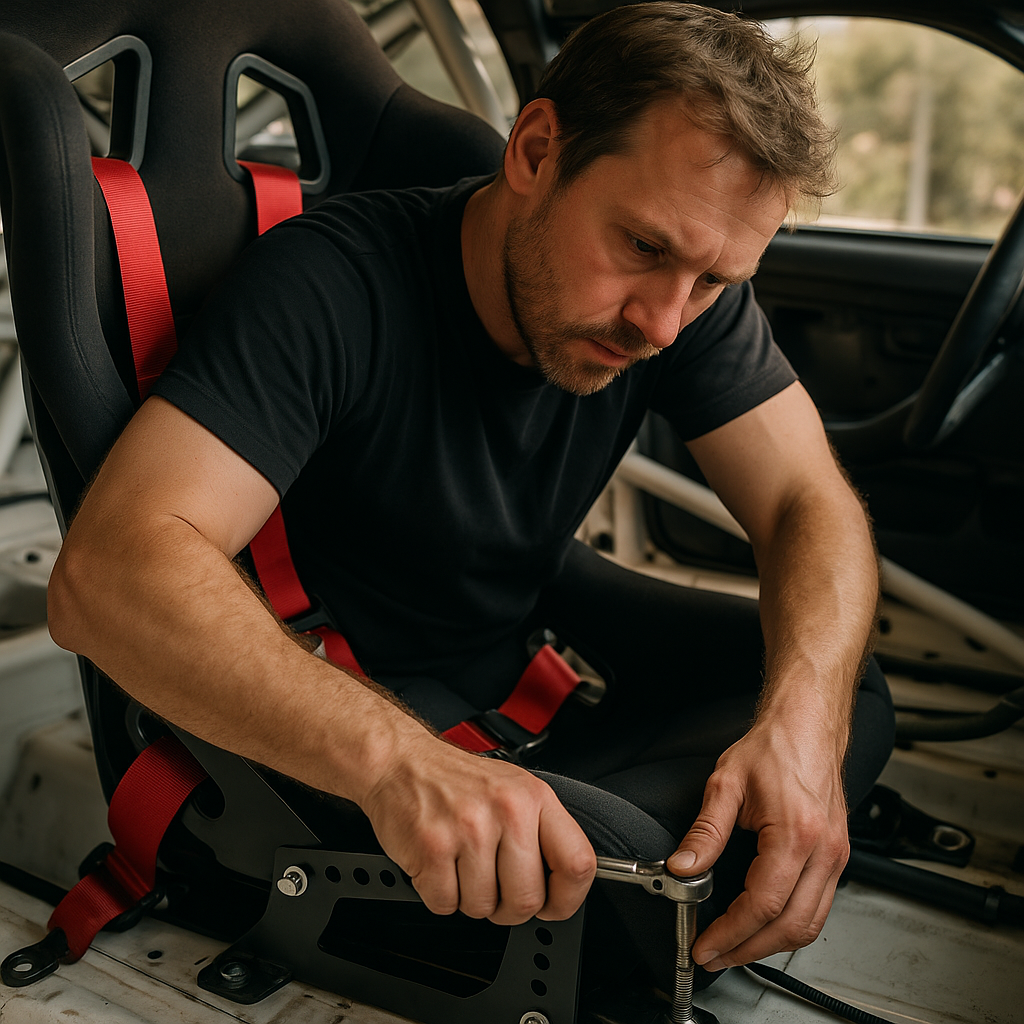
Fixed bucket seats are usually side mounted, while many reclining seats are base mounted. Side mounts bolt to the threaded inserts in the shell and then to rails or directly to the chassis. They allow fine adjustment of height, rake and offset, which is ideal for dialling in your driving position. Base mounts use the bolt pattern on the underside of the seat and often adapt to OEM runners, making installation simpler but reducing adjustment range.
For serious track use, side mounting to proper steel side brackets on solid runners or fixed rails is the preferred solution. Always ensure the mounting hardware is high grade, that the load paths are direct into the chassis and that there is no flex in the brackets when you pull on the harnesses.
Bucket seats and harnesses FAQs
Are bucket seats and harnesses legal for road use?
Legality depends on local regulations and how the system is installed. In many regions, you must retain the OEM three point belt for road driving, especially where airbags are integrated with the seat or belt buckle. Harnesses should be installed to recognised guidelines, with proper anchor points and correct angles. If in doubt, consult your vehicle regulations and an experienced motorsport installer before removing any factory safety equipment.
Do I need FIA approved bucket seats and harnesses for track days?
For non competitive track days, FIA approval is rarely mandatory, but it is strongly recommended. FIA homologation shows the seat and harness have passed defined strength and impact tests. Many circuits and organisers prefer or require FIA marked equipment, and it is essential if you later enter competitive events. Even for fast road cars, FIA approved components are generally better engineered and more consistent in a crash.
How tight should my harnesses be when driving on track?
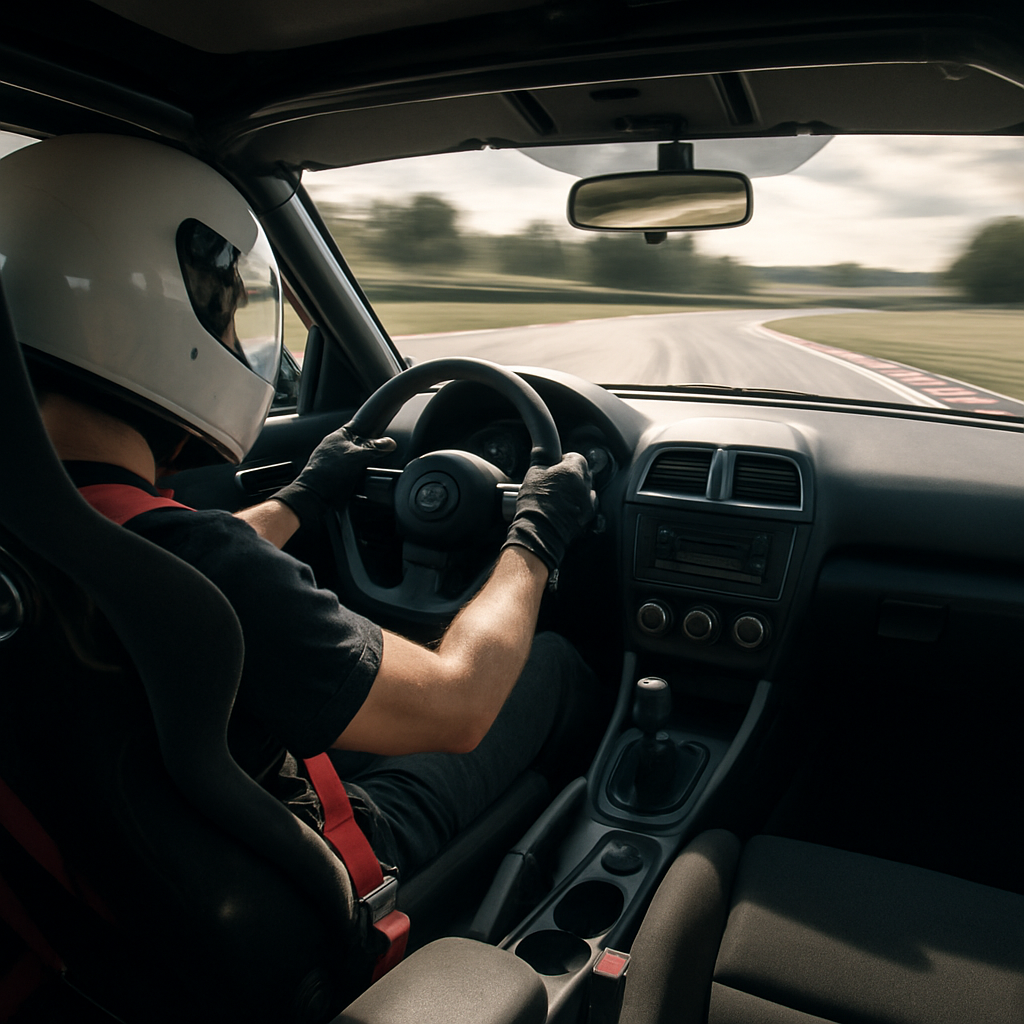
On track, the lap belts should be pulled very tight so they sit low across the pelvic bones, not the stomach. Shoulder straps should be snug enough that your upper body cannot move significantly under braking or cornering, but not so tight that you struggle to breathe. Sub straps must be tensioned to stop the lap belt riding up. Recheck tension after a few laps, as webbing can settle. For road use, many drivers slightly relax the harness or revert to the standard belt for comfort and practicality.
Leave a Reply