Getting a genuine showroom finish at home is no longer the exclusive territory of professional valets. The range of car detailing products available in the UK has advanced considerably, and with the right kit, any enthusiast with a driveway and a few hours to spare can achieve results that rival a professional prep bay. The key is understanding which products actually do the job, and which ones are clever marketing dressed up in impressive packaging.
This guide cuts through the noise and focuses on the product categories that deliver measurable results: ceramic coatings, clay bars, foam cannons, and microfibre cloths. Each one plays a specific role in the detailing process, and combining them correctly is what separates a truly polished car from one that simply looks clean under artificial lighting.
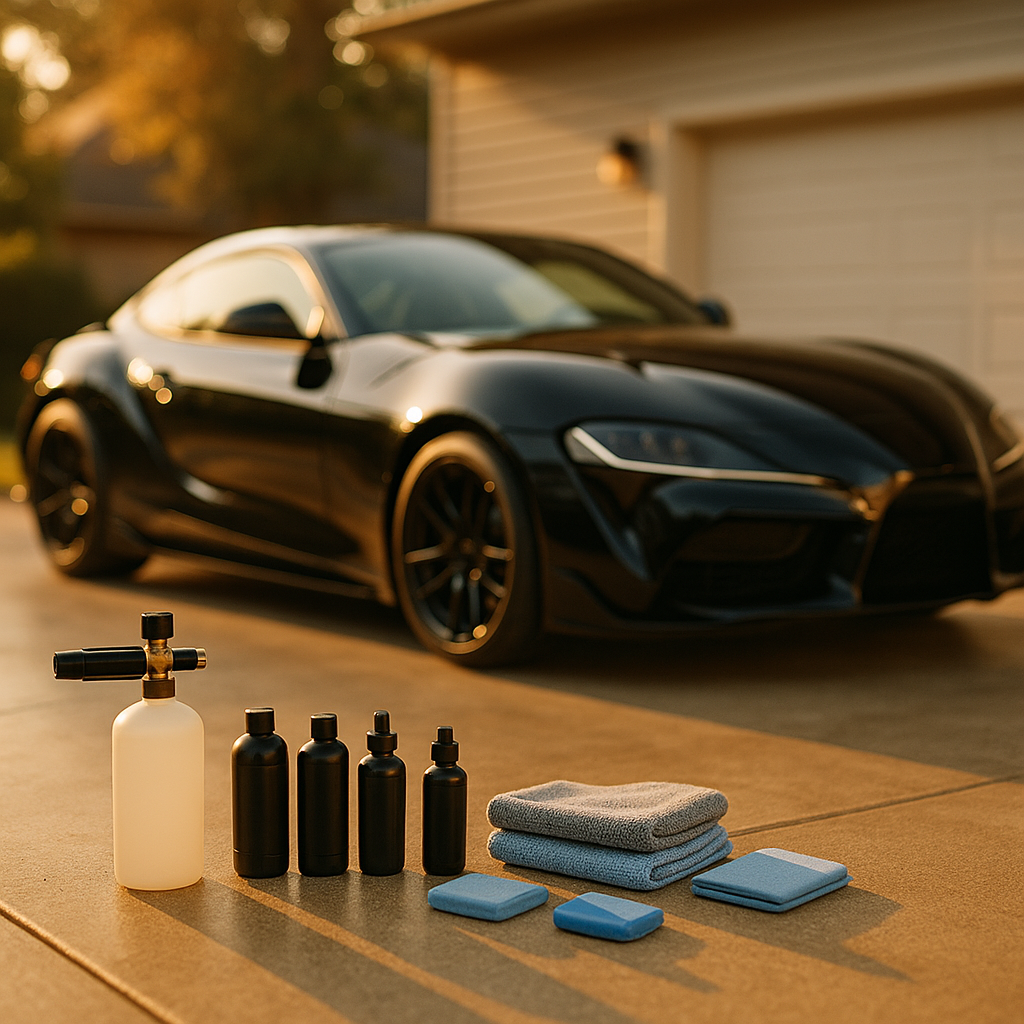
Ceramic Coatings: The Gold Standard in Paint Protection
Ceramic coatings have become the benchmark for long-term paint protection, and for good reason. A proper SiO2-based coating bonds chemically to your clear coat, creating a semi-permanent hydrophobic layer that repels water, contaminants, UV radiation, and light swirl marks. Products such as Gyeon Quartz Q2 One, Gtechniq Crystal Serum Light, and CarPro Cquartz UK 3.0 are consistently rated among the best performers available to UK detailers.
Application does require care. The paint surface must be fully decontaminated and polished before you apply any ceramic coating, otherwise you are sealing in imperfections permanently. Work in a shaded, dust-free environment, apply with a suede applicator in cross-hatch motions, allow the flash time specified by the manufacturer, and buff with a clean microfibre. Curing typically requires 24 to 48 hours without water contact. The result is a surface that beads aggressively, resists brake dust and tar, and is far easier to maintain with routine washes. Durability ranges from 12 months on entry-level consumer products to three or more years on professional-grade formulations.
Clay Bars: The Step Most Enthusiasts Skip
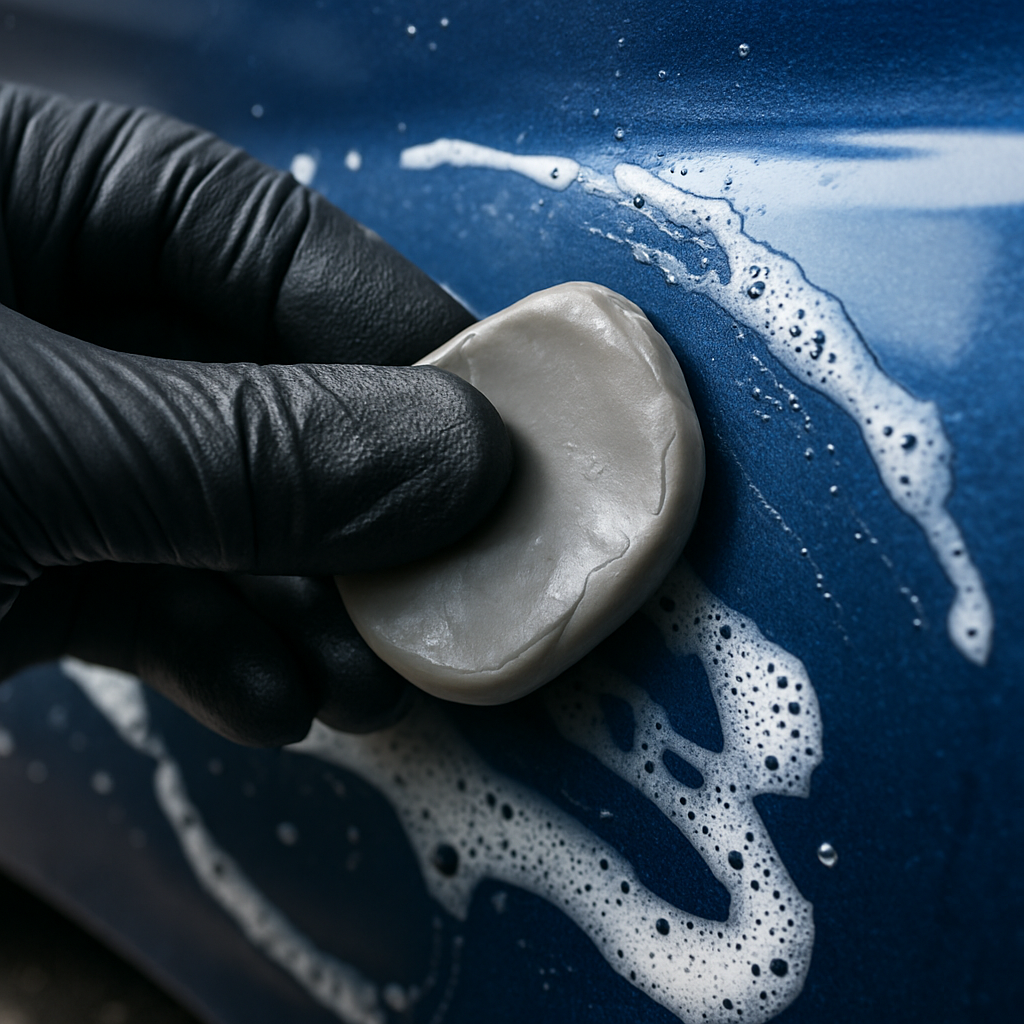
A clay bar is arguably the most underrated tool in the detailing arsenal. Paint surfaces that feel smooth to the touch can still harbour embedded iron particles, industrial fallout, tree sap residue, and brake dust that no shampoo can lift. Running a clay bar across a lubricated panel removes this bonded contamination and leaves a surface that is genuinely smooth, not just visually clean.
For UK drivers, where iron contamination from rail networks and urban traffic is notably high, clay decontamination before any polish or coating application is non-negotiable. Products like Bilt Hamber Auto-Clay, which is produced domestically and widely respected in detailing circles, and Angelwax Enigma Clay are excellent choices. Use a dedicated clay lubricant rather than diluted shampoo for best results, work in small sections, and fold the clay regularly to expose a clean face. A properly clayed panel will feel glassy under your fingertips.
Foam Cannons and Pre-Wash Chemicals: Protecting Paint Before You Touch It
The contact wash is where most swirl marks originate. A foam cannon or foam lance, used as part of a proper two-bucket or rinseless wash method, dramatically reduces the risk of inflicting microscopic scratches on your paintwork during the cleaning process. The foam dwells on the surface, softening and encapsulating dirt particles before any physical contact is made.
A quality foam lance like the Mjjc Foam Cannon Pro V2 or the Chemical Guys Torq Snow Foam Cannon, paired with a thick foam shampoo such as Autobrite Direct’s Avalanche or Bilt Hamber Surfex HD (diluted as a pre-wash), produces a satisfying blanket of foam with good cling time. The goal is not simply theatrical foam volume but genuine dwell time and lubricant content. After the foam has done its work, rinse thoroughly before moving to a contact wash with a high-quality wash mitt. This staged approach is one of the most impactful changes any enthusiast can make to their routine.
It is also worth integrating a dedicated iron remover, such as Bilt Hamber Korrosol or Gtechniq W6 Iron and General Fallout Remover, into your pre-wash stage. These products react visibly with ferrous contamination, turning purple or red as they dissolve iron particles embedded in the paint and wheels. Used before clay, they significantly reduce the effort and abrasiveness required from the clay bar.
Microfibre Cloths: Where Cheap Tools Cost You Money
The microfibre cloth is the single item most often compromised in a detailing kit, and it is the one that can cause the most damage when chosen poorly. Low-GSM (grams per square metre) cloths with rough edges or poor weave structure will inflict fine scratches on polished paint or freshly coated surfaces. Investing in purpose-specific microfibres is not an extravagance; it is simply correct technique.
For paint surfaces, a high-pile, soft microfibre of at least 400 GSM is recommended for buffing off waxes, sealants, and coatings. The Rag Company Edgeless 500 and CarPro DHydrate drying towel are widely regarded as industry benchmarks. For glass, a lower-pile cloth with a tight weave gives streak-free results. Wash microfibres separately from regular laundry, without fabric softener, which destroys the fibres, and air dry or use a low-heat tumble cycle.
Building a Coherent Detailing Routine
The most effective approach to car detailing products is systemic rather than piecemeal. Each product category performs a specific function within a logical sequence: decontaminate with iron remover and clay, correct with machine polish if needed, protect with a ceramic coating or sealant, and maintain with a foam cannon pre-wash and safe contact wash. Skipping stages undermines the stages that follow. A ceramic coating applied over contaminated paint is wasted money. A flawless polish underneath a machine-inflicted swirl pattern is equally pointless.
For owners of Japanese performance cars in particular, where paint quality and finish are taken seriously, this disciplined approach makes a real difference. Just as you would not cut corners on mechanical upkeep, such as sourcing proper Mitsubishi servicing for your vehicle rather than an unspecialised garage, the same philosophy applies to paint care. Use the right products in the right order, and the results speak for themselves.
The UK detailing market is well stocked, with domestic brands like Bilt Hamber and Autobrite Direct sitting comfortably alongside international names such as Gtechniq, CarPro, and Chemical Guys. There has never been a better time to upgrade your detailing kit and take genuine pride in the finish of your car.
Frequently Asked Questions
What car detailing products should I buy first as a beginner?
Start with the fundamentals: a good foam lance or foam cannon, a dedicated pre-wash chemical, a microfibre wash mitt, and a wax or paint sealant for protection. These four product categories cover the core stages of safe washing and protection, and mastering them before moving on to ceramic coatings or machine polishing will prevent you from accidentally damaging your paint.
How long does a ceramic coating last on a car in the UK?
Consumer-grade ceramic coatings typically last between one and two years in UK conditions, while professional-grade products like Gtechniq Crystal Serum Ultra or Gyeon Quartz Q2 Duraflex can last three years or more with correct maintenance. Longevity depends heavily on surface preparation before application, product quality, and whether you maintain the coating with a compatible wash routine and top-up spray sealant.
Is a clay bar safe to use on all car paint types?
Yes, clay bars are safe on all conventional clear-coated paint finishes when used with the correct lubricant. The key is to keep the panel well lubricated throughout the process and to fold the clay frequently to expose a clean face, which prevents any removed contamination from scratching the surface. Do not use clay on matte or satin finishes without specific guidance, as the process can alter the sheen level.
What is the best car detailing foam cannon in the UK?
The Mjjc Foam Cannon Pro V2 and the Chemical Guys Torq Snow Foam Cannon are consistently regarded as the top performers available to UK buyers. Both offer adjustable foam thickness and pattern settings and work well with standard pressure washers. Pair either with a high-foam-yield shampoo like Bilt Hamber Surfex HD or Autobrite Avalanche for the best pre-wash results.
Can I apply a ceramic coating myself or do I need a professional?
Consumer ceramic coatings such as Gtechniq C2 Liquid Crystal, CarPro Cquartz UK 3.0, and Gyeon Quartz Q2 One are specifically formulated for enthusiast self-application. However, correct paint decontamination and polishing beforehand are essential, and working in a controlled environment free from dust and direct sunlight makes a significant difference to the finish. If the paint has significant swirl marks or scratches, machine polishing before coating is strongly advised.
Leave a Reply