A cluttered boot is more than an aesthetic problem. Loose shopping, tools rattling around, and emergency kit sliding into the spare wheel well all add up to a genuinely frustrating driving experience. Finding the best car boot organiser UK drivers will actually use day to day requires looking beyond the marketing and evaluating the things that matter: material durability, structural rigidity, capacity, and how well a unit fits the real-world geometry of a typical British car boot.
Whether you run a family estate, a compact hatchback, or a working van, there is a category of boot organiser built for your use case. This guide breaks down the key types, what separates a solid unit from cheap flatpack nonsense, and which features to prioritise for 2026.
Why Boot Organisation Matters More Than You Think
Beyond tidiness, a well-organised boot directly affects vehicle safety. Unsecured loads in the boot can become projectiles under hard braking. UK Highway Code guidance is clear that loads must be properly secured, and a good organiser plays a real role in that. Collapsible boxes and flimsy fabric bags simply do not cut it when you brake at 60mph and your toolkit launches into the rear cabin.
A quality boot organiser also protects your boot lining. Scratches, spills, and chemical contamination from leaking bottles are common boot-liner killers. An organiser with a waterproof inner lining or removable compartments can save you from expensive liner replacements further down the road.
Types of Car Boot Organiser: Knowing What You Are Buying
Collapsible Fabric Organisers
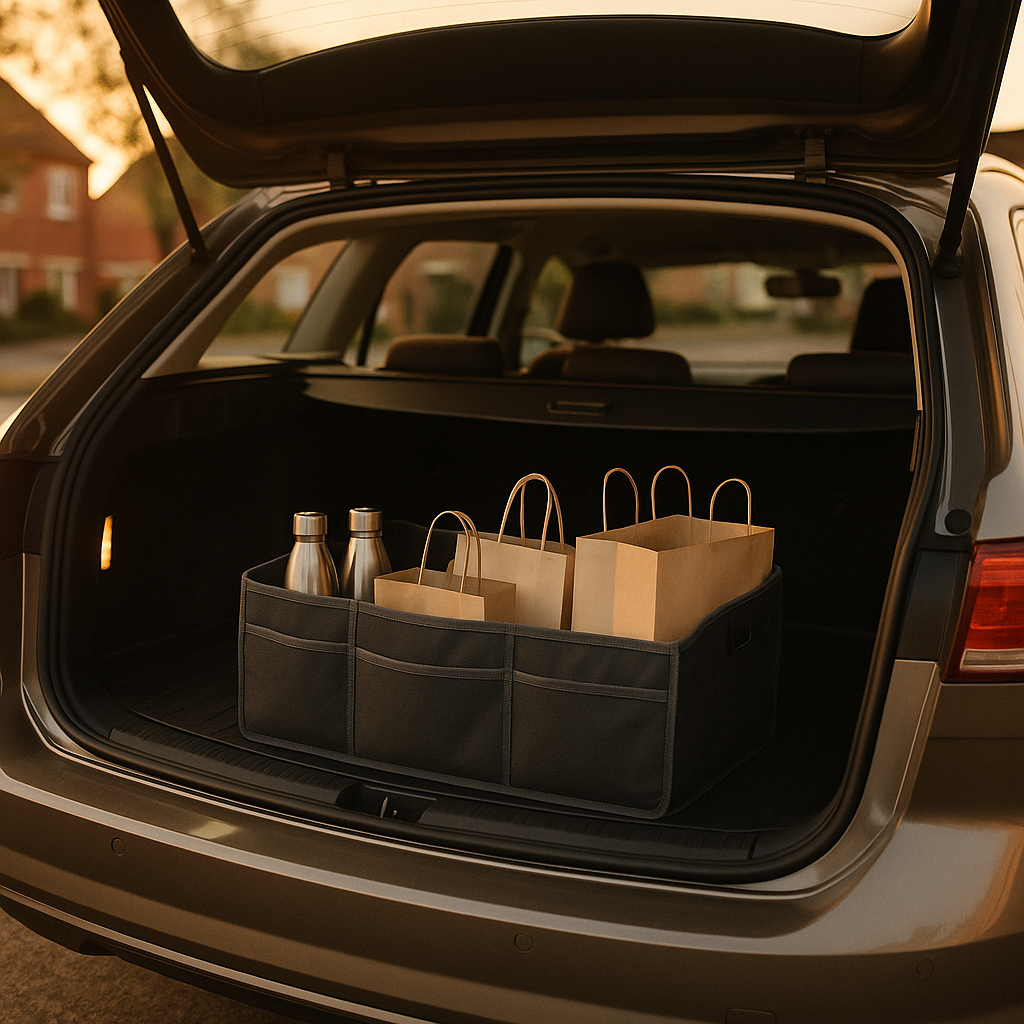
The most common type on the market, fabric organisers typically use 600D polyester or Oxford fabric over a wire or cardboard frame. The better units use double-stitched seams and a rigid base plate, which prevents sagging under load. Look for ones with a waterproof inner lining if you carry groceries, sports kit, or anything that could leak. Capacity tends to sit between 30 and 60 litres, making them a solid general-purpose option. Brands like Joyroom and Fortem offer well-reviewed units in this space, though quality varies widely even within a single brand range.
Hard-Shell and Semi-Rigid Boot Boxes
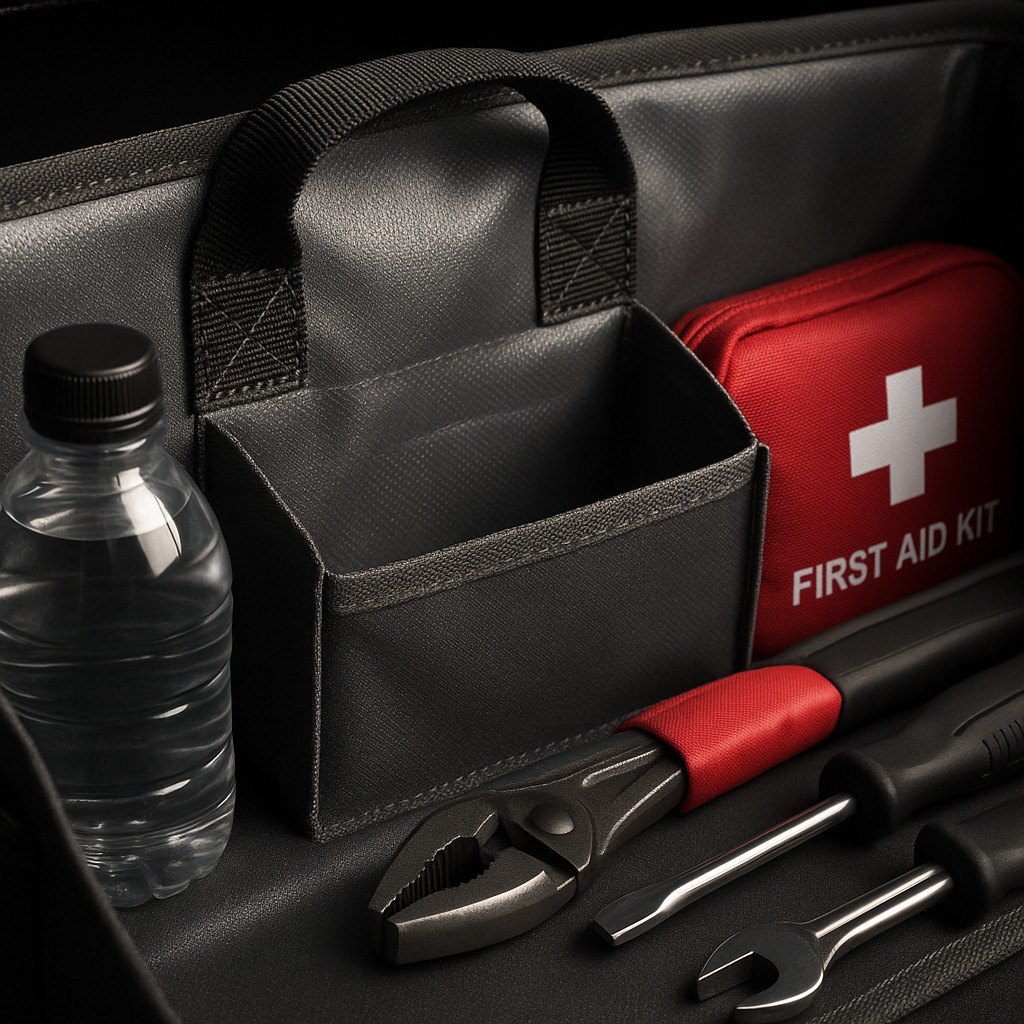
For drivers who carry tools, first aid kits, or emergency gear, a hard-shell or semi-rigid boot box offers significantly better protection. Injection-moulded polypropylene units hold their shape under pressure and resist crushing if a heavy item falls on them. Some feature latching lids and foam inserts, making them genuinely useful for photographers, contractors, or motorsport enthusiasts who need fragile equipment protected in transit. The trade-off is fixed volume and less flexibility for larger awkward loads.
Boot Dividers and Cargo Nets
Cargo nets anchored to existing boot hooks work well as a supplementary solution rather than a primary organiser. They are particularly effective in estates and SUVs for preventing large items from rolling forward. Boot dividers, which sit upright and partition the boot floor, work well for separating clean shopping from muddy wellies or wet sports gear. These are often overlooked but incredibly practical for family use.
Key Specifications to Compare Before You Buy
Structural Rigidity
This is the single biggest differentiator between a usable product and a frustrating one. An organiser that collapses when loaded defeats its entire purpose. Look for units with a hardboard or aluminium-reinforced base, metal frame corners, and handles rated to a minimum of 15kg dynamic load. The description may not always state this clearly, so checking user reviews for comments about sagging or deformation under load is worthwhile.
Material and Weatherproofing
Oxford 600D polyester is the baseline for fabric units. Anything below this grade tends to fray and wear quickly, especially around the handle attachment points. A TPU-coated or PVC-lined interior is essential if you carry anything wet or potentially messy. For hard-shell units, UV-stabilised polypropylene is preferred over basic ABS, which can become brittle in cold British winters.
Fit and Non-Slip Base
An organiser that slides around the boot every time you corner is both annoying and dangerous. A rubberised or anti-slip base is not optional; it is essential. Some units use hook-and-loop straps that attach to the boot’s cargo loops for a fixed position, which is the most secure solution available without permanent installation.
Best Car Boot Organiser UK Options by Use Case
For families doing the weekly shop, a large-capacity collapsible fabric organiser with individual compartments for bottles, bags, and loose items is the practical choice. A unit in the 50 to 60 litre range with separate insulated sections can double as a cool bag carrier, keeping chilled goods upright and separated. For the weekend warrior who takes the car to track days or motorsport events, a hard-shell box with foam inserts and a secure latch is the professional solution. It protects timing equipment, cameras, and tools whilst also keeping the boot presentable between events. Working drivers who cover trade routes would benefit from a full-width boot liner organiser, which effectively divides the boot into front and rear zones and prevents tools from scratching the liner during transit.
What to Avoid When Shopping for Boot Organisers
Avoid any unit that relies solely on cardboard for its structural base. These degrade rapidly with moisture, which is inevitable in a UK climate. Also steer clear of organisers with decorative handles stitched only to the outer fabric shell; under load, these can tear away from the body of the bag. Finally, pay attention to collapsed dimensions if storage space is a concern. Some so-called collapsible units barely fold flat at all, making off-vehicle storage impractical.
Choosing the best car boot organiser UK drivers will trust long-term comes down to honest material specifications, proven structural design, and a clear match to your actual use pattern. A cheap unit purchased twice costs more than a quality unit purchased once. Spend thirty minutes comparing specs rather than simply going for the lowest price, and your boot will reward you with years of genuinely useful, clutter-free motoring.
Frequently Asked Questions
What is the best car boot organiser for a family car in the UK?
For family use, a large-capacity collapsible fabric organiser in the 50 to 60 litre range with multiple compartments works best. Look for a waterproof inner lining, a rigid base plate, and a rubberised anti-slip base to keep it stable during school runs and supermarket trips. Units with insulated sections are a bonus if you regularly carry chilled shopping.
How do I stop my car boot organiser from sliding around?
The most effective solution is a unit with a rubberised or anti-slip base, which grips most boot carpet materials well under normal cornering loads. For even more security, look for organisers that include hook-and-loop cargo straps that attach to the fixed load hooks already present in most UK car boots. Avoid fabric-based bases with no grip treatment.
Are hard-shell car boot organisers worth the extra cost?
If you carry tools, cameras, sensitive equipment, or anything that needs protection from crushing or impact, a hard-shell polypropylene boot box is absolutely worth the additional spend. They maintain their shape under heavy loads and protect contents far better than fabric alternatives. For general shopping and everyday use, a quality fabric unit is usually sufficient.
What size car boot organiser do I need for a hatchback?
Most hatchback boots measure between 270 and 380 litres of total volume, but usable flat floor space is often limited. A compact organiser in the 25 to 40 litre range tends to fit best without consuming the entire boot floor. Always check the external dimensions of the organiser against your boot’s width and depth before purchasing, as hatchback boots vary significantly between models.
Can a car boot organiser help with load safety and legal compliance?
Yes. The UK Highway Code requires that loads in vehicles are properly secured to prevent them becoming hazardous. A rigid or semi-rigid boot organiser significantly reduces the risk of items shifting under braking or cornering. While an organiser alone does not replace proper load securing for very heavy or bulky items, it materially improves safety for everyday groceries, tools, and general cargo.
Leave a Reply