Tyres are the only part of your car actually touching the road. Four contact patches, each roughly the size of a postcard, are doing everything: braking, cornering, accelerating, absorbing the relentless punishment of British tarmac. Yet tyre pressure is one of the most consistently neglected checks in routine car maintenance. A lot of drivers only think about it when a dashboard warning light appears, by which point the damage is often already done. This car tyre pressure guide UK edition covers everything you need to know to get it right, keep it right, and understand why it genuinely matters.
What Is the Correct Tyre Pressure for My Car?
There is no single universal answer. Correct tyre pressure varies by vehicle, tyre size, and load. Your car’s recommended pressures are specified by the manufacturer and will be expressed in PSI (pounds per square inch) or bar. You will find them in at least one of these three places: the sticker on the inside of the driver’s door jamb, the inside of the fuel filler flap, or the vehicle handbook. Never just use a number you remember from a previous car or a figure a mate told you at the petrol station.
Most passenger cars sit somewhere between 28 PSI and 36 PSI for standard driving, though this can change significantly when carrying a full load of passengers or towing. Manufacturers often specify a higher rear tyre pressure for laden conditions. Check the handbook, note both figures, and keep them somewhere useful.
How to Check Tyre Pressure Correctly
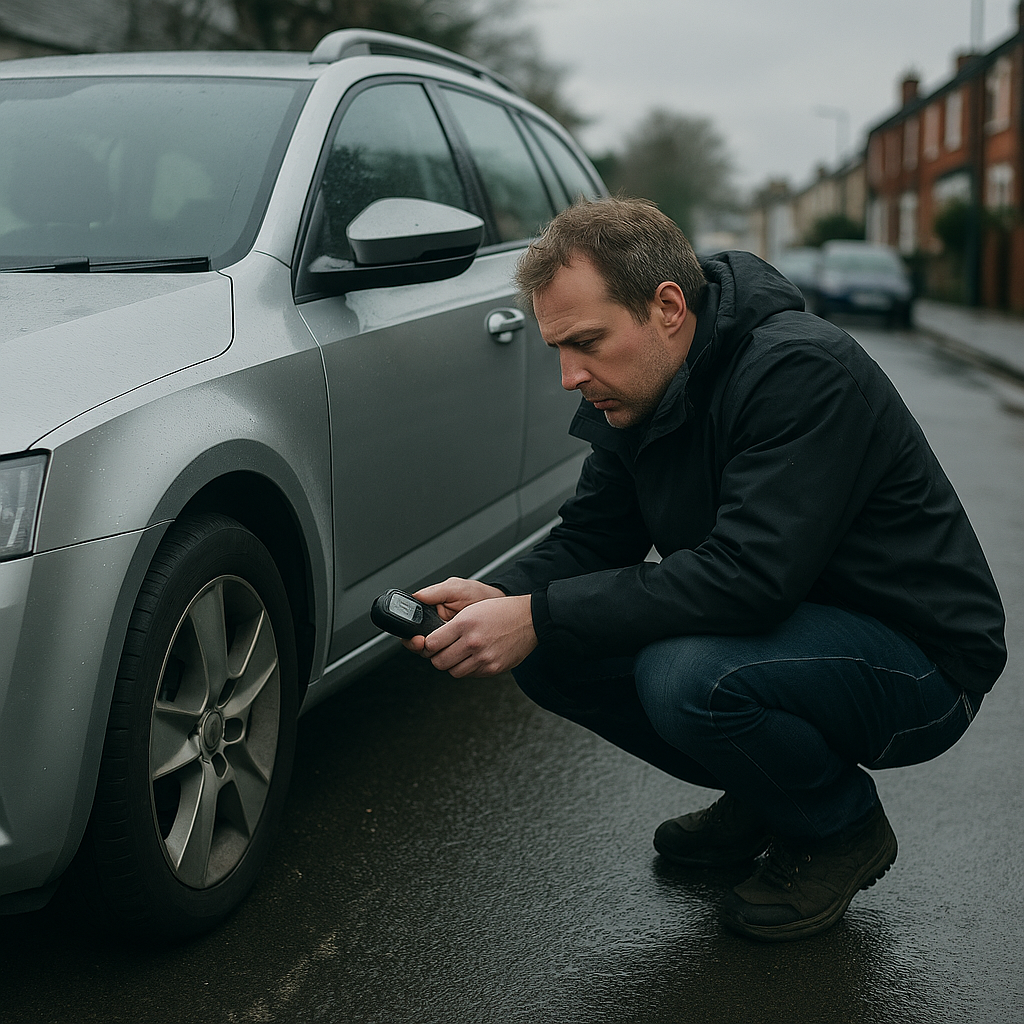
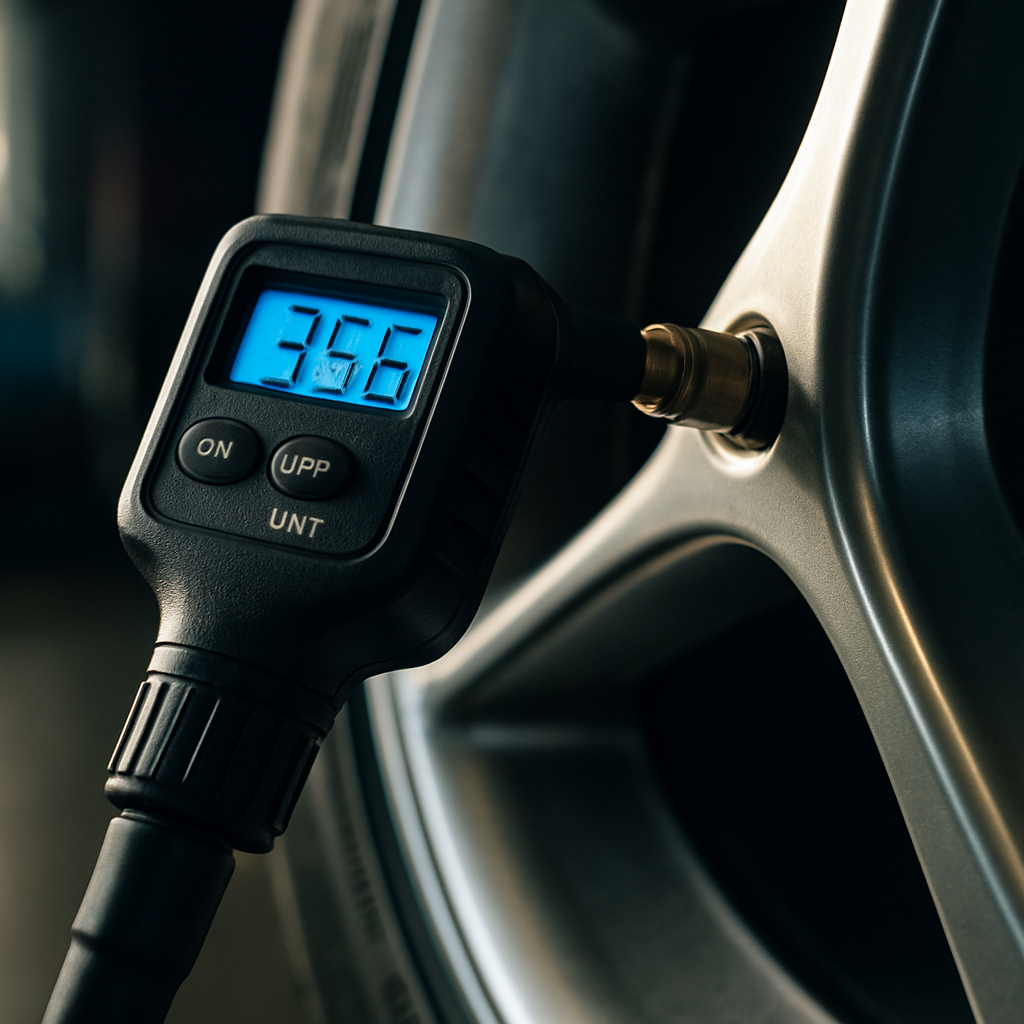
You need a reliable tyre pressure gauge. The gauges built into petrol station forecourt air lines are functional but not always the most accurate, and they vary between sites. A decent digital tyre pressure gauge from a brand like Ring Automotive costs around £10 to £15 and is far more consistent. Keep one in the glovebox.
The most important rule: check pressure when the tyres are cold. After driving even a few miles, the air inside heats up and expands, giving you a falsely elevated reading. Cold means the car has been stationary for at least a couple of hours, ideally overnight. If you must check after driving, add roughly 4 to 5 PSI to your target figure and re-check properly later.
The process itself is straightforward. Remove the valve cap from the tyre valve stem, press your gauge firmly and squarely onto the valve, and read the figure. Compare it against your handbook recommendation. If it is low, add air. If it is high, use the gauge’s release button or a small pen to depress the valve centre pin and bleed some air out. Replace the valve cap when done. Do all four tyres every time, and do not forget the spare if you carry one.
How Tyre Pressure Affects Fuel Economy
This is where most UK drivers leave money on the table. Under-inflated tyres increase rolling resistance, meaning your engine has to work harder to maintain speed. According to the UK Government’s tyre safety guidance, running tyres at just 6 PSI below the recommended pressure can increase fuel consumption by up to 3%. Across a full year of driving, that adds up to a meaningful chunk of extra fuel spend at current pump prices.
Over-inflation is not free of consequences either. Tyres inflated beyond their recommended pressure carry less contact area, reducing grip and increasing the risk of a blowout, particularly at motorway speeds. Neither extreme serves you well.
How Wrong Pressure Affects Handling and Safety
Under-inflated tyres have excessive sidewall flex. In a corner, this causes the tyre to roll onto its shoulder rather than keeping the full tread in contact with the road. Response feels vague and slow. In wet conditions, the risk of aquaplaning increases as the tread pattern cannot disperse water effectively.
Over-inflated tyres behave like a hard rubber ball. The central section of the tread takes the full brunt of the load, the contact patch shrinks, and braking distances can increase noticeably. On the uneven, pothole-scattered roads common across the UK, excessively hard tyres also transmit more impact energy directly into the suspension, accelerating wear on components like shock absorbers and wheel bearings.
From a legal standpoint, driving on a tyre with a pressure so low it is effectively flat can result in a fine of up to £2,500 and three penalty points per tyre under the Road Traffic Act. Inspectors at MOT stations also assess visible tyre condition, and severe uneven wear from chronic pressure neglect can cause an MOT failure.
How Often Should You Check Tyre Pressure in the UK?
The general recommendation is at least once a fortnight, plus before any long journey. That sounds overly frequent to some drivers, but tyres lose pressure naturally over time through microscopic permeation through the rubber, around 1 to 2 PSI per month under normal conditions. Cold weather accelerates this further: for every 10°C drop in ambient temperature, tyre pressure falls by approximately 1 PSI. Given how hard British winters hit, pressures checked in September can be noticeably low by January without any puncture or damage involved.
Tyre Pressure Monitoring Systems (TPMS): What You Need to Know
Since November 2014, all new cars sold in the EU (and by extension the UK at that time) have been required to feature a Tyre Pressure Monitoring System. Most UK cars on the road now carry some form of TPMS. There are two types: direct systems using individual pressure sensors in each wheel, and indirect systems that infer pressure loss from changes in wheel rotation speed via the ABS sensors.
Direct systems are more accurate. Both types have the same legal threshold: the warning light activates when pressure drops 25% below the recommended level. By that point, the tyre is already running in a compromised state. TPMS is a last-resort alert, not a substitute for regular manual checks. If your TPMS light is illuminated, check and correct pressure immediately. If the light stays on after correcting pressure, there may be a sensor fault worth investigating.
Tips for Getting It Right Every Time
A few practical habits that make consistent pressure maintenance easier: use the same petrol station or garage air line regularly so you build familiarity with any quirks in its calibration. Set a recurring reminder on your phone for every two weeks. After any significant temperature change, front and rear axles can shift by different amounts depending on load distribution, so always check all four. And if you switch to a different tyre size, whether through an upgrade or a temporary spare, double-check the handbook or ask a tyre specialist for the correct pressure for that specific fitment.
Getting tyre pressure right is one of the cheapest, simplest acts of car maintenance available, and the return on investment in terms of safety, tyre longevity, and fuel costs is genuinely significant. Take this car tyre pressure guide UK as your starting point and make those fortnightly checks a habit you actually keep.
Frequently Asked Questions
Where do I find the correct tyre pressure for my car?
Check the sticker inside the driver’s door jamb, the inside of the fuel filler flap, or your vehicle handbook. Tyre pressures can vary depending on load, so many manufacturers list two sets of figures for standard and laden conditions.
Can I check tyre pressure at a petrol station?
Yes, most UK petrol stations have air lines with built-in gauges. For the most accurate reading, use a separate digital gauge and always check tyres when cold, before driving more than a couple of miles. Forecourt gauges can vary in calibration.
How does low tyre pressure affect fuel economy?
Under-inflated tyres increase rolling resistance, forcing the engine to work harder. Running at 6 PSI below recommended pressure can raise fuel consumption by up to 3%, which adds up to a meaningful cost over a full year of driving.
Is it illegal to drive with incorrect tyre pressure in the UK?
Driving on a tyre so under-inflated it is effectively flat can carry a fine of up to £2,500 and three penalty points per tyre under the Road Traffic Act. Severe uneven wear caused by chronic pressure neglect can also result in an MOT failure.
Does cold weather affect tyre pressure in the UK?
Yes, for every 10°C drop in temperature, tyre pressure falls by approximately 1 PSI. British winters can significantly reduce pressure from summer levels, so it is worth checking more frequently between October and March.
Leave a Reply