A clean interior makes every drive better. There’s something about sliding into a spotless cabin, no crisp packets under the seat, no greasy fingerprints on the touchscreen, no mystery smell from three weeks ago, that just sharpens the whole experience. Whether you’re daily driving a Focus or babying a classic, the fundamentals of keeping your interior in shape are the same. Here are the car interior detailing tips UK drivers actually need, based on real products you can source right now.
Start With a Proper Vacuum Before You Touch Anything Wet
This sounds obvious but it gets skipped constantly. Applying any cleaning product to a surface that still has loose grit, crumbs, or dust just turns everything into a paste. Grab a decent cordless vac first. The Dyson V15 Detect is the gold standard if budget isn’t an issue, but for interior work specifically, the Bosch Unlimited Series 8 handles tight footwells and under-seat areas particularly well thanks to its slim nozzle attachments.
Work from the top down. Headliner first, then dashboard, door cards, centre console, seats, and finally the carpets. That way, anything dislodged from higher surfaces falls down to be picked up later rather than contaminating what you’ve already cleaned. Use a soft detailing brush (Autoglym do a decent set) to agitate dust out of air vents and speaker grilles before vacuuming. Those louvred vents collect an absurd amount of debris.
Dashboard and Hard Plastics: What Actually Works
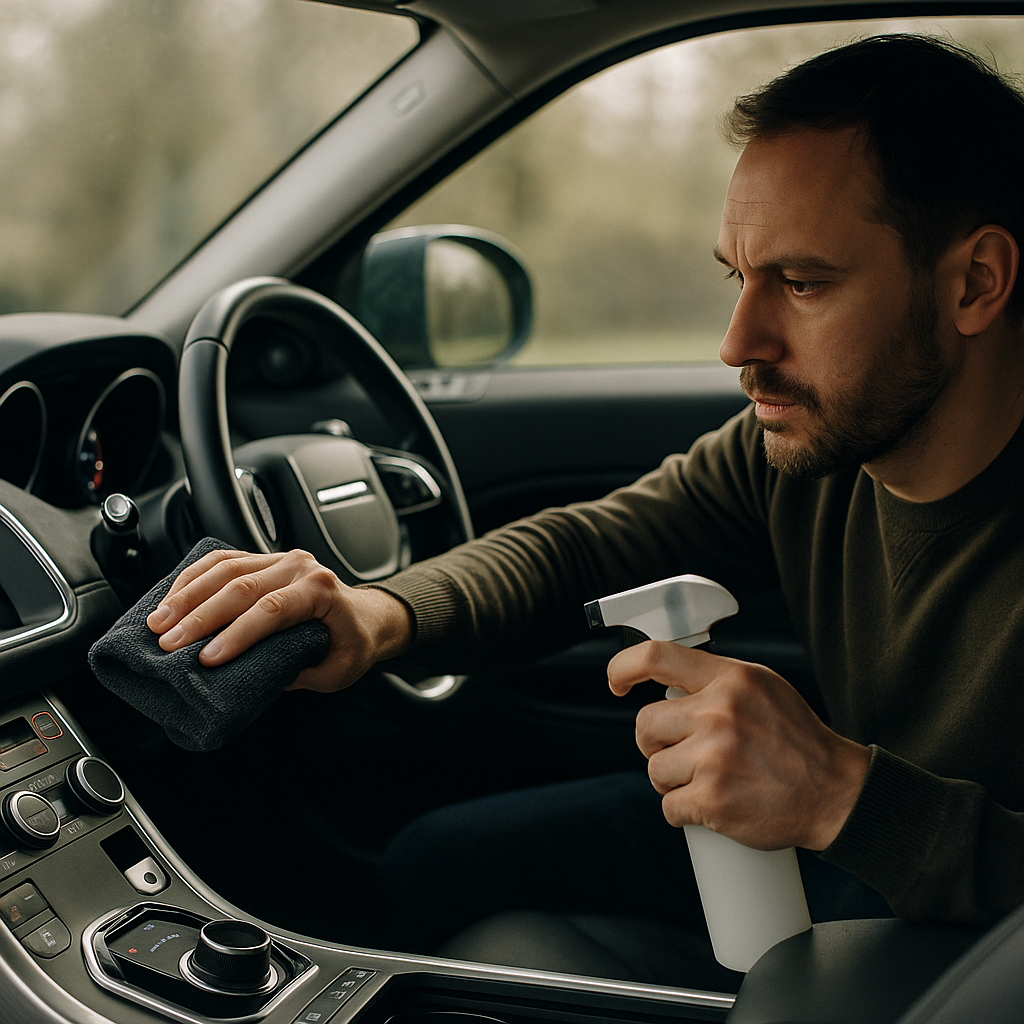
Dashboards are tricky because you’ve got multiple materials in close proximity: hard plastic, rubber trim, possibly leather or alcantara around the binnacle, and the screen itself. A pH-neutral interior cleaner is your safest all-rounder. Chemical Guys InnerClean is widely available through Halfords and Amazon UK, and it won’t leave that greasy sheen that cheap aerosol dashboards products often do.
For a more budget-conscious option, Autoglym’s Interior Shampoo at around £8 for 500ml does a solid job. Apply to a microfibre cloth rather than directly to the surface. Never saturate plastic trim around switchgear. You’re cleaning, not drenching. Work in sections, then buff off with a second dry cloth.
Touchscreens deserve their own treatment. Use a dedicated screen cleaner or isopropyl-based wipe at 70% concentration. Avoid anything ammonia-based, particularly on anti-glare coated screens. The factory oleophobic coating will strip away and you’ll end up with a screen that looks foggy permanently.
Car Interior Detailing Tips UK: Tackling Fabric and Leather Seats
Seats take the most punishment of any interior surface. Sweat, spillages, pet hair, UV fade on leather, compression marks on fabric. Each material needs a different approach, so get this right.
Fabric Seats
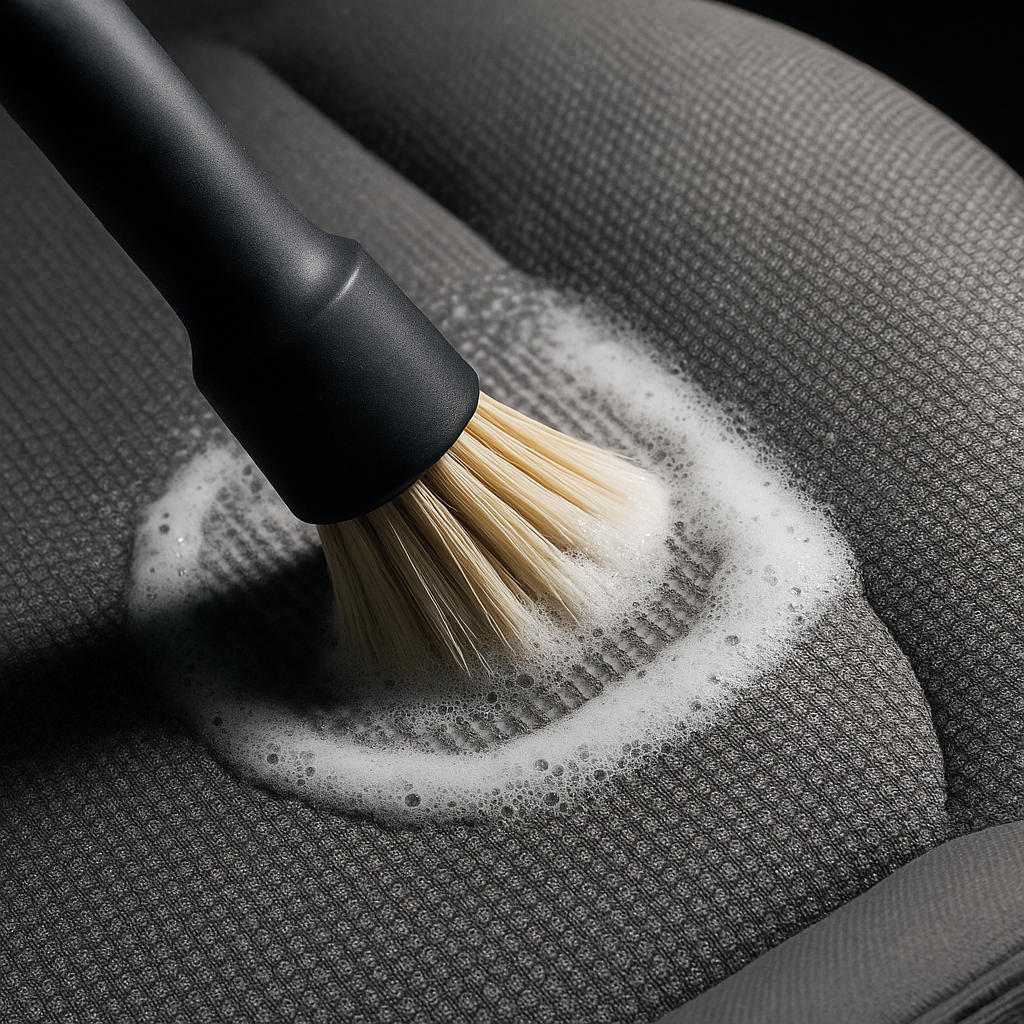
A dedicated upholstery cleaner is non-negotiable here. Bilt-Hamber Surfex HD is a cult favourite in the UK detailing community for good reason. Diluted at around 1:10 with water, applied with a stiff bristle brush, and agitated in circular motions, it lifts embedded grime effectively. Extract or blot dry with a microfibre, then leave doors open to air out. For stubborn stains, the Valet Pro Citrus Tar & Glue Remover works on a surprising range of organic and synthetic stains, though test on a hidden area first.
Leather Seats
Leather needs cleaning first, then conditioning. Use a leather-specific cleaner (Leather Master is a professional-grade choice used by many UK valeters) to remove grime from the grain. Follow up with a good conditioner. Autoglym Leather Care Balm is solid for everyday use. Apply conditioner sparingly. Leather that’s been over-conditioned feels greasy and attracts dust faster. Buff off any excess after five minutes.
Carpets and Floor Mats: The Most Neglected Area
Lift the mats out entirely. This matters more than people realise because water and salt track under mats and sit against the metal floor, which is how rust starts. Give the mats a good beat outside, then either use a pressure washer on rubber mats or a carpet extractor on fabric ones. The Bissell SpotClean Pro is an excellent countertop-sized carpet extractor that handles car interiors brilliantly for around £120.
For the carpet itself, spray an upholstery foam cleaner across the whole area, work it in with a stiff brush, let it dwell for two to three minutes, then extract or blot thoroughly. Gtechniq’s I1 Smart Fabric Coat can then be applied once everything is dry, giving a hydrophobic layer that makes future spills bead up rather than soak in. That’s a legitimate game-changer if you have kids or dogs.
Glass: Getting Streak-Free Results Every Time
Interior glass is harder to clean than exterior glass because it gets contaminated with outgassing from plastics, cigarette smoke residue, and breath. The result is that hazy film that kills visibility at low sun angles. It’s actually a safety issue, not just cosmetic, something worth noting given the Highway Code’s guidance on maintaining clear vision at all times.
Use a dedicated automotive glass cleaner rather than household sprays. Gtechniq G6 Perfect Glass is excellent. Spray onto a folded microfibre cloth (not the glass directly) and work in overlapping passes. Flip the cloth to a dry side for the final buff. For the windscreen, working in circular motions across the full pane helps eliminate streaks rather than spreading them around.
Products Worth Keeping in Your Detailing Kit
If you want a starting setup that covers most situations without spending a fortune, here’s what I’d put in a kit for UK conditions:
- Autoglym Interior Shampoo (around £8) for general plastics and fabric
- Bilt-Hamber Surfex HD (around £9 per litre concentrate) for deep upholstery work
- Autoglym Leather Care Balm (around £13) if you’ve got leather
- Gtechniq G6 Perfect Glass (around £15) for crystal-clear glass
- Gtechniq I1 Smart Fabric Coat (around £20) for fabric protection
- A pack of quality microfibre cloths (at least ten; don’t cheap out here)
- An assortment of detailing brushes for vents and crevices
Total outlay for a complete kit sits around £80 to £100. That’s roughly one professional valet. After that, you’re doing it yourself every time for pennies per session.
How Often Should You Actually Detail the Interior?
A thorough interior detail every eight to twelve weeks is realistic for most drivers. Wipe-down maintenance on the dashboard and screens once a week takes three minutes and keeps things from ever getting truly bad. Seat spot-treatment should happen as spills occur, not six weeks later when they’ve bonded to the fabric. High-traffic areas like the driver’s footwell and the door handle surrounds benefit from a quick going-over monthly.
The professional detailers I’ve spoken to are consistent on one thing: maintenance detailing is infinitely easier than correction detailing. Stay on top of it, and the deeper sessions almost take care of themselves.
Frequently Asked Questions
What is the best way to clean a car dashboard without leaving a greasy finish?
Use a pH-neutral interior cleaner like Autoglym Interior Shampoo or Chemical Guys InnerClean applied to a microfibre cloth rather than directly onto the surface. Buff off with a second dry cloth immediately to prevent any greasy residue from setting.
How do I get rid of the hazy film on the inside of my windscreen?
That film is caused by off-gassing from plastics and general cabin contamination. Use a dedicated automotive glass cleaner like Gtechniq G6 Perfect Glass applied to a microfibre cloth, then buff in overlapping circular passes for a streak-free finish.
Can I use household cleaning products on my car's fabric seats?
It’s not recommended. Many household products contain bleach or detergents that can fade fabric, damage stitching, or leave residues that attract more dirt. Stick to dedicated automotive upholstery cleaners like Bilt-Hamber Surfex HD, which are formulated for car fabrics.
How do professional UK valeters clean leather seats?
They clean first with a leather-specific cleaner to lift grime from the grain, then condition with a product like Leather Master or Autoglym Leather Care Balm to restore suppleness and protect against cracking. The key is not over-conditioning, which makes leather greasy and dusty.
How much does a professional interior car detail cost in the UK?
Prices vary by location and vehicle size, but a thorough professional interior detail typically costs between £80 and £200 in the UK. Building your own detailing kit for around £100 will pay for itself after just one or two sessions.
Leave a Reply