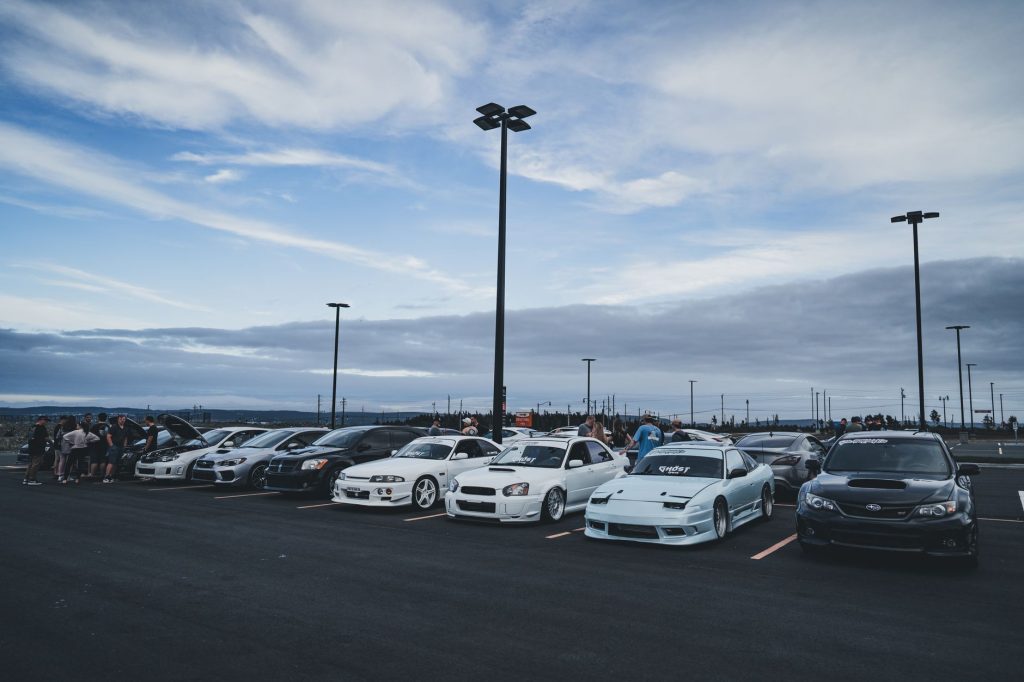
UK car meet culture is one of those things that looks chaotic from the outside but runs on surprisingly tight social rules once you’re in it. I’ve stood in a supermarket car park at half ten on a Tuesday night watching a mint Mk4 Supra idle next to a slammed Honda Civic and a 1972 Jaguar E-Type, and I can tell you, there’s nowhere else that crossover happens. The scene spans everything, connects everyone, and in 2026 it’s bigger and better organised than it’s ever been.
Whether you’re thinking about going to your first cruise night or you’ve been going for years and just want to understand how the whole thing fits together, here’s a proper look at how UK car meet culture actually works.
Where do car meets and cruise nights actually happen?
The short answer: retail car parks, industrial estates, lay-bys, seafront promenades, and occasionally purpose-hired venues. The longer answer is more interesting.
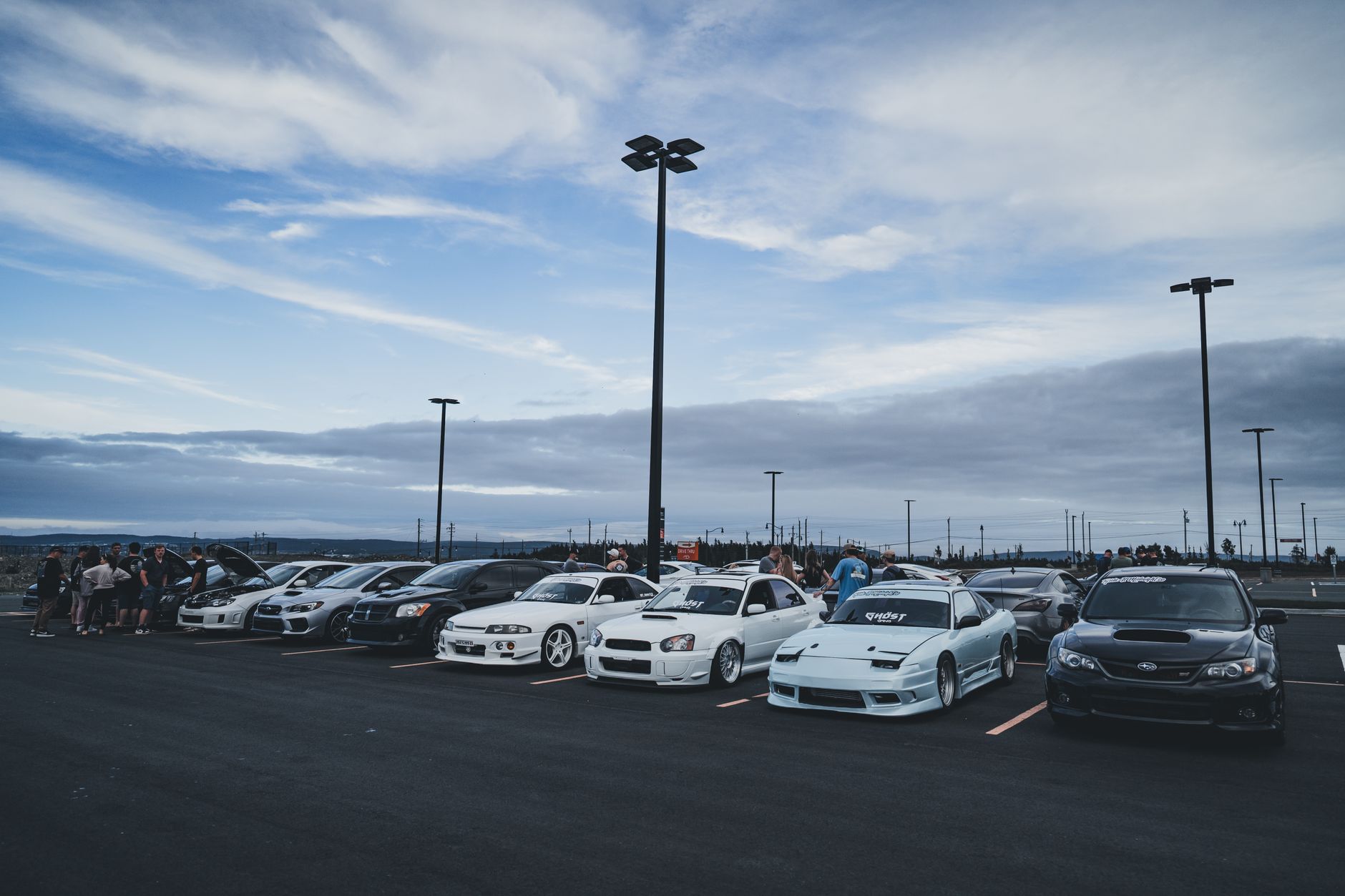
Most meets orbit a few reliable location types. Retail parks with large flat car parks are popular because they’re open late and have good lighting. Think Makro car parks, closed-for-the-night superstore sites, or the back end of a trading estate where the units shut at 6pm. Industrial estates are a favourite in the Midlands and the North West. Coastal promenades, Southend, Weston-super-Mare, Rhyl, have long histories with the scene, often doubling as informal cruise routes.
Finding them used to mean knowing the right people. Now it mostly means Facebook groups, Discord servers, and Instagram accounts. Search your county or city name alongside “car meet”, “cruise night” or “show and shine” and you’ll find multiple events within a 20-mile radius. Apps like Carevents and local car club pages on Facebook are good starting points. The scene is remarkably transparent once you know where to look.
What to expect as a newcomer to the UK car meet scene
The first thing that strikes most people is how welcoming it is. There’s a reputation, partly media-driven, partly earned by a minority, that car meets are aggressive, noisy, or territorial. My experience has been almost entirely the opposite. Turn up clean, be respectful of other people’s cars, and you’ll find enthusiasts genuinely keen to talk.
Expect a mix. On a good night at a well-run meet you’ll see everything from factory-standard daily drivers to full track builds. Modified Vauxhall Corsas, Peugeot 106s, and Honda Civics make up the backbone of most meets because they’re the cars people learned to drive in and then personalised on a budget. But spend an hour walking round and you’ll also find Land Rover Defenders, air-ride SUVs, American muscle on grey import plates, and the odd immaculate classic that someone’s driven 60 miles to bring out for the night.
Sound systems get turned up. Engines get revved. People take photos. There’s usually a food van. That’s the format. It’s a social occasion with cars as the centrepiece, not a formal concours.
How organisers keep car meets legal and on the right side of the police
This is the bit most newcomers don’t see, and it’s genuinely impressive. Running a car meet in the UK in 2026 means navigating a real tangle of landowner permissions, public liability insurance, noise restrictions, and the ongoing relationship with local police liaison officers.
Serious event organisers, and there are plenty of them running tightly managed monthly meets, will have written permission from the landowner, public liability cover of at least £1 million, a named event coordinator on site, and an agreed finish time with local officers. Some events use radio-equipped marshals, parking attendants, and a code of conduct printed on the entry ticket or posted in the event Facebook group.
The legal framework here matters. Under the Road Traffic Act 1988, antisocial driving near or leaving a meet, excessive acceleration, wheel spins, driving without due care, can result in a Fixed Penalty Notice or prosecution. Section 59 of the Police Reform Act 2002 gives officers power to seize vehicles used in a manner causing alarm or distress. Well-run meets are acutely aware of this and communicate clearly to attendees: keep it tidy on entry and exit.
The events that get shut down are almost always the unorganised pop-up meets that accumulate quickly and have no accountability structure. Legitimate, registered meet organisers actively distance themselves from these because they damage the whole scene’s relationship with councils and police. You can read more about the legal position on vehicle antisocial behaviour on the gov.uk guidance on police powers to seize vehicles.
How strong local scenes have developed across the UK
UK car meet culture isn’t one scene, it’s dozens of regional scenes that share an identity. Scotland has a strong culture up the East Coast corridor, particularly around Dundee and Aberdeen, where modified hatchbacks and performance Fords have always had a following. The North West, Manchester, Liverpool, Preston, runs some of the largest regular meets in the country. The Midlands is home to some exceptional show-and-shine events, particularly within South Asian car communities who’ve built an enormous presence in the modified scene over the past 20 years.
And then there are the regional scenes that have developed their own distinct character. Welsh car culture is a strong example of how local geography and community pride can shape an entire scene, coastal routes, mountain passes, and tight-knit local clubs have made Wales a genuinely exciting region for cruise nights and car culture events.
Each region tends to have its own hierarchy of events too: smaller weekly or fortnightly meets for regulars, bigger monthly shows where people travel in, and then the marquee annual events that pull from all over the country. If you’re planning a road trip around car culture, a bit of forward planning can turn a weekend into something genuinely memorable. If you’re heading somewhere remote, our piece on driving the Applecross Peninsula shows just how rewarding a car-culture road trip can be when you plan the route properly.
Show and shine vs cruise night: what’s the difference?
These two formats co-exist in UK car meet culture but they’re quite different experiences. A cruise night is primarily a social gathering with a loose driving element, people arrive, park up, chat, and might do a slow roll around a set route before parking up again. The driving is part of the event, but it’s low-key.
A show and shine is a more formal presentation. Cars are parked in a grid, judged on cleanliness, detailing quality, and often build specification. Categories are divided by class, stock, modified, classic, JDM, American, and so on. Trophies are awarded. People spend serious time the night before polishing every surface, cleaning engine bays, and dressing tyres. It’s competitive, but in a friendly way.
Some of the best events blend both. The evening starts with cars cruising in, there’s a period of parking and socialising, then a show-and-shine judging happens before the crowd moves on. If you’re bringing a car to be judged, presentation matters enormously. Knowing your car’s mechanical condition matters too, a car that’s clean on the outside but clearly rough underneath doesn’t go down well with experienced judges. If you’re unsure about your car’s condition before an event, a proper diagnostic check with an OBD2 scanner can flag any pending fault codes before they become an embarrassing mid-meet breakdown.
The community side of car meets that people don’t always talk about
Beyond the cars, UK car meet culture functions as a genuine community. I’ve seen people get job leads at meets, form business partnerships, find mechanics, source rare parts, and make friendships that have lasted years. Car clubs, formal ones with constitutions and membership fees, not just Facebook groups, often do charity runs, fundraising events, and support causes within their local area.
There’s also a generational thread running through it. You’ll find 18-year-olds at meets who’ve saved for a year to buy their first modified car, and you’ll find 60-year-olds who’ve been going to car shows since the 1980s and now bring out their restored classic. That continuity is what keeps the scene healthy. The newcomers bring energy; the veterans bring knowledge. It’s a genuinely functional subculture.
If you’re navigating to a meet for the first time and debating between your sat nav and your phone, that’s a whole other rabbit hole, we’ve covered sat nav vs phone navigation in detail if you want to sort that out before you head out.
The bottom line is this: UK car meet culture in 2026 is organised, inclusive, and properly established. It’s not the lawless scene that tabloid coverage occasionally suggests. Go to a well-run event, respect the people around you and their cars, and you’ll find a community that’s genuinely worth being part of.
Frequently Asked Questions
How do I find car meets near me in the UK?
Facebook groups are the most reliable starting point, search your county or nearest city alongside ‘car meet’, ‘cruise night’, or ‘show and shine’. Instagram and Discord servers run by local car clubs are also active. Apps like Carevents list registered events across the UK and often include entry fees and organiser contact details.
Do I need a modified car to attend a UK car meet?
No. The vast majority of UK car meets welcome any car, including standard factory-spec daily drivers. The culture spans everything from stock hatchbacks to full race builds. Turning up in a clean, well-maintained car with a genuine interest in the scene is all you need.
Are car meets legal in the UK?
Properly organised car meets with landowner permission and public liability insurance are entirely legal. The issues arise when events are held without permission or when attendees drive antisocially near the venue. Under the Police Reform Act 2002, officers can seize vehicles used in a manner causing alarm or distress, so well-run events communicate clear conduct expectations to attendees.
What's the difference between a car show and a cruise night in the UK?
A cruise night is primarily social, cars arrive, park up, and there’s often a slow rolling cruise as part of the evening. A show and shine is more competitive, with cars judged on presentation, detailing, and build quality, with trophies awarded by category. Many events combine both formats across a single evening.
How much does it cost to attend a car meet or show in the UK?
Many smaller meets are free to attend, though a voluntary contribution or food van purchase is expected. Formal show-and-shine events with judging categories typically charge an entry fee of £5 to £20 per car, with spectator entry often free or £2 to £5. Larger annual events can charge more, especially if they include trade stands and entertainment.
Leave a Reply