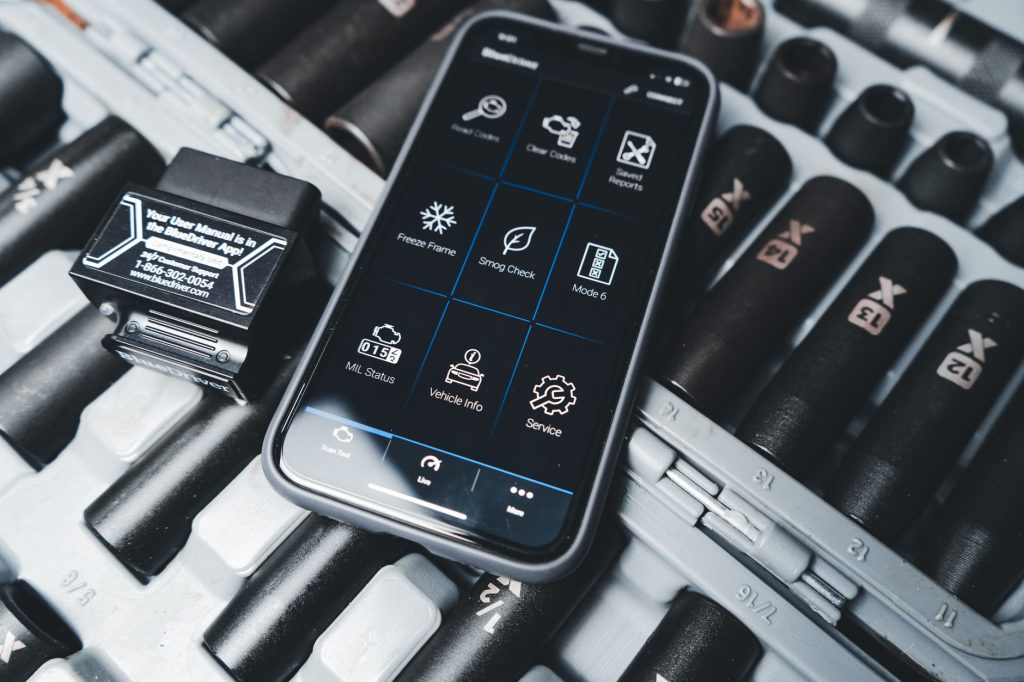
Every car sold in the UK since 2001 (petrol) or 2004 (diesel) has an OBD2 port tucked somewhere under the dashboard. Most drivers walk past it every single day without a second thought. That port is essentially your car talking to anyone willing to listen, and a decent OBD2 diagnostic tool is how you start that conversation. I’ve been plugging these things into cars for years, and I’d argue that a mid-range scanner is one of the most genuinely useful purchases a UK driver can make, far more so than half the accessories that get marketed at us.
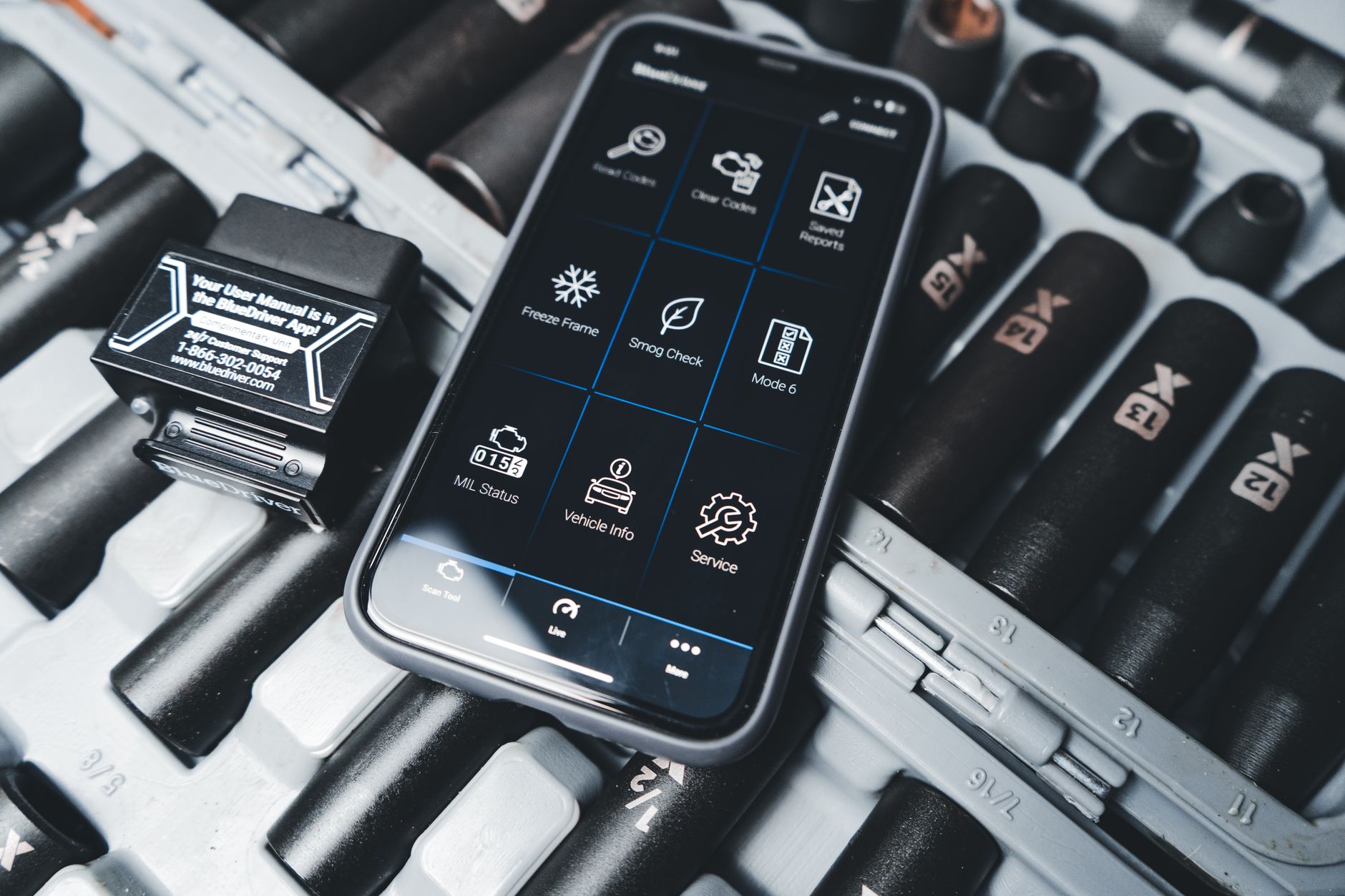
The basic premise is straightforward. Your car’s engine control unit (ECU) monitors hundreds of sensors in real time and logs fault codes when something falls outside its accepted parameters. An OBD2 scanner reads those codes. But the better units do a lot more than that, and understanding what the data actually means is where most guides fall short. Let’s go through it properly.
What OBD2 actually is and why the protocol matters in the UK
OBD2 stands for On-Board Diagnostics, second generation. It became mandatory in the EU for all petrol cars from 1 January 2001 and for diesels from January 2004. The protocol standardises the communication interface and a core set of diagnostic trouble codes (DTCs), which is why a single scanner can talk to a Vauxhall Astra, a Honda Civic, and a BMW 3 Series without needing brand-specific software.
The port itself is a 16-pin trapezoid connector, almost always found within 60cm of the steering column. Look under the dash on the driver’s side, sometimes behind a small plastic cover. On some French cars it appears lower down near the gearstick area. If you’re ever unsure of a specific model’s port location or manufacturer-specific ECU architecture, the Car Data Wiki is worth bookmarking for quick reference across different makes.
Five communication protocols sit underneath OBD2: ISO 9141-2, KWP2000, J1850 VPW, J1850 PWM, and CAN Bus. In practice, if your car is from 2008 onwards, it almost certainly uses CAN Bus. Older cars from that 2001-2007 era are where protocol compatibility sometimes causes headaches with cheap scanners.
Understanding fault codes: P, B, C and U codes explained
Fault codes follow a five-character structure. The first letter tells you which system threw the code: P for powertrain (engine, gearbox), B for body (airbags, windows), C for chassis (ABS, traction control), and U for network/communication faults. The second character is either a 0 (standardised code shared across all manufacturers) or a 1/2/3 (manufacturer-specific). Then three digits describe the exact fault.
So P0300 is a generic random/multiple cylinder misfire. P0171 is system too lean on bank 1. P0420 is catalyst efficiency below threshold, which usually means a knackered catalytic converter or a failing lambda sensor. Knowing the code is only half the job, though. A scanner that just spits out a code number and leaves you to Google it is barely more useful than the warning light itself.
This is why I push people towards scanners with live data streaming, because the fault code tells you what the ECU has noticed, but live data tells you why.
Live data parameters that actually matter
This is where OBD2 diagnostic tools earn their money. The following parameters are the ones I check routinely, and each one tells a different part of the story.
Short-term and long-term fuel trims
Fuel trims are expressed as percentages. Short-term fuel trim (STFT) is the ECU’s real-time adjustment to the fuelling mixture. Long-term fuel trim (LTFT) is the learned correction it has built up over time. A healthy engine sits close to 0% on both. If your LTFT is sitting at +15% or higher, the engine is consistently running lean and compensating; common causes include a vacuum leak, a dirty mass airflow sensor (MAF), or injectors that are partially blocked. Negative values (say, -15%) suggest the engine is running rich, which could point to a leaking injector or an over-fuelling condition. Knowing this before a MOT failure could save you a retest fee and a garage bill.
Misfire counts
Most OBD2 scanners that support Mode 6 data can show you misfire counts per cylinder. If cylinder 3 shows 47 misfires over the last drive cycle while the others show zero, that’s your diagnostic path right there: coil pack, spark plug, or injector for cylinder 3 specifically. Without live data, you’d just be guessing.
Coolant temperature, O2 sensor readings and MAF flow rate
Coolant temp tells you whether your thermostat is opening too early (engine never reaches full operating temperature, which kills fuel economy and can also trigger a catalyst efficiency code). Oxygen sensor voltage should oscillate rapidly between roughly 0.1V and 0.9V on a healthy narrow-band sensor upstream of the cat. A flat line at either extreme suggests a failed sensor. MAF flow rate at idle should typically be between 2 and 7 grams per second depending on engine size; a low reading points to a dirty or failing sensor.
Which OBD2 scanners are actually worth buying in 2026
The market splits roughly into three tiers: sub-£30 Bluetooth dongles that pair with your phone, dedicated handheld units in the £50-£150 range, and professional workshop tools that start around £300 and go stratospheric from there. Here’s my honest assessment of each.
Budget Bluetooth dongles (under £30)
The Veepeak OBDCheck BLE+ and the Carista OBD2 adapter are the two I’d recommend from this tier. Both pair reliably with iOS and Android via the respective apps. Carista is particularly good if you own a VAG Group car (VW, Audi, Seat, Skoda), because the app’s paid tier unlocks manufacturer-specific coding functions that can disable annoying factory settings. Pair either with the free Torque Pro app on Android or OBD Fusion on iOS and you get decent live data streaming.
The limitation at this tier is speed and depth. Bluetooth dongles can lag noticeably on older CAN Bus implementations, and almost none support enhanced manufacturer-specific PIDs out of the box without a third-party app.
Mid-range dedicated scanners (£60-£150)
This is where I’d spend my money if I owned one car and wanted something reliable. The Autel MaxiCheck MX808 (around £130 on the UK market) reads and clears codes across all systems, streams live data smoothly, and supports bi-directional testing on many makes. The Launch X431 CRP129E is another solid option around the £90 mark, covering engine, gearbox, ABS and airbag codes on one screen without needing a phone.
For pure engine diagnostics and emissions readiness checks, the Foxwell NT301 at around £65 is excellent value. I’ve used one to quickly check O2 sensor readiness status before a pre-MOT emissions test, and it does exactly what it says. If you’re using fuel additives to clean injectors or address carbon buildup, running live fuel trim data before and after a treatment cycle is genuinely informative with a unit like this.
What to avoid
Generic unbranded ELM327 clones from auction sites for under £5. I’ve tested half a dozen and they range from slow to outright unreliable. Some refuse to disconnect from the OBD2 port properly and drain your battery overnight. Spend at least £20 on a Bluetooth dongle from a named brand.
Freeze frame data and readiness monitors
Two more features worth understanding. Freeze frame data is a snapshot the ECU takes of all sensor readings at the exact moment a fault code was triggered. It’s invaluable for intermittent faults, those gremlins that clear themselves before you get to a garage. Load percentage, vehicle speed, coolant temp and fuel trim at the moment of the fault are all captured and can narrow down the conditions that cause the problem enormously.
Readiness monitors tell you whether the ECU has completed its self-test cycles for various systems: catalyst, oxygen sensors, evaporative emissions (EVAP), EGR, and so on. After clearing codes or disconnecting the battery, these monitors reset to “incomplete”. UK MOT testers check readiness status as part of the emissions assessment. If too many monitors are incomplete, the car will fail. Give it a proper drive cycle (a mix of urban and dual carriageway speeds) after clearing any codes before booking the test.
The Driver and Vehicle Standards Agency (DVSA) publishes the MOT inspection manual if you want to read exactly how OBD checks factor into the test, and it’s far more useful than most summaries floating around online.
One more thing: if you’re planning a long motorway run and want to track how your engine is behaving under sustained load, pairing a scanner with something like a dedicated heads-up display is a neat setup. Similarly, if you’ve been looking at fuel treatments to address a lean condition, live fuel trim data is the only objective way to know whether they’ve made any difference at all.
An OBD2 scanner doesn’t make you a mechanic. But it does mean you walk into a garage knowing exactly what the car has logged, which is a very different conversation to “there’s a light on and it feels a bit rough sometimes.” That’s worth the price of a mid-range unit on its own.
Leave a Reply