If you rely on your van for work, effective van security upgrades are no longer a nice-to-have – they are essential risk management. Tool theft from vans has become highly organised, with criminals using power tools, decoding tech and even social media to target trades and fleet vehicles. This guide breaks down the most effective hardware and electronic upgrades from a technical perspective, so you can harden your van without wasting money on gimmicks.

Why van security upgrades matter for modern work vans
Factory security on most vans is designed as a compromise between cost, convenience and basic protection. Standard central locking, basic immobilisers and thin door skins are simply not engineered to withstand determined attacks. Thieves know the weak points on popular platforms like Transit, Vivaro, Transporter and Sprinter, and they exploit them in seconds.
Well chosen van security upgrades change the equation. Instead of relying on a single OE lock or alarm loop, you create multiple layers: mechanical resistance, electronic detection, visual deterrence and asset recovery. The goal is not to make the van invincible, but to increase the time, noise and effort required to such a level that thieves move on.
Mechanical van security upgrades that actually work
Mechanical systems are the backbone of any serious van security package. They are not dependent on batteries, signals or software, and a quality installation creates real physical resistance.
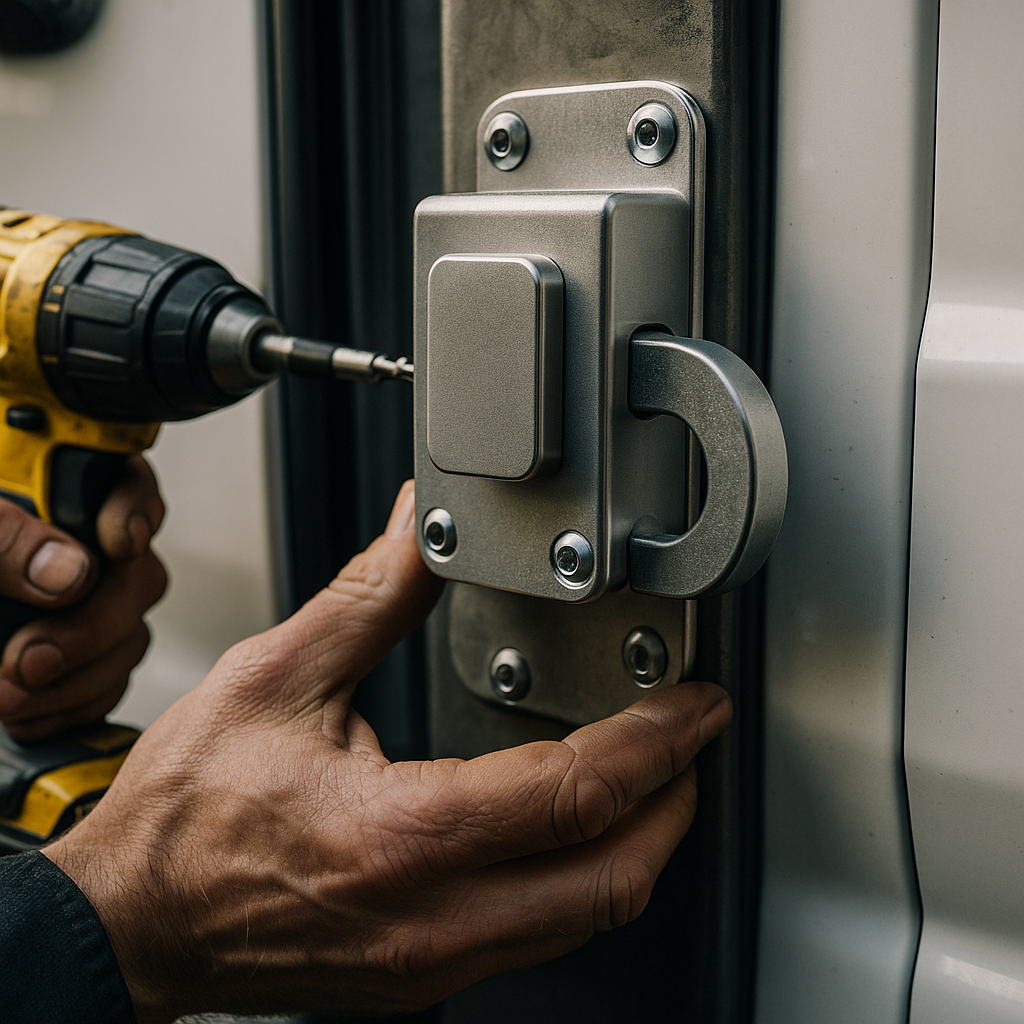
High security deadlocks and hook locks
Aftermarket deadlocks add a separate locking point, usually at the rear and side load doors. Look for:
- High security cylinders with anti-pick and anti-drill features
- Hardened steel bolts engaging into reinforced keepers
- Correct positioning to resist peeling or crowbar attacks
Hook locks go a step further, with a hook-shaped bolt that engages behind a strengthened bracket, making it far harder to force the door outwards. On many vans, a combination of deadlocks on the cab doors and hook locks on the load area is the most robust layout.
Anti-peel kits and door reinforcement
Side door peeling using a bar or jack is one of the most common attack methods. Anti-peel brackets re-engineer the door edge, tying the skin back into the stronger parts of the structure. Reinforcement plates around the factory lock area stop thieves from simply cutting around the latch to bypass the OE mechanism.
Internal lock shields and handle protection
Many vans can be popped by attacking the handle or exposed rods behind the skin. Internal shields and guard plates cover these components, so even if the outer metal is pierced, there is no direct access to the release mechanism.
Electronic upgrades: alarms, trackers and sensors
Mechanical systems slow thieves down; electronics help you detect and respond. Integrated correctly, they form a second line of defence.
Thatcham-approved alarm systems
A quality alarm should monitor door openings, bonnet, ignition status and interior movement at minimum. On work vans, consider:
- Additional door contacts on side and rear doors
- Load area ultrasonic or microwave sensors tuned to avoid false triggers
- Audible sirens positioned deep in the bay, with tamper protection
Modern systems can also interface with smartphone apps, giving push alerts if the van is attacked and allowing remote status checks.
GPS tracking and telematics
Tracking will not prevent a break-in, but it can be the difference between losing a van for good and a rapid recovery. Look for:
- Hardwired units with independent backup batteries
- Secure, hidden mounting locations away from obvious harness runs
- Driver ID or geofencing to flag unauthorised movement
For fleets, telematics platforms can also log driving behaviour, routes and stops, helping you identify patterns that might increase risk, such as regular overnight parking in poorly lit locations.
Protecting tools and cargo inside the van
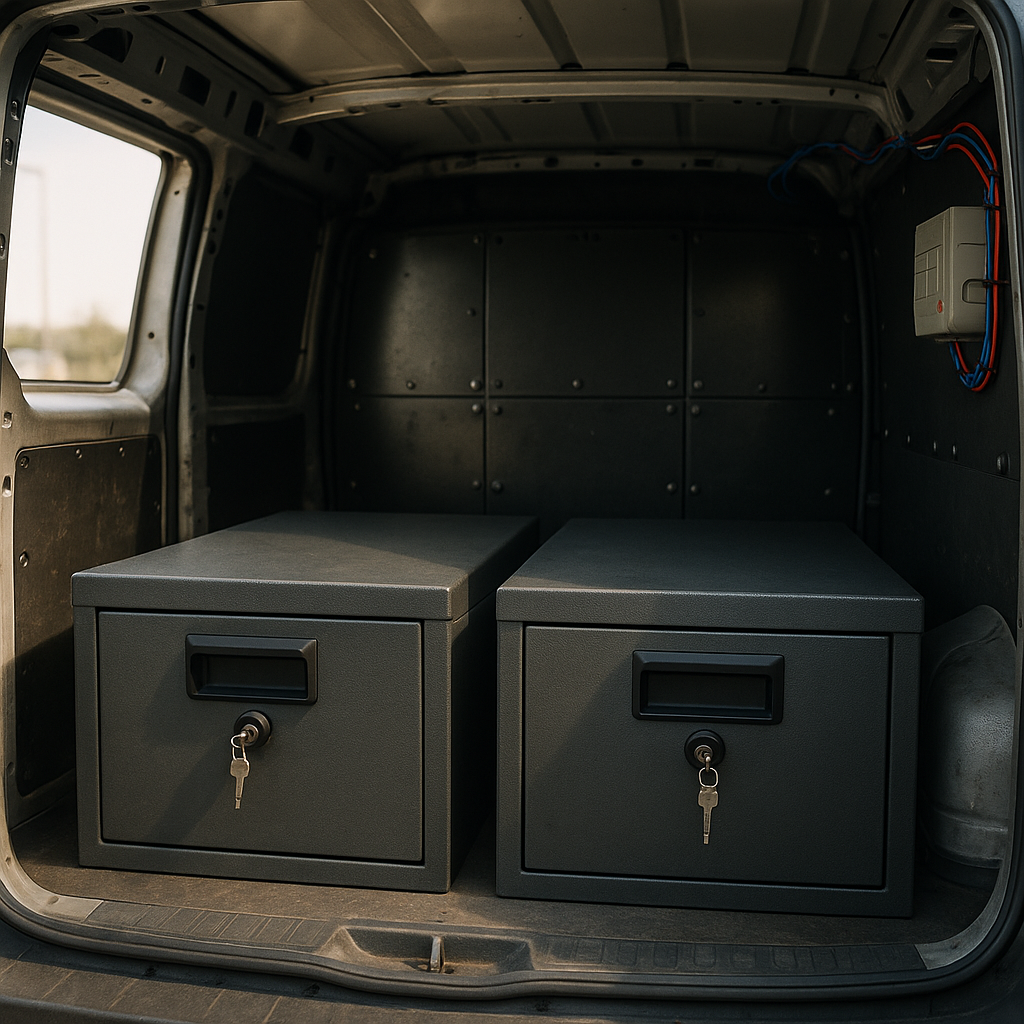
Even with strong perimeter protection, you should assume that a determined attack might still breach the shell. The next layer is securing tools and equipment internally.
Van security upgrades FAQs
Which van security upgrades should I prioritise first?
Prioritise physical security at the most commonly attacked points: side and rear doors. High quality deadlocks or hook locks, combined with anti-peel brackets and reinforcement plates, deliver the biggest immediate jump in security. Once the perimeter is strengthened, add an alarm with extra door contacts and interior sensors, then consider tracking and internal tool vaults as the next layers.
Are aftermarket van security upgrades worth the cost for older vans?
Yes, provided the van is structurally sound and you rely on it for income. Thieves often target older vans because they expect weaker security and less telemetry. A relatively modest investment in locks, shields and a basic alarm can be far cheaper than losing a full set of tools and facing downtime while you repair damage and deal with insurance.
Can I install van security upgrades myself, or should I use a specialist?
Some components, like internal tool vaults, can be installed by a competent DIYer with the right fixings. However, locks, shields, alarms and trackers are best left to specialists. They will know the correct lock positions for each van model, how to avoid damaging structural or crash protection elements, and how to route wiring to minimise the risk of tampering and faults over time.
Leave a Reply