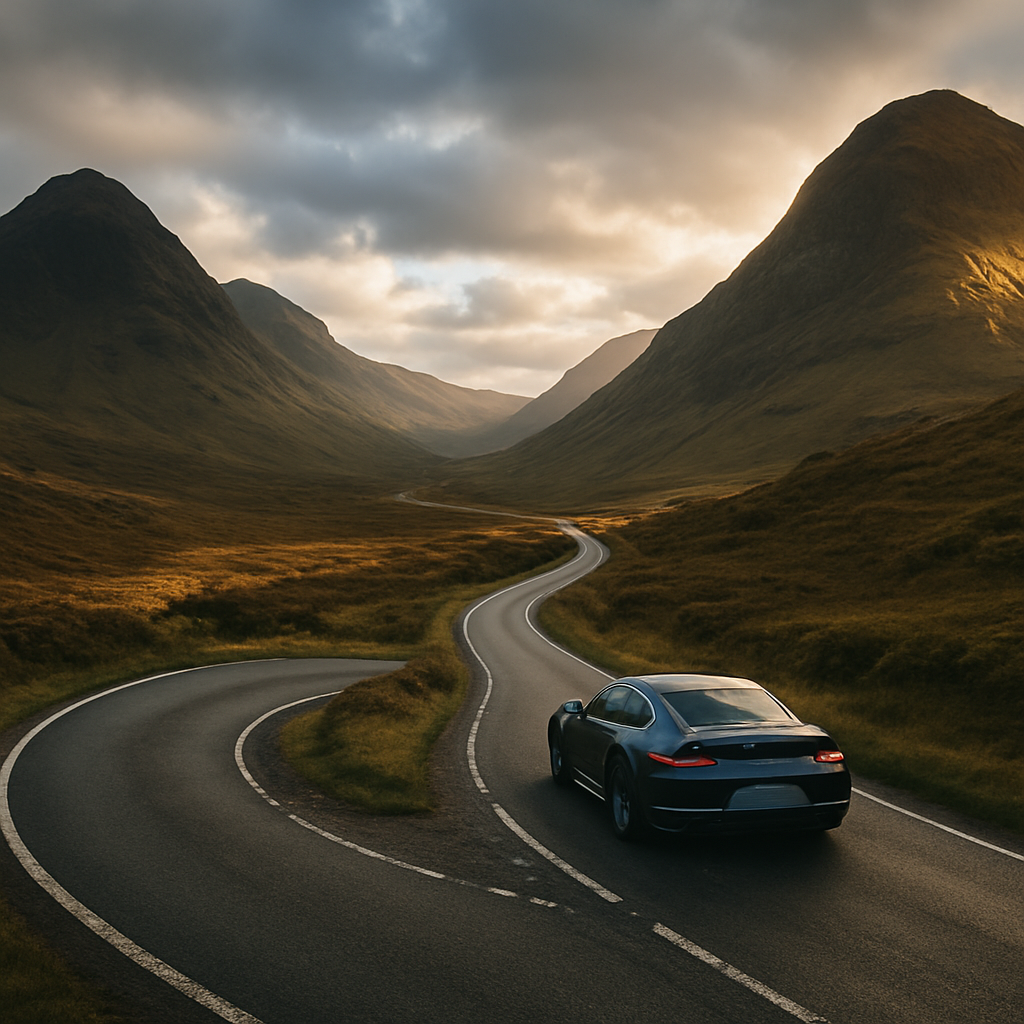
The North Coast 500 is, without question, one of the finest driving roads in Europe. Five hundred miles of single-track highland drama, mountain passes, sea lochs, and coastal cliff roads that make your hands tighten on the wheel instinctively. If you haven’t driven it yet, it belongs at the top of your motoring bucket list. This guide covers everything you need to make the most of your North Coast 500 road trip, from the best routes and must-see stops to practical fuel planning and the car preparation that can make or break a remote highland journey.
Understanding the North Coast 500 Route
The official route starts and finishes in Inverness, looping around the northern tip of Scotland in a rough circuit. Most drivers choose to go anti-clockwise, heading north-west through the Black Isle and up towards Ullapool first. This puts the west coast’s most dramatic scenery, the Assynt mountains, Torridon, and Applecross, in the first half when energy and enthusiasm are highest. The eastern leg, running down through Caithness and Sutherland, is flatter and faster, useful for clocking miles if time is against you.
Key waypoints on the full loop include Inverness, Beauly, Dingwall, Ullapool, Lochinver, Durness, Thurso, Wick, Golspie, and Dingwall again. That’s a lot of ground. Most drivers take between five and seven days to complete the route properly, though some manage it in three if they’re more interested in the drive than the destination. Personally, seven days feels right. There’s too much to see to rush it.
The Best Sections of the NC500 for Drivers
Not all 500 miles are created equal. Some sections are genuinely breathtaking to drive; others are more functional connectors. Here are the standout stretches every car enthusiast should savour.
Bealach na Bà, Applecross Peninsula
This is the one. Bealach na Bà translates as the Pass of the Cattle, but it drives more like a highland rally stage. Gradients of up to 20 per cent, hairpin bends with sheer drops, and a summit at 626 metres above sea level. The road officially warns against caravans and large vehicles, which tells you everything about its character. In a capable car on a clear morning, it’s genuinely exhilarating. Plan to stop at the top. The view west over the Inner Sound to Skye is worth every gear change.
Torridon and Loch Maree
The A896 through Glen Torridon runs beneath some of the oldest rock formations in the world. Liathach and Beinn Eighe rise steeply on either side of the road. The driving here is rhythmic and absorbing: long sweeping curves on decent tarmac with virtually no other traffic early in the morning. Loch Maree sits just north and offers a more relaxed run along its eastern shore.
Durness to Tongue
The far north coast between Durness and Tongue is relentlessly scenic and surprisingly technical to drive. The road dips and climbs through moorland that feels genuinely remote. Kyle of Tongue causeway, opened in 1971, cuts across the sea inlet and saves miles compared to the old inland road. It also makes for one of the more photographed driving shots on the entire route.
Must-See Stops Along the Way
Driving the NC500 is the point, but stopping is where the memories get made. A few stops that are genuinely worth the time:
- Smoo Cave, Durness – A vast sea cave accessible from the main road. The interior chamber, lit naturally through a collapsed roof, is impressive on a dry day. Easy parking just off the A838.
- Dunrobin Castle, Golspie – A French-style château overlooking the Moray Firth. It’s incongruous in the best possible way and worth a stop on the eastern leg.
- Corrieshalloch Gorge, near Ullapool – A box canyon with a suspension bridge. Managed by the National Trust for Scotland. Five minutes from the main road but genuinely dramatic.
- Handa Island Ferry, Scourie – The ferry runs from Tarbet on the mainland. Sea stacks, puffins from May to July, and a circular walk that takes roughly two and a half hours. If your schedule allows it, it’s exceptional.
- Caithness Glass, Wick – Lighter relief on the eastern leg. A working glassblowing studio with a visitor centre and a decent café stop.
Fuel Planning on the NC500
This is the one practical area where poor preparation genuinely costs you. Fuel stations on the NC500 are sparse, particularly on the west coast between Ullapool and Tongue. Distances between stations can exceed 50 miles, and many rural stations are either unstaffed overnight or keep limited opening hours. Several are closed on Sundays.
The rule here is simple: never let the tank drop below a quarter. Fill up whenever you pass a station, even if you don’t strictly need to. Key fuelling points to note are Ullapool, Lochinver (if open), Durness, and Tongue. The RAC publishes a useful breakdown of remote driving preparation that’s worth bookmarking before you head north. You can find their breakdown cover and advice resources at RAC Motoring Guides. Diesel is more reliably available than petrol in remote areas, something worth factoring in if you have a choice of vehicles.
Car Preparation: What the NC500 Actually Demands
The NC500 is not a motorway run. It includes single-track roads with passing places, steep gradients, loose gravel, exposed moorland with weather that changes in twenty minutes, and sections with no mobile signal whatsoever. Your car needs to be genuinely ready.
Start with tyres. Check tread depth, sidewall condition, and pressures before you go. Cold highland mornings will drop pressures noticeably. Carry a quality portable compressor and a can of tyre sealant as a minimum. A full-size spare is better if your car can carry one. Brakes should be properly bedded in before tackling Bealach na Bà. Descending that pass on tired brake pads is not an experience you want. Check your fluid levels meticulously: coolant, oil, brake fluid, and screen wash in a concentrated mix that handles sub-zero temperatures.
For those running modified or older off-road capable vehicles on the NC500, especially Land Rovers, older Defenders, or Japanese imports popular on the tougher west-coast tracks, sourcing specific components beforehand is essential. Drivers running Mitsubishi Delica camper conversions, which are increasingly popular on the NC500 for their ground clearance and all-weather capability, should source delica parts before departure rather than hoping to find them remotely. There is no Mitsubishi specialist in Durness.
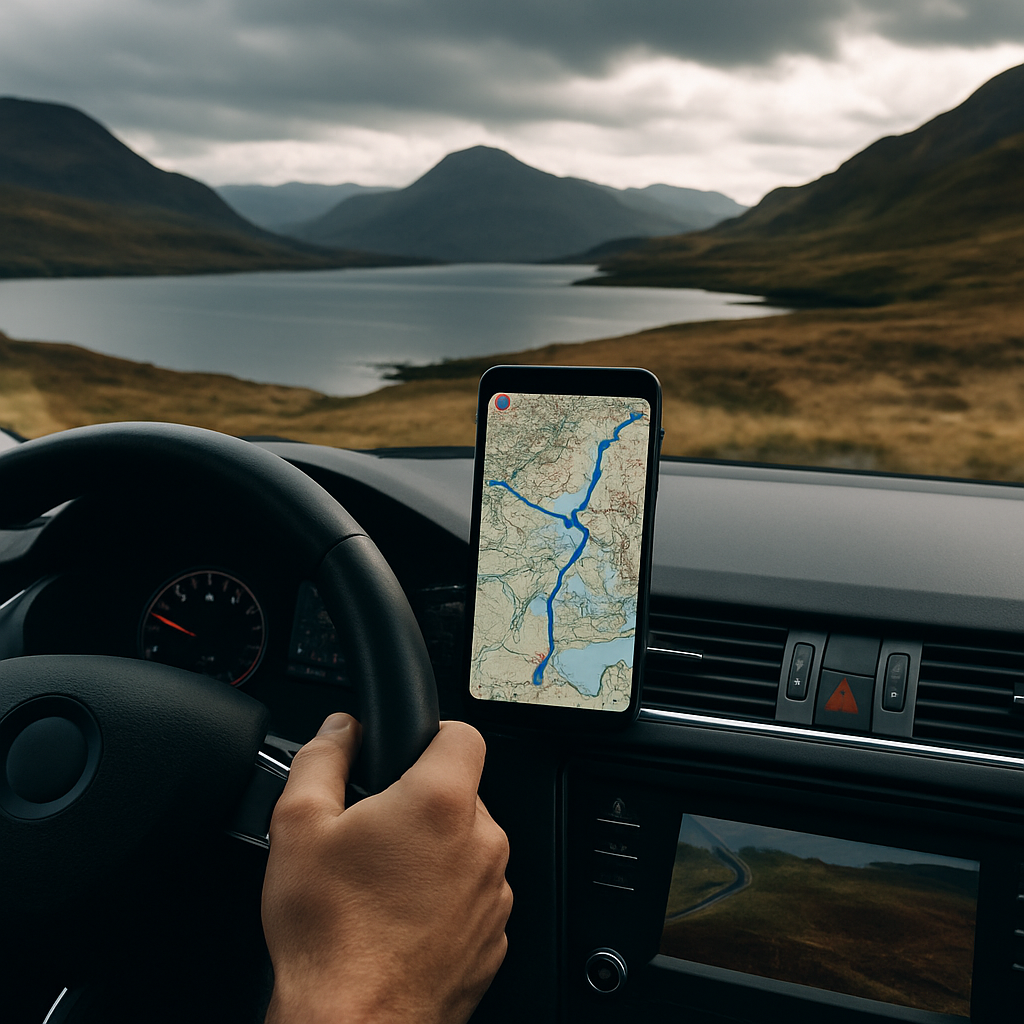
Navigation is another consideration. Google Maps works for the most part, but download the relevant Ordnance Survey maps for offline use via the OS Maps app. Mobile signal is genuinely absent on long stretches of the western route. A physical road atlas as a backup is not overkill here.
Accommodation and Timing
The NC500 has become significantly busier since about 2016, and summer availability can be tight. Book accommodation at least three months in advance if you’re travelling between June and August. Shoulder seasons, May and September, offer excellent driving conditions with less traffic, more available rooms, and midges that are at least tolerable. Midges in July are another matter entirely. A midge head net is not embarrassing. It is necessary.
Wild camping is legal in Scotland under the Land Reform (Scotland) Act 2003, which is genuinely useful for campervan and roof-tent setups. The Scottish Outdoor Access Code sets out the responsibilities that come with that freedom. Designated campsites with facilities are available throughout the route for those who prefer them.
Making the Most of Your North Coast 500 Road Trip
The NC500 rewards drivers who prepare properly and resist the urge to rush. Get the mechanical basics right, fuel up at every opportunity, and build enough slack into your itinerary to stop when something catches your eye. Because something will. Every ten miles, something will. That’s what makes this one of the great driving routes in Britain, arguably the great one. It’s worth every mile.
Frequently Asked Questions
How long does it take to drive the North Coast 500?
Most drivers allow five to seven days to complete the full 500-mile loop from Inverness. Three days is technically possible but leaves little time to stop and explore. Seven days is the sweet spot for balancing driving time with sightseeing and proper rest.
What is the best time of year to drive the NC500?
May, June, and September offer the best balance of good weather, longer daylight hours, and manageable traffic levels. July and August are peak season with heavier tourist traffic and severe midges on the west coast. Winter driving is dramatic but genuinely challenging due to ice, snow, and limited fuel station hours.
Is the North Coast 500 suitable for all cars?
Most cars can complete the NC500, but low ground clearance can be a problem on certain west coast tracks. Single-track roads with passing places require careful manoeuvring and confident reversing. Tyres, brakes, and fluid levels should all be checked before departure, and a puncture repair kit is strongly recommended.
Are there fuel stations along the entire NC500 route?
Fuel stations are spread unevenly across the route, with significant gaps on the west coast. The stretch between Ullapool and Tongue in particular has very limited options. Always fill up when you see a station and avoid letting the tank drop below a quarter full.
Can you drive the NC500 in a motorhome or with a caravan?
Motorhomes can complete the route, though some sections, particularly Bealach na Bà, are explicitly signed as unsuitable for caravans and large vehicles. The NC500 route itself has alternative roads that bypass the most technical passes. Wild camping is legal under Scottish law, which suits smaller campervans well.
Leave a Reply