Picking the right car phone mount sounds straightforward until you’re standing in Halfords staring at a wall of brackets, arms, pads and magnetic discs with absolutely no idea which one suits your car, your phone, or the law. The reality is that car phone mount types vary enormously in how they attach, how securely they hold your device, and how well they suit different vehicle interiors. Get it wrong and you’re either fishing your phone off the footwell mat on the M6 or, worse, attracting a £200 fine and six points on your licence.
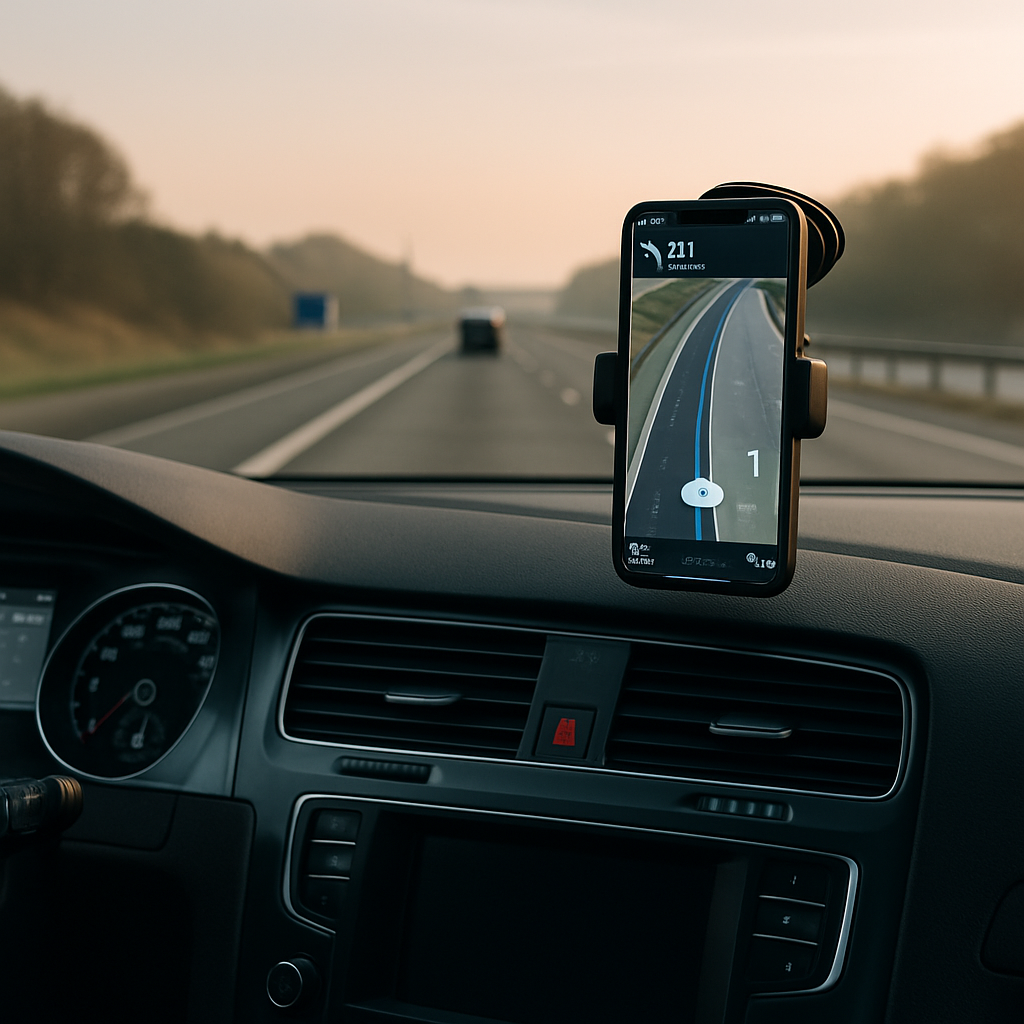
Let’s cut through the noise. This guide covers every major mounting style available in the UK market right now, the legal framework you need to understand, and the practical trade-offs between them. We’ll also touch on which vehicles tend to work better with specific mount types, because a solution that’s brilliant in a Ford Focus estate might be useless in a low-slung sports car with a raked windscreen.
UK Legal Requirements for Hands-Free Phone Use in Cars
Before we get into the hardware, the legal side matters. Since March 2022, the UK tightened the rules significantly. You cannot pick up, hold or use a handheld mobile phone while driving, even briefly at traffic lights or in a queue. The penalty is a £200 fixed fine and six penalty points. For new drivers who still have a probationary licence, that’s an instant ban.
A phone mounted correctly in a cradle or holder is legal for navigation, provided it does not obstruct your view of the road. You must not interact with it manually while moving. Voice commands via Android Auto or Apple CarPlay are fine. Tapping the screen while stationary at lights remains an offence. The full guidance is available on GOV.UK’s mobile phone driving laws page, and it’s worth a read if you’ve not checked since the rules changed.
The key takeaway: a mount is not a get-out clause. It’s a tool that facilitates legal, distraction-reduced navigation. The mount must keep the phone stable so you’re not reaching for a sliding device, and it must sit within your natural sightline, not blocking the road ahead.
Suction Cup Mounts: The Classic Choice
Suction cup mounts are the most common type and they’ve been around long enough that the technology is genuinely mature. A rubber or silicone cup adheres to the windscreen or dashboard, and a telescopic arm holds the phone in a cradle or clamp. The better ones, like those from iOttie or Scosche, use a locking lever mechanism rather than relying purely on atmospheric pressure, which massively improves retention on the motorway.
The advantages are obvious. They’re versatile, easy to reposition, and work with virtually any phone regardless of size. The downside is the windscreen placement debate. In the UK, the Highway Code recommends that nothing obstructs the driver’s view through the windscreen, so positioning matters. A mount crammed in the top-right corner of the glass near the A-pillar is generally considered acceptable. Planting it dead centre at eye level is not.
Dashboard suction mounts solve the obstruction issue but can suffer in extreme heat, common in a south-facing car park in July. The gel pad loses grip faster on textured dashboards than on smooth glass.
Magnetic Car Phone Mounts: Fast, Clean, Minimal
Magnetic mounts have surged in popularity and for good reason. The concept is simple: a thin metal plate attaches to your phone (usually between the case and handset, or via a stick-on disc), and a powerful neodymium magnet in the mount snaps it into position instantly. One-handed placement, one-handed removal. No wrestling with spring-loaded cradles.
The concern people raise about magnets affecting phone internals is mostly a legacy worry. Modern smartphones use solid-state storage and the magnets involved are nowhere near strong enough to cause data issues. The bigger practical concern is MagSafe compatibility. If you’re on an iPhone 12 or later and running Apple’s MagSafe charging system, you want a mount designed to work with it rather than fighting against the alignment.
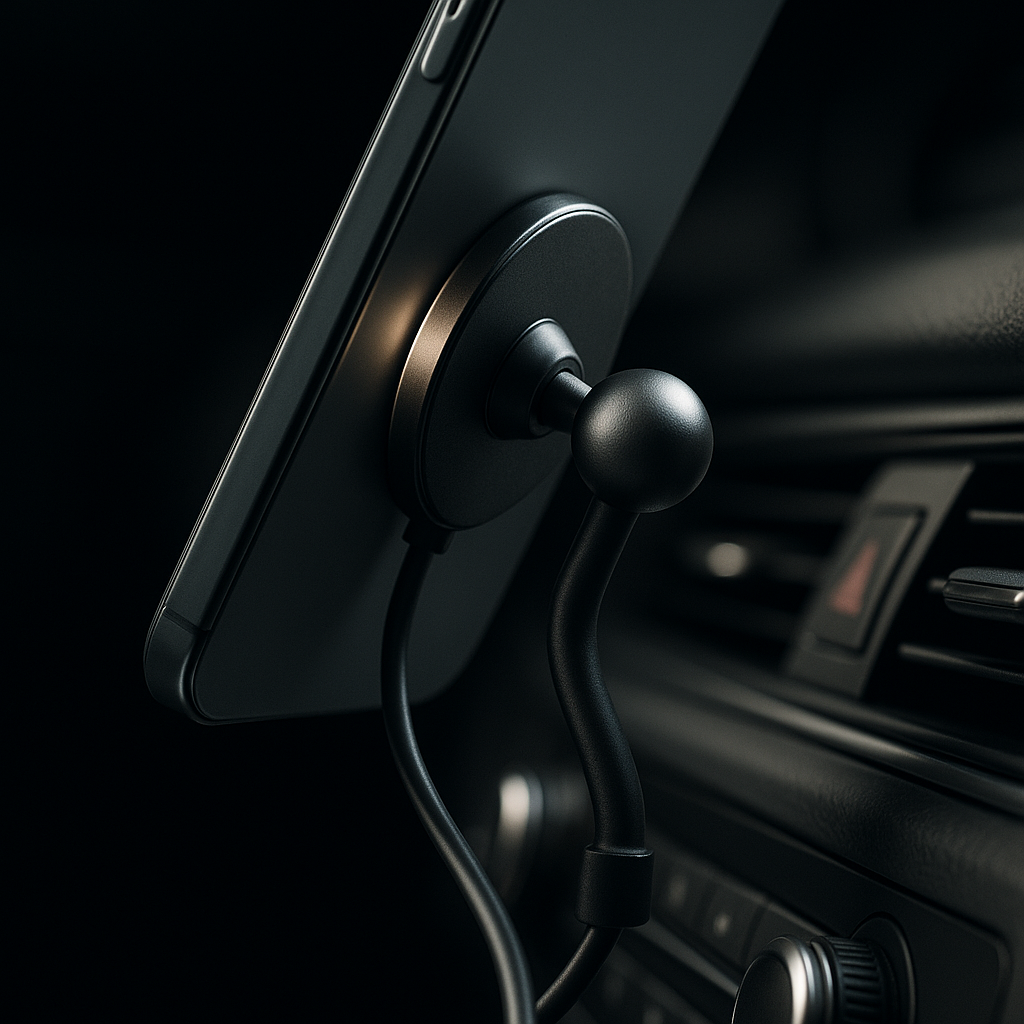
Where magnetic mounts fall down is with heavier phones or big rugged cases. A 280g phone with an Otterbox on a bumpy B-road in the Cotswolds will test any magnetic mount, and some will lose the battle. Look for mounts specifying a minimum 15N holding force if you’re running anything above 200g.
CD Slot Mounts: The Hidden Gem for Clean Installations
CD slot mounts are an underrated choice and frequently the cleanest-looking option in the cabin. They slot into the CD/DVD drive opening on your head unit and use a mechanical lock to grip the slot’s internals. No adhesive, no marks on the windscreen, no dangling arms.
The obvious limitation: your car needs a CD slot. Many newer vehicles, particularly from 2022 onwards, have ditched optical drives entirely in favour of larger infotainment screens. But a significant number of UK drivers are in cars from the 2010-2022 era where CD slots are still standard, making this a genuinely practical option for a large chunk of the market.
The placement is also inherently sensible. Your head unit sits in the centre console, low enough not to obstruct forward vision. With a properly angled arm, the phone sits at a natural glance-down angle, which is cognitively less demanding than looking across to a windscreen corner mount. The downside is vibration. CD slot mounts can rattle on rougher roads and the mechanical engagement can loosen over time on cars with particularly vibration-prone interiors.
Air Vent Mounts: Practical but Imperfect
Air vent mounts clip onto horizontal or vertical vents and use either a clamp or a ball-and-socket head to position the phone. They’re inexpensive, don’t mark the car, and place the device in a reasonably accessible spot without touching the windscreen.
The problem is structural. Modern cars increasingly feature thin, angled, or uniquely shaped vents that don’t play nicely with universal clip designs. The clip can also interfere with airflow, which matters in winter when you need demisting fast. And in direct sunlight, a phone sitting directly in front of an air vent can overheat even with cold air blowing around it because of the dashboard heat soak from the glass above.
For short urban runs, they’re fine. For long motorway trips, you’ll probably want something more solid.
Wireless Charging Mounts: The Premium Upgrade
Wireless charging mounts combine a secure cradle with a Qi charging pad built into the backplate. Brands like Belkin, Anker and iOttie produce solid options in the £30-£60 range. You connect the mount to your car’s USB port or 12V socket, and your phone charges automatically when placed in the cradle.
These are worth the investment if you do regular long drives. Arriving at your destination with a full battery rather than a depleted one is a genuine quality-of-life improvement. They typically use suction or vent attachment methods, so all the same placement considerations apply. Check your phone’s maximum wireless charging speed before buying; some cheaper mounts limit to 5W even if your phone supports 15W fast wireless.
Which Car Phone Mount Type Should You Choose?
For most UK drivers in cars with CD slots, a quality CD slot mount paired with a magnetic head is arguably the best all-round solution. Clean, secure, no marks, sensible sightline placement. If your car is post-2022 with no CD slot, a premium suction cup mount on the windscreen near the A-pillar, or a dashboard gel mount, gives the best stability. Magnetic mounts are superb for convenience if your phone is under 220g and you’re not doing heavy off-road tracks or serious spirited driving.
Whatever you pick, spend more than £10. The difference between a £9 vent clip and a £35 suction mount from a reputable brand is the difference between a phone that stays put on the A1(M) and one that becomes a projectile. It’s also worth noting that running any kind of online business from your car, whether checking emails or using free SEO tools via mobile data, should always wait until the engine’s off and you’re safely parked. No notification is worth the points.
Get the mount right, set up your navigation before you pull away, and let your phone do the one job it’s there for: keeping you pointing in the right direction without ever needing to touch it.
Frequently Asked Questions
What are the different types of car phone mounts available in the UK?
The main car phone mount types are suction cup (windscreen or dashboard), magnetic, CD slot, air vent clip, and wireless charging cradles. Each has different attachment methods, stability levels, and compatibility with vehicle interiors. The right choice depends on your car’s layout and how long your typical journeys are.
Is it legal to use a phone in a cradle while driving in the UK?
Yes, provided the phone is secured in a proper mount and you are not physically interacting with the screen while the vehicle is moving. You must not obstruct your view of the road. Violating hands-free rules carries a £200 fine and six penalty points under laws updated in March 2022.
Do magnetic phone mounts damage your phone or battery?
Modern smartphones are not damaged by the neodymium magnets used in phone mounts. Solid-state storage and current battery chemistry are unaffected. The main practical consideration is ensuring MagSafe-compatible mounts if you use an iPhone 12 or later with wireless charging.
Are CD slot phone mounts suitable for newer cars?
CD slot mounts only work in vehicles that still have a CD or DVD drive in the head unit. Many cars built from around 2022 onwards have removed optical drives entirely. If your car has a CD slot, these mounts offer one of the cleanest and most obstruction-free mounting positions available.
Where is the best place to position a phone mount in a car?
The best position is within your natural sightline but without obstructing your view through the windscreen. Near the base of the windscreen close to the A-pillar, or on the central dashboard, are generally considered acceptable. Avoid placing the mount directly in front of the steering wheel or in the centre of the windscreen at eye height.
Leave a Reply