A flat tyre or a slow puncture at the wrong moment is one of those genuinely frustrating situations every driver faces eventually. Modern cars increasingly ship without a spare wheel at all, with manufacturers opting for run-flat tyres or a can of foam sealant that fixes almost nothing properly. A quality portable tyre inflator in your boot is, frankly, one of the most sensible investments you can make as a UK driver. Whether you are running a small city hatchback or a full-size SUV with 275-section rubber, there is a unit out there that will do the job correctly, quickly, and without costing you a fortune.
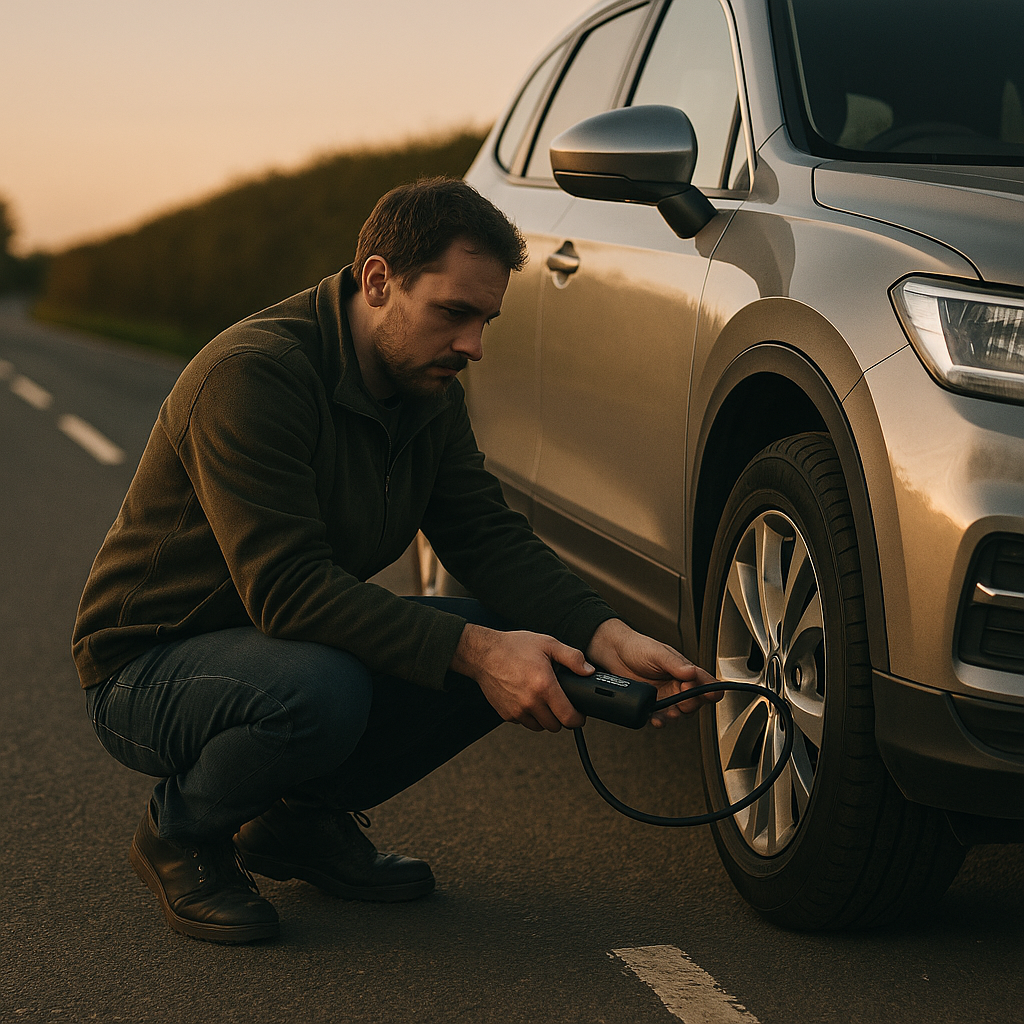
The market has moved on enormously in the last couple of years. Cordless, lithium-ion powered inflators now deliver serious performance that was once the exclusive territory of mains-powered garage compressors. Digital pressure gauges have replaced the old dial units, giving you genuine PSI accuracy rather than a hopeful guess. And automatic shutoff at your target pressure means you are not standing in a layby with your phone torch between your teeth, watching the gauge and panicking. This guide cuts through the noise and tells you exactly what to look for and which models are earning the strongest reputation on UK roads in 2026.
What to Look For in a Portable Tyre Inflator
Before we get into specific models, it is worth understanding the key specs that actually matter. Maximum PSI is one number people fixate on, but inflation speed is arguably more important in real-world use. A unit that tops out at 150 PSI is useless if it takes 12 minutes to fill a standard 195/65 R15 from flat. Look for models quoting inflation times on a typical passenger tyre, not just maximum output figures.
Pressure accuracy is the other critical factor. A decent unit should hold within plus or minus 1 PSI of the target reading. Most modern digital inflators hit this, but cheaper units can drift by 2-3 PSI, which matters more than it sounds when tyre pressures directly affect tyre wear, fuel economy, and handling. According to GOV.UK vehicle guidance, correctly maintained tyre pressures are a legal roadworthiness requirement, making accuracy non-negotiable.
Then there is the power source. Mains-powered units are the most powerful but obviously require a socket, which defeats the purpose roadside. Twelve-volt models that plug into your 12V socket are reliable and affordable but tether you to the car. Cordless battery-powered inflators offer the best portability, though you need to keep them charged. For most drivers, a cordless unit with a backup 12V cable is the sweet spot.
Best Portable Tyre Inflators for Small to Mid-Sized Cars
The Ryobi ONE+ PCL825B continues to be a strong performer for drivers of smaller hatchbacks and saloons. It runs off Ryobi’s 18V ONE+ battery platform, which is handy if you already own Ryobi tools, and it pumps a 195/65 R15 from flat to 35 PSI in around five to six minutes. The auto-shutoff is reliable to within 0.5 PSI consistently, and the built-in LED light is genuinely useful rather than decorative. At around £65-£75 for the bare unit, it sits at a sensible mid-range price point.
The DeWalt DCC020IB is the other name that keeps coming up for passenger car use. It is compatible with DeWalt’s 20V MAX battery system, builds pressure quickly, and has a clean digital display that is easy to read in daylight. It handles everything from 20-inch alloys down to the standard 16-inch setup you find on most family cars. It is slightly pricier at around £90-£100, but the build quality justifies it.
Best Portable Tyre Inflators for SUVs and 4x4s
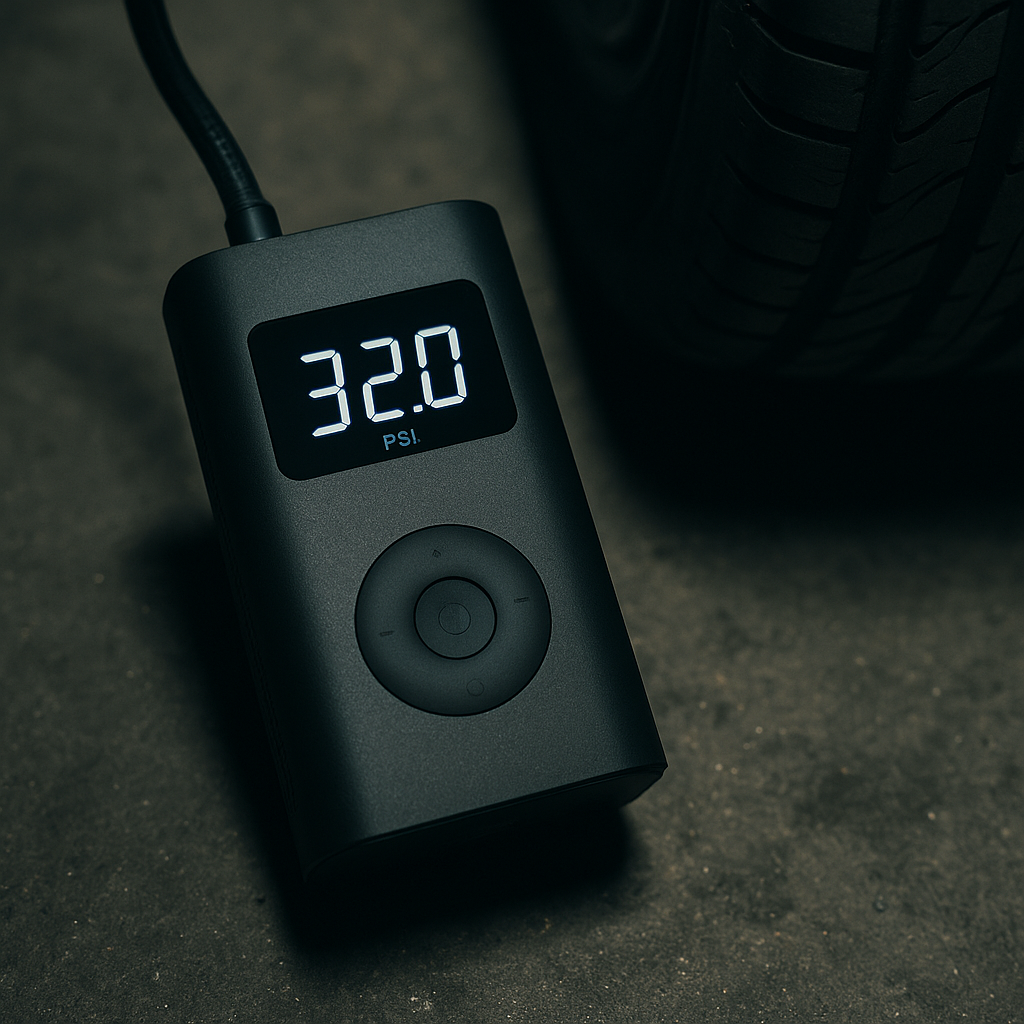
Running an SUV or a large estate with 235-section or wider tyres means you need something with significantly more air volume per cycle. A unit that breezes through a Polo tyre will labour badly on a Land Rover Discovery or a Toyota RAV4. Volume output, measured in litres per minute, is the number to look at here rather than just PSI rating.
The Makita DMP181Z is a proper inflator for larger vehicles. Running on the LXT 18V battery, it delivers a strong 35 litres per minute and handles pressures up to 160 PSI. Filling a 235/65 R17 SUV tyre from flat takes roughly nine to ten minutes, which is acceptable for roadside use. It is a bulkier unit than the Ryobi, but that is the trade-off for the additional capacity. Prices sit around £80-£95 for the bare unit.
For those who prefer a dedicated standalone inflator rather than using power tool batteries, the Ring RAC900 has established a strong following among UK 4×4 and camper van owners. It is a 12V unit that plugs into the vehicle’s power socket, delivers 35 litres per minute, and includes a digital pressure preset with auto-shutoff. The braided hose and heavy-duty construction are noticeably better than budget alternatives. It handles motorhome and trailer tyres as well as car tyres, making it useful if you tow. Street price is typically around £50-£60.
Cordless Versus 12V: Which Is Right for You
Cordless units win on flexibility. You can use them away from the vehicle entirely, which matters if you run a track day car and want to adjust pressures in the paddock, or if you cycle or use inflatable kayaks. The obvious downside is that a flat battery renders them useless, so storage discipline matters. Keep them charged and you will never regret owning one.
Twelve-volt models draw power from the car battery and therefore never run out mid-inflation, but they require the engine to be running or they will drain the battery over a long session. They are also slightly slower in most cases. If you drive a petrol or diesel car and simply want emergency inflation cover for road use, a 12V unit from Ring or RAC is honest, dependable kit that requires zero charging management.
One underrated consideration for car enthusiasts who enjoy spec upgrades: just as you might invest in BMW Audio Upgrades to improve the in-car experience, spending a bit more on a quality inflator with precise digital pressure management pays dividends across tyre lifespan and fuel efficiency over time.
Tyre Inflator Features Worth Paying Extra For
Auto-shutoff at a preset PSI is the feature that separates genuinely useful inflators from frustrating ones. Every unit on this list includes it. Without it, you are manually watching the gauge the entire time, which leads to errors, especially under pressure roadside. Non-negotiable.
A built-in torch is more valuable than it sounds on British roads. Most tyre incidents happen in poor light, in autumn and winter, on unlit A-roads or in dark car parks. A decent LED on the inflator body makes a real difference to how safely and accurately you work.
Nozzle adapters are worth checking. A good kit should include a Presta valve adapter for cyclists, a needle adapter for sports balls, and a wide nozzle for inflatables. Some manufacturers bundle these in; others charge extra. For a portable tyre inflator you keep in the boot long-term, a full adapter set makes it genuinely multi-purpose kit.
Finally, hose length. Anything under 40cm is a nuisance in practice, particularly on SUVs where you are working around large wheel arches. Look for a hose of at least 50cm, ideally 75cm or longer. The Ring RAC900 and the Makita both score well here.
What Should You Spend?
For a small to mid-sized car, budget £50-£80 for a cordless or 12V unit that will perform reliably. For SUVs and larger vehicles, expect to spend £80-£110 for something with sufficient volume output and robust build quality. Anything significantly below £40 tends to show its limitations in pressure accuracy and inflation speed, which defeats the purpose. This is one of those accessories where the middle tier of the market genuinely represents value, and the premium end is not always necessary unless you are inflating large commercial tyres or want serious workshop-grade performance.
A portable tyre inflator is not exciting kit. It sits in your boot, hopefully never urgently needed, but the day you do need it you will be very glad it is there and even more glad you bought a decent one rather than the cheapest option available.
Frequently Asked Questions
What PSI accuracy should a portable tyre inflator have?
A quality portable tyre inflator should be accurate to within plus or minus 1 PSI of your target reading. Most digital units on the mid-to-premium end of the market achieve this consistently, while cheaper dial-based models can drift by 2-3 PSI, which affects tyre wear and handling over time.
How long does a portable tyre inflator take to fill a flat tyre?
For a standard passenger car tyre such as a 195/65 R15, a good cordless inflator will take roughly five to seven minutes from completely flat to 35 PSI. SUV tyres with larger volumes typically take nine to twelve minutes with a high-output unit. Inflation time varies significantly between budget and mid-range models.
Are cordless tyre inflators better than 12V models?
Cordless inflators offer greater flexibility and can be used away from the vehicle entirely, making them ideal for track days, cycling, or inflatable accessories. Twelve-volt models draw power directly from the car battery so they never run out mid-inflation, which makes them a simpler, lower-maintenance choice for pure roadside emergency use.
Which portable tyre inflator is best for a large SUV?
For SUVs and 4x4s with 235-section or wider tyres, look for a unit delivering at least 30 litres per minute of volume output. The Makita DMP181Z and the Ring RAC900 are both strong choices for larger vehicles, handling 235/65 R17 tyres without labouring excessively during inflation.
Do I legally need to maintain correct tyre pressures in the UK?
Yes. Under UK roadworthiness regulations, tyres must be properly inflated to the manufacturer’s specified pressures. Driving on significantly under-inflated tyres can result in a defect notice, an MOT failure, or a fine if stopped by police. Your vehicle’s recommended pressures are usually found on a sticker inside the driver’s door frame or in the owner’s handbook.
Leave a Reply