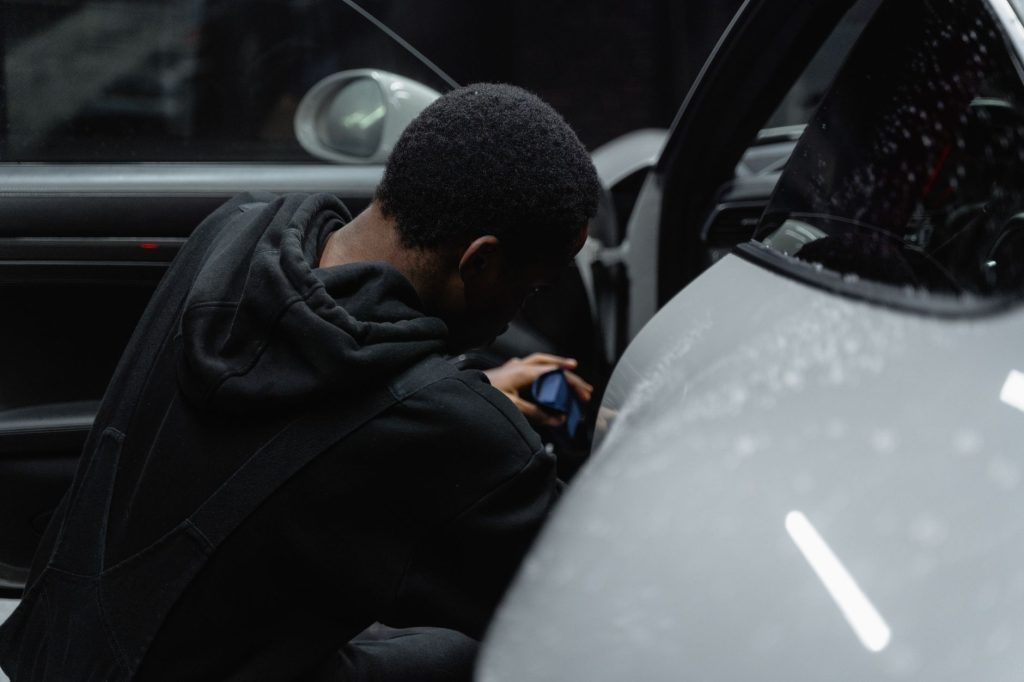
Window tint is one of those modifications that looks straightforward until you actually start reading the rules. I’ve spoken to enough people at car meets who’ve fitted dark film and then had a rude awakening at an MOT or a roadside stop to know that the specifics really do matter. So here’s a plain, technical breakdown of car window tinting laws UK drivers need to understand before they order a roll of film or book a fitting appointment.
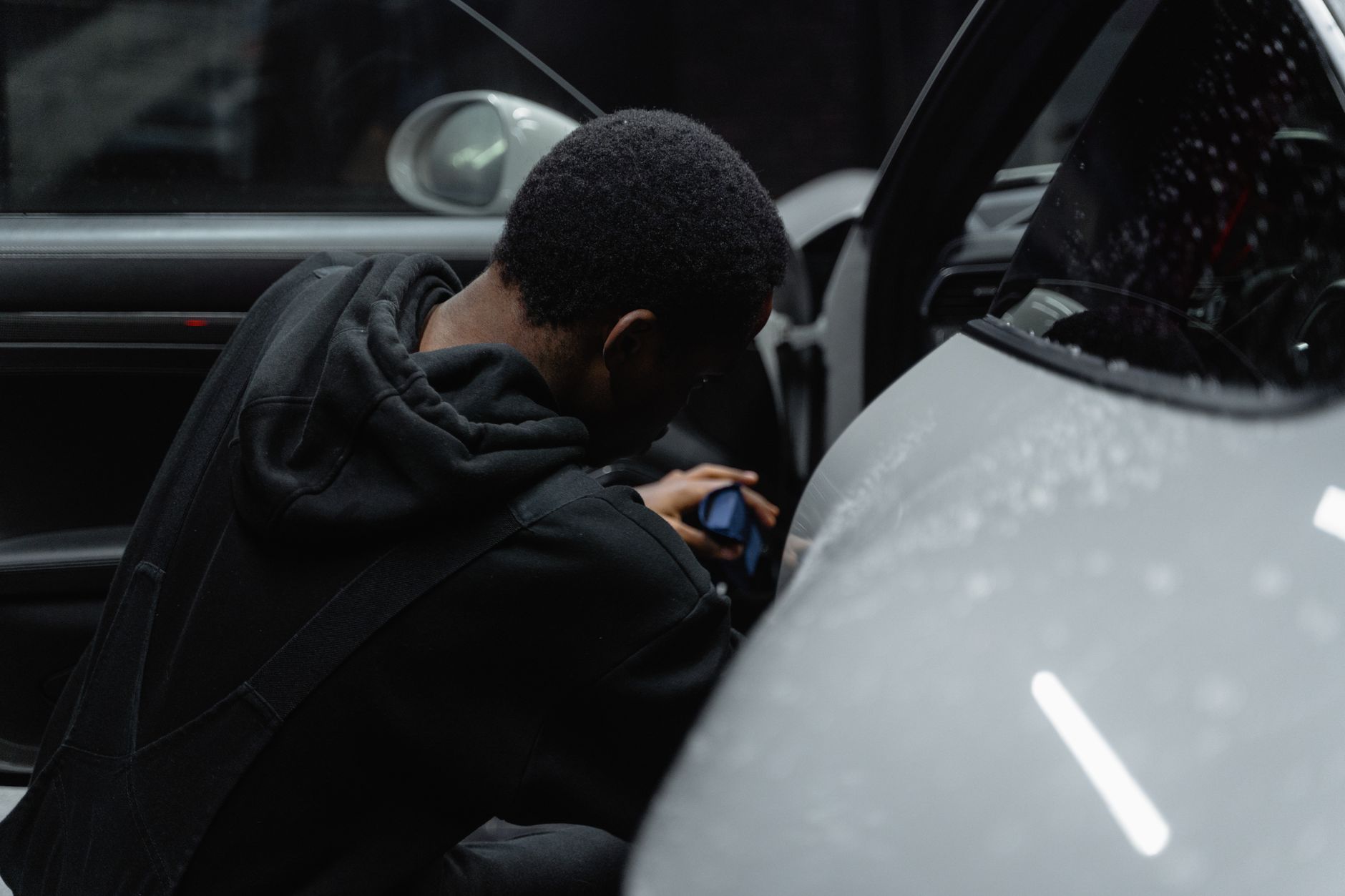
The VLT percentages that actually matter
VLT stands for Visible Light Transmission. It’s the percentage of light that passes through your glass and film combined. The higher the number, the more light gets through. A VLT of 70% means 70% of external light passes through; a VLT of 20% means only a fifth does. UK law doesn’t regulate the film in isolation, it regulates the finished glass-and-film combination, which is an important distinction.
Under the Road Vehicles (Construction and Use) Regulations 1986, the rules break down like this:
- Windscreen: must allow at least 75% VLT through the area swept by the wipers. The band above the wiper sweep (the so-called “AS1 band”) can be darker, but cannot extend more than 10% down from the top of the glass on most passenger cars.
- Front side windows (driver and front passenger): must also pass at least 70% VLT.
- Rear windscreen and rear side windows: no legal minimum VLT. You can go as dark as you like, limo-black if you want.
Those front window limits are the ones that catch people out. A standard uncoated factory windscreen typically has a VLT somewhere between 74% and 80% depending on the manufacturer’s own glass spec. Apply even a “light” 80% VLT film to glass that started at 74%, and you’re immediately in breach. This is why you need to know your base glass VLT before you spec any film at all.
How MOT testers check for illegal tint
MOT stations are required to check window glazing as part of the inspection. Testers use a light transmission meter (sometimes called a tint meter or photometer) to measure VLT at the front windows. If either front side window or the windscreen’s swept area reads below the legal threshold, the car gets a major defect, and that means a fail. No borderline calls, no discretion.
I’d strongly recommend anyone who’s unsure about their existing tint to get a reading before their next MOT rather than after. A decent detailer or window film specialist can measure it for you cheaply. Failing an MOT over tint is frustrating because it’s entirely preventable, and removing film that’s been on for a year isn’t always clean or quick. We’ve covered the most common MOT failure points in detail if you want to know what else inspectors are looking for beyond glazing, it’s worth a read before your car goes in.
One nuance worth knowing: the MOT tester checks the combined glass-and-film VLT. If you’ve fitted a 70% film to a windscreen with a 74% base glass, the tester doesn’t have to calculate the combined figure from first principles, they just read the meter. The actual combined transmission of 74% and 70% film is roughly 51.8% (multiply them: 0.74 x 0.70), which would be a hard fail on the windscreen. The maths can look brutal even with “light” film percentages.
Police enforcement and Section 42
Beyond the MOT, police can pull you over and test your windows at the roadside under Section 42 of the Road Traffic Act 1988. Officers carry calibrated tint meters for exactly this purpose, particularly at traffic enforcement operations. If your front windows fail a roadside test, you’ll typically be issued a vehicle defect rectification notice (VDNR) requiring you to remove the film within a set period and return to a police station with proof of compliance. Ignore it and you risk prosecution.
Persistent offences, or refusing to comply with an inspection, can escalate. You could also find your insurance voided if a claim arises and the insurer’s assessor discovers illegal modifications, because fitting illegal tint counts as a material modification you failed to declare. That’s a double consequence most people don’t think through when they’re ordering a cheap roll of 35% film online.
Factory privacy glass vs aftermarket window film, they’re not the same thing
A lot of cars come from the factory with what manufacturers call “privacy glass” on the rear side windows and rear screen. It looks dark from the outside, and it’s often used on MPVs, SUVs and estate cars. Factory privacy glass is tinted during the manufacturing process, the colour is in the glass itself, not a film applied on top. On rear windows there’s no legal VLT minimum anyway, so this is entirely legal regardless of how dark it appears.
Problems arise when people assume their factory rear privacy glass means their front windows are also legally tinted, or when they apply additional aftermarket film over already-dark factory rear glass. Stacking film on top of privacy glass on the rear isn’t illegal (there’s no rear VLT limit), but applying film over standard factory glass on the front side windows can push them below the 70% threshold very quickly.
If you’re looking at a used car and wondering whether its front windows have been tinted, check the VLT with a meter rather than guessing by eye. I’ve seen front windows that look completely clear but are sitting right on the 70% line because the previous owner fitted a “barely-there” film for UV protection. You inherit the compliance problem when you buy the car.
What film is actually legal on front windows?
For front side windows with a typical clear factory glass base of around 76-78% VLT, you have some room to apply very light film without breaching the 70% threshold. A film rated at approximately 90-95% VLT would keep you legal in most cases, but given how tight the margins are, most professional fitters will advise against applying any tint to front side windows at all unless you’ve had the base glass measured first.
On the windscreen, most installers won’t touch the wiper-swept area with any film for this reason. The legal band at the top, the sun strip, is a different matter. That can be darker, though it must stay within the defined zone. Ceramic and nano-ceramic films have become popular partly because they block UV and infrared heat without dramatically reducing visible light, making them easier to keep legal on front windows. If you’re weighing up film types, our detailed comparison of ceramic tint vs standard window film covers the optical and thermal performance differences in depth.
Rear windows: where you actually have creative freedom
Rear side windows and the rear screen have no VLT minimum in UK law. That means 35%, 20%, or even limo-black 5% film is all technically legal on the rears. The one practical caveat is reversing visibility, if you go very dark on the rear screen, you need effective wing mirrors or a reversing camera system to maintain adequate rearward vision. Most modern cars have reversing cameras as standard, which takes the edge off this concern.
Practically speaking, rear window tinting is where most enthusiasts and privacy-focused drivers get their dark look legally. A professionally fitted 20% film on the rear side and back glass, combined with clear or near-clear fronts, creates the privacy aesthetic without any legal risk at the MOT or roadside.
Getting the job done properly
Self-adhesive film from a roll is tempting if you’re handy and want to keep costs down, but the margin for error on front windows is too slim to risk a DIY result that measures 68% because of a small bubble or uneven application. For front windows especially, use a professional installer who measures your base glass VLT before fitting and provides you with a certificate of installation showing the film specification and the combined final VLT. That document protects you if your car is tested at the roadside and the officer’s meter gives a borderline reading.
If you’re planning other modifications alongside tint, bear in mind that performance upgrades don’t interact with window tinting compliance, but stacking multiple modifications can attract more scrutiny at MOT time, it’s worth making sure every angle is covered before you drive in.
The bottom line: dark rear glass, legal. Dark front glass without measuring, a gamble you’ll likely lose. Car window tinting laws UK-wide are clear enough that there’s no reason to end up on the wrong side of them with a bit of preparation.
Frequently Asked Questions
What is the legal VLT percentage for front windows in the UK?
Front side windows must allow at least 70% visible light transmission (VLT) through the combined glass and film. The windscreen must allow at least 75% VLT through the area swept by the wipers. These limits apply to the finished combination, not just the film in isolation.
Will dark window tint fail an MOT in the UK?
Yes. If either front side window or the windscreen’s swept area reads below the legal VLT threshold during an MOT inspection, the car receives a major defect and fails. MOT testers use a calibrated light transmission meter to check glazing as part of the standard inspection.
Is there a legal limit for rear window tint in the UK?
No. UK law sets no minimum VLT for rear side windows or the rear screen, so you can legally apply very dark film, including 5% limo-black, to those areas. The practical consideration is rearward visibility; most modern cars with reversing cameras handle this fine.
Is factory privacy glass legal on a UK car?
Yes. Factory privacy glass on rear windows is legal because UK law has no VLT minimum for rear glazing. It’s also manufactured differently from aftermarket film, the tint is in the glass itself. However, applying additional dark film over factory-tinted front windows could still push them below the 70% legal threshold.
Leave a Reply