Quick-release steering wheel hubs have been a staple of motorsport for decades. Pull the boss, drop the wheel, extract the driver fast in an emergency. On circuit, they make absolute sense. On the road, the picture gets considerably more complicated, and plenty of UK drivers have come unstuck fitting one without understanding what they were actually getting themselves into.
This is a subject that sits at the crossroads of modification legality, passive safety engineering, and genuine mechanical quality. Get any one of those three wrong and you’re either risking an MOT failure, a serious injury in a collision, or the wheel coming off mid-corner. So let’s go through it properly.
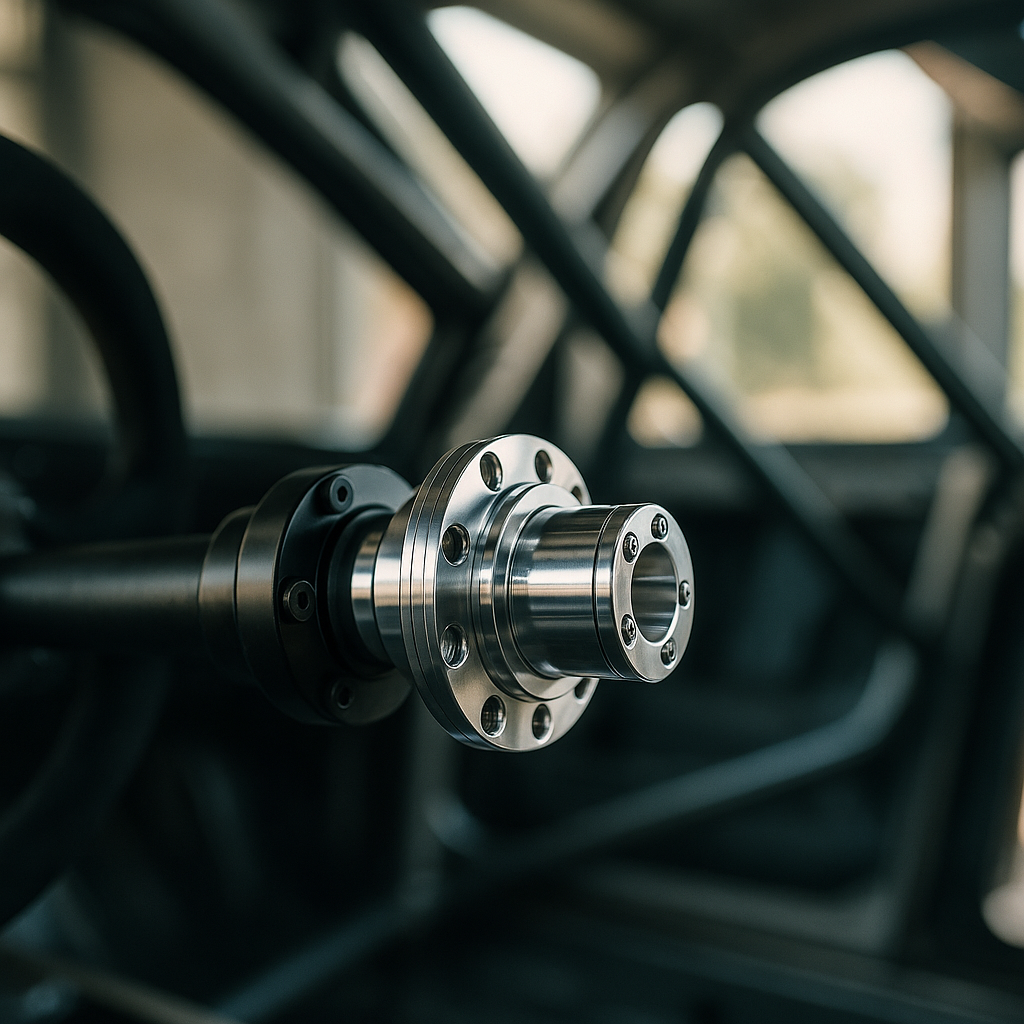
What Is a Steering Wheel Quick-Release Hub?
At its most basic, a quick-release system replaces the standard boss kit between your steering column spline and the wheel itself. A snap-in or push-button mechanism allows the wheel to be removed in seconds without tools. In circuit applications, this lets marshals extract a driver rapidly after an incident. In a rally car, it also makes entry and exit practical in a narrow cabin with a harness.
Most kits consist of two halves: a fixed hub that bolts to your column using a boss adapter specific to your vehicle, and a detachable collar that the wheel attaches to. The two halves lock together via a ball-bearing mechanism, a splined system, or a push-pin design depending on the manufacturer. Quality varies enormously between a £40 eBay unit and something from Sparco, OMP, or Lifeline.
Is a Steering Wheel Quick Release UK Legal on a Road Car?
This is the question everyone searches for, and the honest answer is: it depends, but the conditions for legal road use are quite strict.
In the UK, the DVSA MOT Inspection Manual flags steering modifications under section 2.1. A steering wheel quick-release system fitted to a road car will cause an MOT failure if the examiner determines that the steering wheel is not secure or that it presents an unacceptable risk. A correctly installed, non-wobbly quick-release from a reputable manufacturer may pass, but there is no explicit green light in the regulations. The examiner’s judgement applies.
The bigger legal consideration under UK law is the airbag situation. Under the Road Traffic Act and the Construction and Use Regulations, your car must maintain the safety systems it left the factory with, unless a formal modification has been approved. Remove the airbag wiring and you’ve deactivated a primary restraint system. That is a grey area at minimum, and in a collision it becomes a very serious one, both from an injury standpoint and an insurance perspective.
Most quick-release hubs designed for road use include an airbag clock spring bypass or retention of the horn circuit, but they do not carry a live airbag through the release mechanism. If your car has a steering wheel airbag (which virtually every modern UK car does), fitting a quick-release almost certainly means that airbag is no longer operational. Your insurer needs to know about this modification, and many will refuse cover or void your policy if they discover it wasn’t declared.
The Airbag Problem Is Not a Small Thing
It’s worth dwelling on this because it’s where enthusiasm tends to override common sense. A driver-side airbag deploys in approximately 30 milliseconds during a frontal impact above roughly 15 mph. Without it, in a serious shunt, you hit the steering wheel or the column boss directly. The injuries are qualitatively different to what the car was designed to produce.
Some higher-end quick-release systems, particularly those designed for road-legal rally homologation, attempt to route an airbag signal through the release mechanism. In practice, these are rare, expensive, and typically developed for specific vehicle platforms rather than as universal fitment. For the vast majority of UK road drivers fitting a quick-release to a Golf, a Fiesta ST, or an Impreza, the airbag is simply gone.
If you’re genuinely committed to running one on the road, you need a car without a steering wheel airbag to begin with. Older vehicles, pre-1995 or so, sometimes fit this description, but anything modern does not. This is why you see quick-release hubs almost exclusively on dedicated track cars or competition vehicles that have already been stripped and caged.
Fitment Compatibility: Boss Kits and Column Splines
The steering wheel quick-release itself is just one part of the system. The hub still needs to mount correctly to your steering column, which means selecting the right boss adapter for your specific make and model. Manufacturers like Sparco, MOMO, and OMP produce boss kits for most common platforms, and the fitment database on most specialist suppliers’ websites is reasonably thorough.
What catches people out is the offset. A quick-release adds depth to the steering column, typically 50-70mm depending on the unit. Combined with a dished or flat aftermarket wheel that may be smaller in diameter than standard, you can end up with the wheel sitting significantly further from or closer to the driver than the factory setup. This affects reach, visibility of instruments, and in some cases clearance with stalks or the dash surround. Always check the combined stack height of boss kit, quick-release unit, and wheel before ordering.
Torque specifications on the hub bolts are not optional. On a competition quick-release from OMP or Sparco, the manufacturer’s specified torque is there for a reason. Under-torqued bolts on a boss kit have come loose under steering load, and that is a very specific kind of bad day.
Which Quick-Release Kits Are Worth Considering for Track Day Use?
For track day use on a dedicated circuit car, the calculus is entirely different. Here, the airbag has almost certainly already been removed as part of a cage install or strip-out, and legality on the public road is not the primary concern. The question becomes build quality and reliability under repeated use.
Sparco’s quick-release hub in the QRK range is broadly trusted across UK club motorsport. The ball-bearing retention mechanism is positive, there’s minimal play when locked, and the aluminium body is machined rather than cast. OMP’s equivalent in their Avio range is similarly well-regarded and is used extensively in British club rally events.
Lifeline, a Derbyshire-based safety equipment manufacturer with strong credentials in UK motorsport, also produces quick-release hardware that appears in BRSCC paddocks with some regularity. Their products carry the kind of provenance that cheaper generic units simply do not.
Stay away from unbranded units at the bottom end of the market. The ball-bearing count, the heat treatment of the locking mechanism, and the precision of the spline interface all matter when you’re cornering hard and putting real load through the steering. A hub that shows measurable play when locked is not fit for purpose on circuit, regardless of price.
Horn and Electrical Continuity
Even on a pure track car, maintaining horn function matters for MSA/Motorsport UK technical checks in some series. Most quality quick-release systems include a centre contact for horn circuit continuity, but verify this before purchase. Wiring a quick-release incorrectly and then having a horn that misfires or doesn’t work at all is an easy issue to avoid by reading the instructions properly before fitting.
The Practical Summary for UK Drivers
If you’re considering a steering wheel quick release for road use in the UK, the honest position is this: on any modern car with a steering wheel airbag, fitting a quick-release deactivates a primary safety system, must be declared to your insurer, and sits in genuinely uncertain territory with the MOT. For most road drivers, the right answer is not to fit one.
For track day use on a stripped, caged, or dedicated circuit car, a quality quick-release from a proven manufacturer is a sensible addition. The ease of driver changeover, the practicality of entry and exit in a car with a harness, and the emergency extraction benefit all stand up. Just buy from a brand with a motorsport pedigree, torque the boss kit correctly, and check the play in the locking mechanism before every session.
Frequently Asked Questions
Is a steering wheel quick release legal for road use in the UK?
There is no outright ban, but fitting one on a road car with a steering wheel airbag effectively deactivates that safety system, which creates issues under the Construction and Use Regulations and with your insurer. MOT examiners also have discretion to fail a car if the steering wheel is deemed insecure. For most modern UK road cars, it is not a straightforward legal modification.
Will fitting a quick-release hub affect my MOT?
It can do. Under the DVSA MOT Inspection Manual, examiners check for steering wheel security and integrity. A quick-release hub that shows excessive play or movement when locked is a failure point. Even a well-fitted unit may be flagged at the examiner’s discretion, particularly if the airbag wiring has been disturbed.
What happens to the airbag when you fit a steering wheel quick-release?
On almost all consumer-grade quick-release hubs, the airbag circuit is severed. The steering wheel airbag will not deploy in a collision. This is a significant safety reduction on any modern road car and must be declared to your insurance provider, who may refuse cover as a result.
Which quick-release kits are best for UK track day use?
Sparco’s QRK range and OMP’s Avio series are both widely used in UK club motorsport and are built to a standard suitable for circuit use. Lifeline, a UK-based manufacturer, is also well-regarded in BRSCC and club rally paddocks. Avoid unbranded or generic units, as the locking mechanism tolerances on cheaper kits are often inadequate under real steering loads.
Leave a Reply