Why Most Wireless Car Chargers Are a Disappointment
You buy a wireless car charger, clip it to your vent, plug your phone in, and… it barely moves the battery needle by the time you reach the office. Sound familiar? It’s one of the most common complaints I hear from drivers who’ve taken a punt on a cheap unit from an online marketplace. The technology is absolutely there to do this properly. The problem is that the market is flooded with underpowered, poorly designed chargers that generate more heat than charge. Finding the best wireless car charger UK 2026 has to offer means knowing exactly which specs to scrutinise before you spend a penny.
Wattage: The Number That Actually Matters
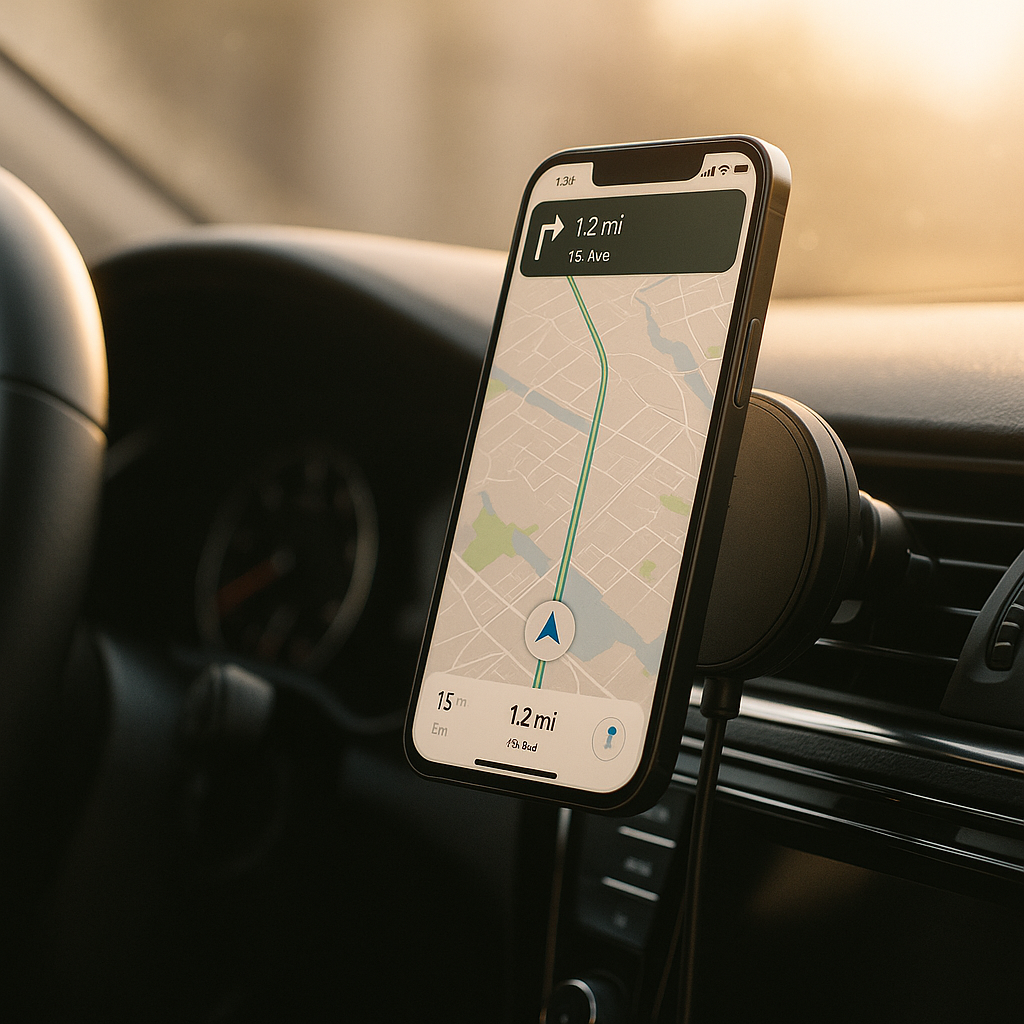
Let’s start with the obvious one. Wattage determines how fast your phone charges, full stop. Most cheap wireless car chargers are rated at 5W or 7.5W, which is barely above the trickle-charge territory. If you’re using navigation continuously with the screen on, a 5W charger won’t even keep pace with discharge. You need to be looking at a minimum of 15W for most modern Android flagships, and 15W MagSafe output for recent iPhones.
The iPhone 15 and iPhone 16 series, which are the dominant handsets on UK networks right now, support up to 15W charging via MagSafe. Samsung’s Galaxy S25 range supports up to 15W wirelessly too, with some units hitting 25W on compatible chargers. The Samsung Galaxy S25 Ultra in particular benefits enormously from a higher-wattage unit on longer motorway runs. If your charger is only outputting 7.5W to a phone that can handle 15W or more, you’re leaving serious performance on the table.
Check that the charger explicitly states its output wattage rather than relying on vague marketing language like “fast charging compatible”. That phrase means nothing without a number attached.
MagSafe Compatibility: Worth the Premium for iPhone Users
Apple’s MagSafe system is genuinely excellent in a car context. The magnetic alignment means your phone snaps into position instantly, the connection is secure even on rough A-roads, and you get the maximum 15W charging rate without fussing with coil alignment. If you’re running an iPhone 12 or later, a MagSafe-certified charger is worth every extra pound.
The key word here is “certified”. There are dozens of MagSafe-style chargers on the market that use magnets to hold the phone but aren’t Apple-certified MFi (Made for iPhone) products. These often cap out at 7.5W regardless of what the packaging implies. Certified units carry the MFi badge and Apple’s own MagSafe authentication chip. They cost more, typically £30 to £60 for a car-specific mount, but the charging speed difference is real and measurable.
Android users aren’t left out, though. Qi2 is the open standard built on MagSafe’s magnetic alignment technology, and a growing number of Android phones, particularly from Samsung and Google, now support it. A Qi2-certified charger will work properly with both ecosystems.
Secure Mounting: The Spec Everyone Underestimates
Here’s where a lot of otherwise decent chargers fall apart. A wireless charger that wobbles, rotates on its mount, or pops off the vent at the first speed bump is actively dangerous. Distraction is distraction, regardless of the cause.
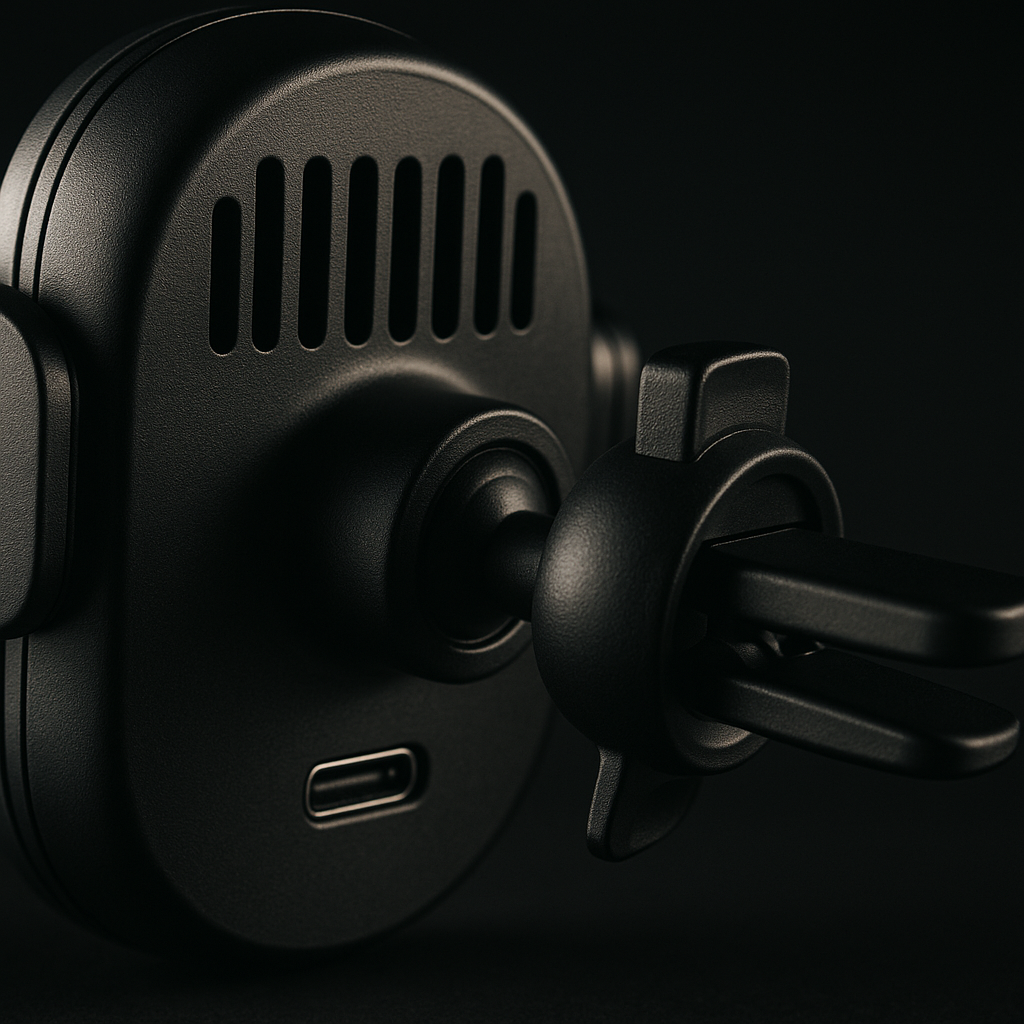
Vent-clip mounts are the most common type, and the quality varies enormously. Look for ones with adjustable grips that clamp onto the vent blade itself rather than hooking loosely. Some better units use a dual-point clamp system that grips both horizontally and vertically, which is far more stable on older UK cars with thin, vertical vent fins.
Dashboard-mounted suction units are an alternative, particularly useful if your car has a flat, smooth dashboard surface. A good suction mount with a gel pad can hold a phone and charger solidly, but many fail in the summer heat. UK summers may not be tropical, but a car parked in direct sun can get interior temperatures well above 40°C, which is enough to compromise cheap suction mechanisms.
CD slot mounts are a solid third option for cars that still have optical drives, offering rigid mounting without relying on suction or vent grip. They tend to be the most stable option overall, and I’d lean towards them for any car where dashboard space is limited.
Heat Management: The Hidden Problem
Wireless charging generates heat. That’s physics, not a design flaw. The question is how well a given charger manages that heat, because excessive temperatures slow charging, degrade your battery over time, and can trigger your phone’s own thermal throttling protection, ironically resulting in slower charging from a higher-wattage unit.
Quality units use thermal management features: ventilation slots, graphene thermal pads, or intelligent output regulation that drops wattage when the unit or phone gets too warm. Budget chargers simply don’t bother. On a hot August drive with the phone in direct sunlight, a cheap charger can push phone temperatures above 40°C, at which point most modern smartphones throttle charging to protect the battery chemistry.
Look for chargers that specifically mention thermal protection in their spec sheets, not just as a marketing line but as an actual feature. Some units also include a small fan for active cooling, which sounds excessive but makes a genuine difference during long journeys.
According to guidance from Which?, battery longevity is heavily influenced by charging habits, including temperature management during charging cycles. That alone makes heat management worth taking seriously.
Which Wireless Car Charger Types Suit Different Dashboard Setups
Not every car has the same interior layout, and the best wireless car charger UK 2026 buyers should consider will depend on your specific vehicle.
- Modern cars with large central touchscreens: A vent-clip MagSafe unit positioned beside the screen keeps your phone within sightline without obscuring the display. Look for an articulating arm to fine-tune position.
- Older cars with small or no touchscreen: A CD slot mount or suction dashboard unit works better here. Consider a unit with its own cable management clip to keep the USB-C or USB-A connection tidy.
- Cars with wireless charging pads already fitted: Some factory-fitted charging pads are only 5W. A dedicated aftermarket wireless car charger mounted to the vent will outperform the OEM pad substantially. Don’t assume built-in means best.
Budget vs Premium: Where to Draw the Line
You can find wireless car chargers from around £12 to well over £70. Below £20, you’re almost certainly looking at a 5W or 7.5W unit with no thermal management and a dubious mount. Between £25 and £45 is the sweet spot for most drivers: proper 15W output, Qi2 or MagSafe certification, and a mount that won’t rattle off at the first roundabout.
Brands like Belkin, Anker and Satechi have strong reputations in this space and back their products with genuine certifications. All three have UK distribution and products readily available through major retailers. Premium units from these brands, typically £45 to £70, add features like auto-clamping arms, built-in cables, and active cooling, which justify the price for high-mileage commuters.
Whatever you spend, check that the charger includes a sufficiently powerful car adaptor. A 15W wireless charger plugged into a 12W USB-A adaptor will only ever deliver 7.5W maximum. The adaptor spec matters just as much as the charger itself, and it’s the detail most buyers miss entirely.
Final Verdict
The best wireless car charger UK 2026 drivers will actually use day-to-day is one that charges at the rated wattage, holds the phone securely regardless of road surface, and manages heat well enough that you don’t arrive with a phone that’s hotter than your engine bay. Prioritise certification over marketing copy, match the charger to your actual phone model, and match the mount type to your dashboard setup. Get those three things right and wireless charging in the car goes from gimmick to genuinely useful in one purchase.
Frequently Asked Questions
What wattage do I need for a wireless car charger to actually fast charge my phone?
For most modern smartphones, including iPhones from the 12 onwards and Samsung Galaxy S-series devices, you need at least 15W output to charge at full wireless speed. Anything below that and you risk the charger not keeping pace with discharge when navigation and screen are active.
Is a MagSafe wireless car charger worth buying for an iPhone in 2026?
Yes, for iPhone 12 and later models, a certified MagSafe car charger is worth the extra cost. The magnetic alignment ensures optimal coil positioning for the full 15W charge rate, and the secure snap-fit hold is far more reliable than standard Qi chargers on bumpy UK roads.
Are wireless car chargers safe to use in summer heat?
Quality units with thermal management are fine, but cheap wireless car chargers can push phone temperatures high enough to trigger thermal throttling, slowing the charge down. Look for chargers that explicitly list thermal protection or active cooling, particularly if you park in direct sunlight.
What is the difference between MagSafe and Qi2 wireless charging in a car?
MagSafe is Apple’s proprietary magnetic wireless charging standard delivering up to 15W on compatible iPhones. Qi2 is an open standard built on the same magnetic alignment technology, and is increasingly supported by Android phones. A Qi2-certified car charger will work well with both iPhone and Android devices that support the standard.
Which wireless car charger mount type is most secure for UK driving?
CD slot mounts are generally the most rigid and stable option, as they lock mechanically into the slot rather than relying on suction or vent clips. Vent-clip mounts with dual-point clamping are a close second, while suction dashboard mounts can fail in high interior temperatures if the adhesive or suction quality is poor.
Leave a Reply