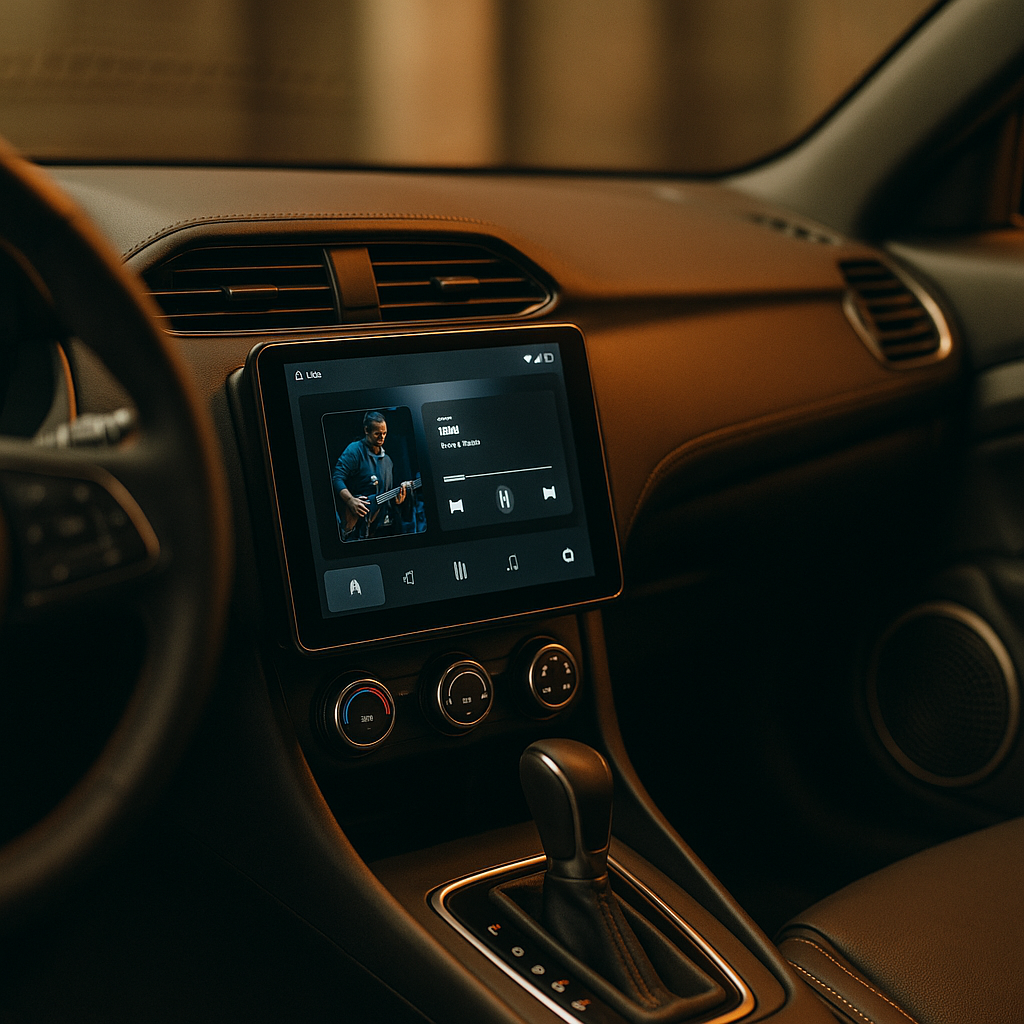
Factory-fitted sound systems are, almost universally, a disappointment. Manufacturers spend the bare minimum on audio components because the margins on infotainment hardware are thin, and most buyers focus on engine specs and fuel economy rather than what’s coming out of the door speakers. The result is a car audio setup that technically works but rarely inspires. A car audio upgrade doesn’t have to cost a fortune, though. With a sensible budget and the right approach, you can transform the way your car sounds without touching a finance plan.
Why Factory Car Audio Lets You Down
It comes down to cost-cutting at the production stage. OEM (original equipment manufacturer) speakers are typically pressed-paper cone units with cheap magnets and limited frequency response. They’re rated at low wattages, they distort under any real pressure, and the crossover components are minimal at best. The head unit feeding them often outputs somewhere between 18W and 22W RMS per channel, which sounds impressive on a spec sheet but is genuinely feeble in practice. Even a modest aftermarket speaker immediately reveals how much detail was being lost.
Understanding this is the foundation of any smart car audio upgrade. You don’t need to strip the car and run new wiring looms to make a serious difference. Targeted, plug-and-play improvements often deliver 80% of the sonic improvement for 20% of the cost of a full professional install.
Start With the Speakers: The Biggest Bang for Your Budget
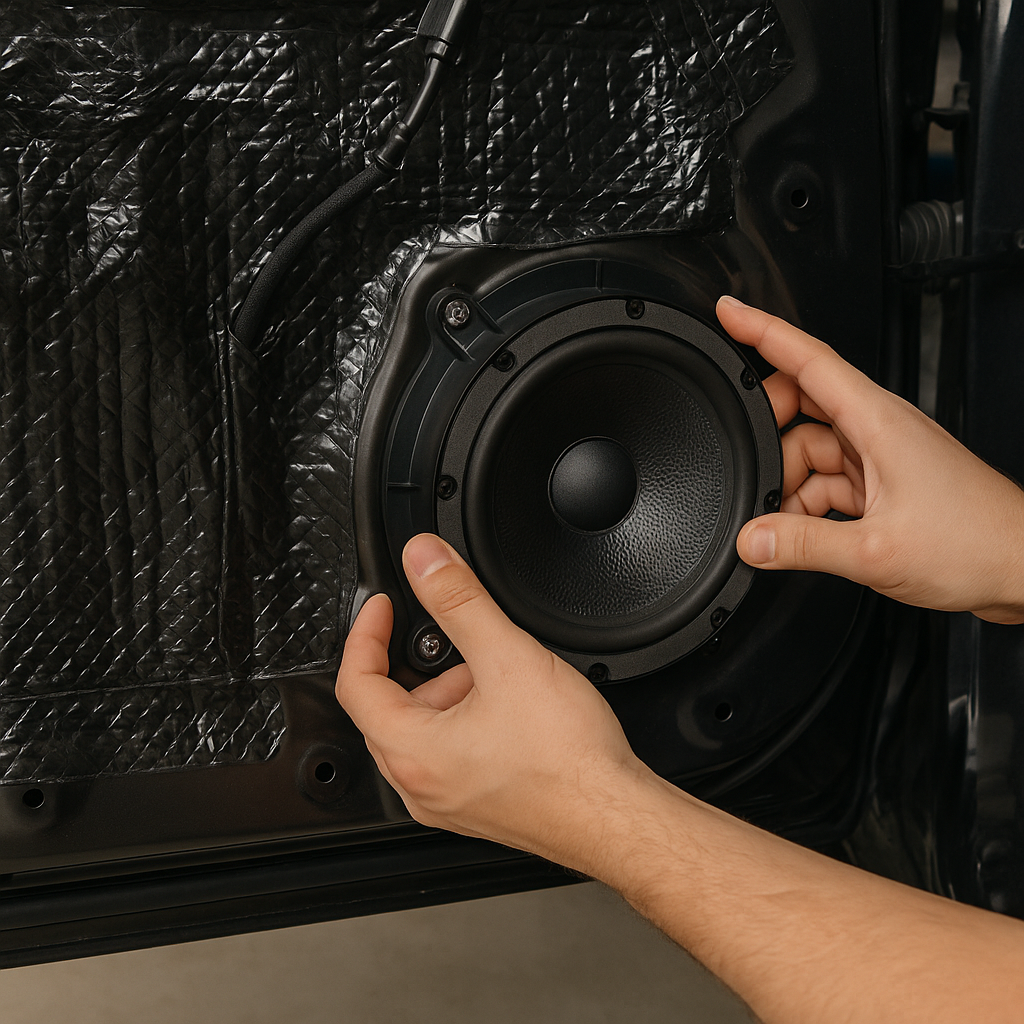
Swapping out the front door speakers is the single most impactful upgrade you can make. Most cars run 6.5-inch or 5.25-inch component or coaxial units in the front doors. Brands like Focal, Pioneer, Hertz, and JL Audio all produce aftermarket replacements that will fit directly into the OEM mounting points with minimal modification.
For a genuine step up in quality, budget somewhere between £60 and £150 for a pair of front coaxials. Pioneer’s TS-G series and the JVC CS-series are perennial favourites at the lower end. Focal’s Access range sits around £90 to £130 per pair and is a noticeable jump in quality again. Component speakers, which separate the tweeter from the woofer, give better stereo imaging but require slightly more involved installation.
One often-overlooked detail: door deadening. Fitting a layer of butyl-based acoustic mat (Dynamat, STP Gold, or the more budget-friendly Noico are popular choices in the UK) to the inner door skin dramatically reduces road noise bleed into the speaker, tightening bass response and improving overall clarity. A basic door deadening kit for two doors costs around £25 to £50 and takes an afternoon with a trim panel removal tool and a roller.
DAB Adapters: Actually Worth It in 2026
If your car is running an older head unit without DAB reception, you’re missing out. FM broadcasts have been steadily degrading as investment follows digital infrastructure, and DAB signal quality is noticeably cleaner in most urban and suburban areas of the UK. The good news is that you don’t need to replace the head unit to get it.
Plug-and-play DAB adapters like the Pure Highway 400 or the Majority Bluetooth DAB+ adapter connect via Bluetooth or FM transmitter and receive digital audio broadcast signals through a small aerial. Prices start at around £40 for a basic unit and climb to around £100 for units with screen displays and steering wheel control integration. The Pure Highway 400 remains one of the most reliable options for clean DAB reception and is available from most UK electronics retailers including Halfords and Amazon UK.
According to Ofcom’s broadcasting data, DAB now covers over 97% of UK households and the majority of UK roads, making it a genuinely practical upgrade rather than a niche one.
Adding Bass: Compact Subwoofers for Tight Spaces
A common misconception is that fitting a subwoofer means sacrificing half your boot to a massive enclosure. That hasn’t been true for years. Underseat subwoofers from brands like Pioneer (TS-WX010A), Focal (Sub Air), and Rockford Fosgate (PS-8) are slim, active units that slide beneath a front seat and draw power from a single cable run to the fuse box. They handle frequencies below 80Hz that stock speakers simply cannot reproduce, giving music genuine weight and definition without muddying the mids.
Expect to pay between £80 and £200 for a quality underseat active sub. Installation is typically a two-to-three hour job for someone comfortable with basic wiring. The gain and crossover frequency controls are usually accessible on the unit itself, so tuning them to match your existing speakers is straightforward.
For those who want more output and have boot space to spare, a slim-fit sealed enclosure with a 10-inch driver and a separate Class D amplifier is the next step. You’re looking at a combined spend of around £150 to £300 for components at this level, and the difference in low-end performance is substantial.
Upgrading the Head Unit: When It Makes Sense
If your car is running a genuinely ancient head unit with no Bluetooth, no USB input, and no AUX port, replacement becomes worth considering. Double-DIN Android Auto and Apple CarPlay head units from Pioneer, Sony, and Kenwood now start at around £150 to £200 for solid, feature-rich units. These come with significantly better built-in amplification (typically 50W x 4 peak, around 22W RMS), improving drive capability for your upgraded speakers.
Fitting is made considerably easier by the existence of adaptor kits. Companies like Connects2 and Autoleads produce vehicle-specific loom adaptors for most popular UK cars, meaning you don’t need to splice a single wire. The Halfords fitting service is worth considering if you’re not confident with dash work, though independent car audio specialists will generally do a cleaner job for similar money.
It’s worth noting that some modern cars with CANbus-integrated audio systems are more complicated to modify. Check compatibility before purchasing anything. If you’re running a car with full OEM integration (steering wheel controls feeding signals through the CANbus), you’ll likely need a compatible steering wheel control adaptor as well.
The Off-Road Audio Consideration
If you’re driving something capable off-road, audio upgrades come with an extra layer of thinking. Road noise in 4x4s and SUVs is significantly higher than in a standard saloon, so acoustic deadening becomes even more important. Cabin resonance from a lightly insulated body shell can completely undermine even a premium speaker set. Those running lifted trucks or trail vehicles, for instance, investing in upgraded Toyota 4×4 suspension will often notice that changes in ride height alter cabin acoustics enough to warrant revisiting their audio settings post-build.
Putting It All Together: What to Budget
A genuinely effective car audio upgrade on a sensible budget looks something like this. Front speaker swap with door deadening: £80 to £150. DAB adapter: £50 to £100. Underseat subwoofer: £100 to £180. Head unit upgrade (if needed): £150 to £220. Total outlay for a full transformation sits comfortably between £200 and £500, depending on how much of the work you do yourself and which components you prioritise. That is a fraction of what a professional full-system installation costs, and the sonic results are far beyond what most drivers expect from a DIY job.
The key is working methodically. Start with the speakers. Listen. Add deadening. Listen again. Then layer in the subwoofer. By the time you’ve done all that, you may find the head unit you already have is perfectly adequate. A car audio upgrade done in stages lets you spend money where it actually matters rather than throwing everything at the wall at once.
Frequently Asked Questions
What is the best first upgrade for a car audio system on a budget?
Front door speaker replacement gives the most immediate and noticeable improvement for your money. Pairing a quality aftermarket coaxial speaker, costing between £60 and £150 per pair, with some basic door deadening mat will transform clarity and bass response without needing to touch the head unit.
Do I need to replace my head unit to improve car audio?
Not necessarily. If your current head unit has Bluetooth or AUX input and your speakers are the primary weakness, a speaker swap and DAB adapter can make a dramatic difference. Only replace the head unit if it lacks connectivity entirely or has genuinely insufficient amplifier output.
How much does a basic car audio upgrade cost in the UK?
A solid entry-level upgrade covering front speakers and door deadening typically runs between £80 and £180 including fitting hardware. Adding a DAB adapter and underseat subwoofer brings the total to around £250 to £400 for a comprehensive DIY improvement.
Are underseat subwoofers any good compared to boot-mounted ones?
For most everyday listening and moderate output levels, quality underseat active subwoofers like the Pioneer TS-WX010A or Focal Sub Air are genuinely impressive and save considerable boot space. Boot-mounted enclosures with dedicated amplifiers will outperform them at higher volumes and lower frequencies, but the gap is smaller than many expect.
Will a DAB adapter work with any car stereo?
Most plug-and-play DAB adapters connect via Bluetooth to the head unit or via an FM transmitter, meaning they work with virtually any car stereo that has Bluetooth or an FM radio. Units like the Pure Highway 400 also offer aux-in connection for older head units without Bluetooth, making compatibility very broad.
Leave a Reply