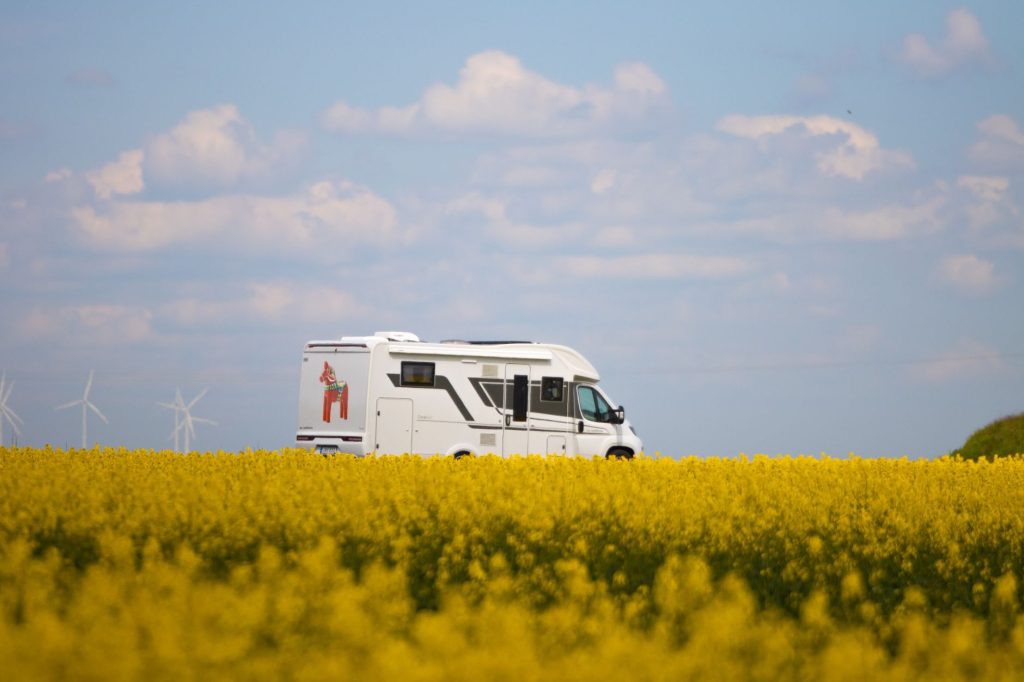
Most car drivers underestimate just how different a motorhome feels the first time they pull away in one. You’re sitting higher, the vehicle is wider than anything you’ve likely driven before, and the wing mirrors are suddenly your best friends. I’ve spoken to plenty of people who hired a campervan, set off confidently, and immediately had a white-knuckle moment pulling out of a service station. The good news is that with a bit of preparation, the transition is genuinely manageable. Here’s what you need to know before you go anywhere near that ignition key.
Driving a motorhome UK: licence rules you need to check first
The licence category is the first thing to sort, and it trips up more people than you’d expect. If you passed your car driving test before 1 January 1997, you automatically hold a Category C1 entitlement on your licence, which covers vehicles between 3,500kg and 7,500kg Maximum Authorised Mass (MAM). That covers the vast majority of leisure motorhomes on the market. Check the back of your photocard licence and look for the C1 category, if it’s there, you’re legal to drive most motorhomes straight away.
If you passed your test on or after 1 January 1997, your standard Category B (car) licence only covers vehicles up to 3,500kg MAM. Plenty of campervans and smaller van conversions fall within that limit, but a full-size coachbuilt motorhome often won’t. You’ll need to sit a separate Category C1 test if you want to drive anything heavier. The DVLA has a clear breakdown of entitlements on gov.uk, and I’d strongly recommend checking it before you book anything, hire companies will ask to see your licence categories, and some will turn you away at the desk if you haven’t got the right one.
One more thing: if you’re towing a car or trailer behind the motorhome, you need a B+E entitlement too. It adds another layer but it’s worth knowing upfront rather than discovering it in a hire company car park.
Width and height: the two things that will catch you out
A typical coachbuilt motorhome runs somewhere between 2.2 metres and 2.5 metres wide. That sounds abstract until you’re threading one through a country lane in the Peak District with a dry-stone wall six inches off your nearside mirror. Motorhomes are also noticeably taller than they look from the outside, most sit between 2.8 and 3.5 metres high. That matters the moment you see a low bridge sign, a car park barrier, or a rural road with overhanging trees.
Get into the habit of checking height restriction signs before you commit to a route. The AA recommends knowing your vehicle’s exact height and writing it somewhere visible in the cab. Some hire companies attach a sticker to the dashboard for exactly this reason. Height-related incidents are genuinely common, and a lot of them happen in pub car parks and multi-storey facilities, places where car drivers don’t think twice but motorhome drivers absolutely should.
Weight limits on country lanes and rural roads
Weak bridge signs and weight restriction notices exist for a reason. A loaded motorhome at its MAM can weigh anywhere from 3,500kg to 7,500kg, far heavier than any standard car. Many rural bridges and lanes in the UK carry 7.5-tonne restrictions, which you’ll stay within, but there are plenty of bridges with 3-tonne or even 2-tonne limits that would mean a lengthy detour.
Sat nav systems set up for car routing will cheerfully send you down roads that are completely unsuitable for a vehicle of that size. I’d always recommend using navigation software that lets you input your vehicle’s height, width and weight, apps like CoPilot Truck or dedicated motorhome-specific routing work far better than Google Maps or standard built-in sat nav for this. The best motorway driving apps for UK journeys cover some of this ground, but for a motorhome specifically you want vehicle-profile routing, not just traffic updates.
Country lanes present another problem: passing places. In Scotland, Wales and much of rural England, single-track roads are perfectly normal for car drivers. In a 2.4-metre-wide motorhome, those same roads become a genuine problem. Learn to read the road ahead properly, use passing places early, and don’t be embarrassed to reverse, it’s far easier to back up a short distance than to try squeezing past a tractor with nowhere to go.
Speed limits are different for motorhomes
This surprises a lot of people. Under UK law, if your motorhome exceeds 3,050kg unladen weight, different national speed limits apply. On a single carriageway, the limit drops to 50mph (not 60mph). On a dual carriageway, it’s 60mph (not 70mph). The motorway limit stays at 70mph for most leisure motorhomes, though it drops to 60mph for heavier vehicles over 7,500kg MAM. These aren’t advisory suggestions, they’re enforceable limits, and a speeding ticket in a hired vehicle will follow you home.
Beyond the legalities, there’s simple physics. A 6,000kg vehicle with a high centre of gravity doesn’t handle like a hot hatch. Crosswinds on exposed sections of the A9 in Scotland or the M62 in Yorkshire can push a motorhome around considerably. Slowing down isn’t just about staying legal; it’s about staying comfortable and in control. If you enjoy exploring challenging driving roads in places like Snowdonia, be aware that the same roads that are thrilling in a sports car become genuinely demanding in a large motorhome.
Reversing, manoeuvring and understanding your footprint
Reversing a motorhome without a reversing camera is an experience I’d describe as character-building. Most modern hire vehicles come with a rear camera fitted as standard, but if you’re buying a used motorhome, check whether one’s been installed. If not, fit one before you go anywhere. A rear camera combined with large, well-adjusted wing mirrors makes an enormous difference.
The vehicle’s turning circle is also considerably larger than a car. Allow more space than you think you need when pulling into campsites, fuel station forecourts or roadside laybys. Swing wide, take your time, and ignore any impatient car drivers behind you, they have no idea what you’re working with.
Pre-drive checks that matter more in a motorhome
Tyre pressures on a motorhome are critical and change significantly depending on payload. A vehicle that’s loaded with full fresh water tanks, camping gear and passengers can be several hundred kilograms heavier than an empty one. Check the manufacturer’s recommended pressures for loaded and unloaded conditions, they’re usually found on a sticker inside the habitation door or in the handbook. Under-inflated tyres on a heavy vehicle at motorway speeds are a serious safety issue, not just an economy concern.
Also check that everything in the living area is secured before you move. Cupboard doors, gas cylinders, loose items on worktops, all of it moves when the vehicle does. I’ve heard accounts of unsecured gas bottles rolling around during cornering, which is the sort of thing you really don’t want to deal with at 60mph on a dual carriageway.
If you’ve been thinking about understanding your vehicle better before a long trip, an OBD2 scanner can be worth carrying in the cab of a self-purchased motorhome, engine warning lights are far more stressful when you’re 200 miles from home and parked on a farm.
Getting the mindset right
The biggest adjustment isn’t mechanical, it’s psychological. Car drivers are used to moving quickly, filtering through gaps, and making snap decisions. In a motorhome, the correct approach is the opposite: slow down your decision-making, plan well ahead, and never commit to a manoeuvre until you’re certain of the space available. Give yourself extra stopping distance (the Highway Code recommends considerably longer stopping distances for heavier vehicles), and plan fuel stops in advance since not every petrol station forecourt can accommodate a long wheelbase vehicle with ease.
Done properly, driving a motorhome across the UK is genuinely brilliant. The Applecross Peninsula, the Yorkshire Dales, the Pembrokeshire coast, all of it looks completely different from the cab of a campervan. You just need to arrive in one piece first.
Frequently Asked Questions
What licence do I need to drive a motorhome in the UK?
It depends on when you passed your test. Passing before 1 January 1997 usually means you automatically hold a C1 category entitlement, covering vehicles up to 7,500kg MAM. If you passed after that date, a standard Category B licence only covers vehicles up to 3,500kg, so you may need an additional C1 test for larger motorhomes.
Do different speed limits apply when driving a motorhome UK?
Yes. If your motorhome exceeds 3,050kg unladen, the limit on single carriageways drops to 50mph and on dual carriageways to 60mph, compared to 60mph and 70mph for cars. Motorway limits are usually 70mph for leisure motorhomes under 7,500kg MAM.
Can I drive a hired motorhome on a standard car licence?
Only if the motorhome’s MAM is at or below 3,500kg, which applies to many smaller campervans and van conversions. Full-size coachbuilt motorhomes typically exceed this, requiring a C1 entitlement. Always confirm the vehicle’s MAM with the hire company before booking and check your licence categories on the DVLA website.
Leave a Reply