Some of the most rewarding driving you’ll ever do isn’t on a track. It’s on a narrow B-road with a dry stone wall on one side and the Atlantic on the other. England’s coastline stretches for well over 2,000 miles, and tucked within it are some genuinely spectacular coastal driving routes that deserve far more attention than they get. Whether you’re pointing the nose of a hot hatch or settling into a grand tourer for a proper weekend escape, these routes will remind you why you fell in love with driving in the first place.

Why Coastal Driving Routes in England Are Worth the Detour
Motorways are efficient. They are also deeply, profoundly boring. Coastal driving routes in England offer something completely different: changing light, unpredictable weather, elevation changes, tight bends, open straights, and scenery that shifts every few miles. The UK’s coastal road network includes everything from single-track lanes in Cornwall to wide, sweeping cliff-top roads in Northumberland. Every single one of them earns its place on this list.
Before you go, check your tyres, top up the washer fluid, and make sure you’ve got a decent OS map or offline navigation loaded. Coastal areas can have patchy mobile signal, and the last thing you want is to be stranded in a lay-by near Tintagel with no idea where you are.
The A39 Atlantic Highway, Cornwall and Devon
If there’s one road that qualifies as England’s answer to a proper driving road, it’s the A39 running from Barnstaple in Devon up into north Cornwall. It earns its nickname honestly. You get genuine Atlantic views, dramatic cliff edges, and a rhythm to the bends that rewards a driver who’s paying attention. Stop at Bude for a walk along the canal and the beach, then push on towards Boscastle, where the steep harbour road is genuinely exciting in the right car. The whole stretch from Barnstaple to Newquay takes a full day if you’re doing it properly, which is exactly how it should be done.
Road condition varies seasonally. Summer sees more caravans and tractors, which changes the experience significantly. Late September or early October gives you quieter roads, golden light, and still-decent weather. Fuel up when you can because petrol stations thin out considerably past Wadebridge.
The B1339 and Northumberland Coastal Route
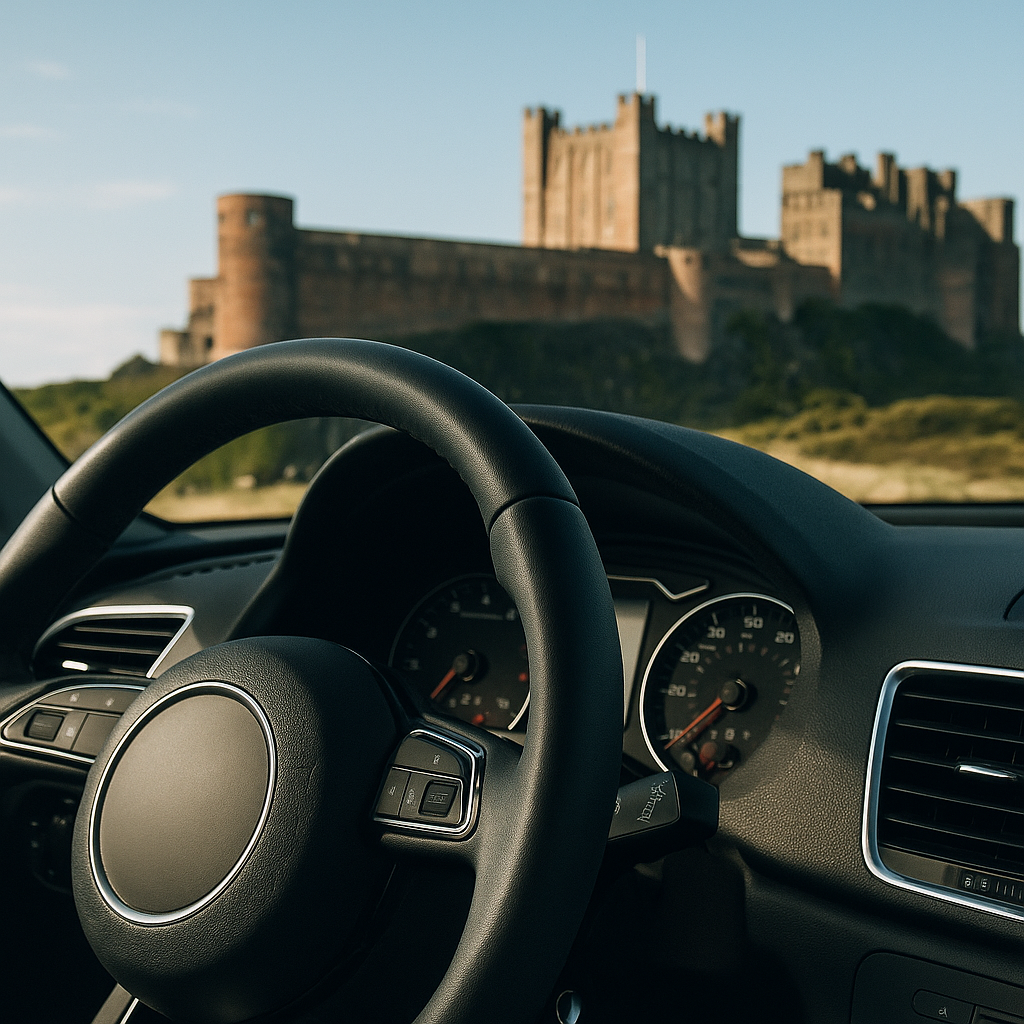
Head north and the character of England’s coast changes completely. The Northumberland coast is raw, wide, and almost startlingly empty compared to the south-west. The B1339 runs close to the sea between Alnmouth and Bamburgh, with Dunstanburgh Castle appearing on the horizon like something from a fantasy novel. Bamburgh itself is worth a full stop; the castle sitting above the beach is one of the most dramatic sights in the country.
From Bamburgh, continue north on the B1342 towards Holy Island (Lindisfarne). Check the tide tables before you cross the causeway. Seriously. The causeway floods twice a day and the RNLI rescues stranded drivers here with frustrating regularity. The Lindisfarne causeway tide timetable is freely available online and takes thirty seconds to check.
The Jurassic Coast Drive, Dorset
Dorset’s coast is UNESCO World Heritage-listed, and the driving that shadows it is some of the most technically interesting in southern England. The B3157 between Weymouth and Bridport is the headline act: a road of tight S-bends, steep descents, and sudden sea views that appear without warning. Abbotsbury is a worthwhile stop, and West Bay, familiar to anyone who’s watched Broadchurch, is excellent for fish and chips before you tackle the climb out towards Burton Bradstock.
The roads here are narrow in places and the hedgerows are high. Wing mirrors have met their end on this stretch. Keep your speed measured, particularly on the downhill sections where road camber works against you. This is one of those coastal driving routes in England where the technique matters as much as the scenery.
Robin Hood’s Bay to Whitby, North Yorkshire
This one is shorter but absolutely earns its place. The road between Robin Hood’s Bay and Whitby via the A171 and the coastal B-roads that dip off it is characterful driving in the truest sense. Whitby itself is brilliant: the harbour, the abbey ruins on the cliff top, and some of the best fish and chips in the country at Magpie Cafe. But the real driving pleasure comes from the tight lanes that connect the villages scattered across the North York Moors before they tumble back down to the sea. Staithes, just north of Whitby, is reached via a road steep enough to make your clutch nervous.
Practical Bits Before You Go
Coastal driving routes in England tend to share certain characteristics that are worth preparing for. Stone chip risk is real on exposed cliff roads; a good wax layer on your paintwork and a clean windscreen are your first line of defence. Ground clearance matters less than you’d think, but stiff suspension setups can feel punishing on older coastal B-roads that haven’t seen a resurfacing budget in a decade.
Accommodation books up fast in coastal areas, particularly in Cornwall and Dorset from May through to August. Book ahead or go off-season. Parking at popular spots like Lulworth Cove can cost upwards of £7 for a few hours in peak season, so carry change or check which car parks take contactless. And if you’re driving something wide, study your route on Street View first; some of England’s most beautiful coastal roads were designed for horses, not modern SUVs.
Which Route Should You Start With?
If you’ve never done a proper coastal road trip in England, start with the Jurassic Coast. It’s accessible from most of the Midlands and South within a few hours, the roads are genuinely entertaining, and the scenery-to-driving-quality ratio is hard to beat. Experienced road trippers who want something rawer should head straight to Northumberland or Cornwall’s Atlantic Highway. Both demand more from you as a driver and reward you more in return.
The best coastal driving routes in England aren’t just about getting somewhere. They’re about the act of driving itself. Pick a route, plan your stops loosely, leave early, and enjoy the road for what it is.
Frequently Asked Questions
What are the best coastal driving routes in England for a weekend?
Top picks include the A39 Atlantic Highway in Cornwall and Devon, the Northumberland Coastal Route via the B1339, and the B3157 Jurassic Coast drive in Dorset. Each offers a different character, from dramatic Atlantic cliffs to wide, open northern beaches. All are achievable within a weekend from most UK cities.
When is the best time of year to drive coastal roads in England?
Late September through to early November is ideal for most routes. Roads are quieter once the school holidays end, light is softer and more photogenic, and temperatures are still reasonable. Spring from April onwards is a close second, particularly for routes through Devon and Cornwall.
Are coastal roads in England suitable for sports cars and low-riding vehicles?
Most main coastal routes are tarmacked and well-maintained, making them suitable for sports cars. However, some B-roads and village lanes in Cornwall and Yorkshire have uneven surfaces and tight bends, so very low ground clearance can be an issue. Checking the specific route on Google Street View before you go is always worthwhile.
How do I cross the Lindisfarne causeway safely on the Northumberland coastal drive?
The causeway to Holy Island floods twice daily with the tide. You must check the official tide timetable before crossing and only drive during the safe crossing window. Never attempt to cross when water is visible on the road; numerous vehicles have been abandoned mid-causeway and required rescue.
What should I pack in the car for a coastal road trip in England?
A physical OS map or downloaded offline navigation is essential given patchy mobile signal in many coastal areas. Pack a windscreen cleaning kit, a waterproof jacket, tyre pressure gauge, and cash for car parks and smaller stops. If you’re heading to Cornwall or Dorset in summer, book accommodation well in advance as it fills up fast.
Leave a Reply