Let’s be honest: stopping at a motorway service station is rarely a highlight of any road trip. You pull in stiff-legged, paying through the nose for a watery coffee and a sandwich that’s seen better days, then battle your way back onto the slip road. But not all services are created equal. Some are genuinely decent stops, and a few are so grim they should be approached only in genuine emergencies. After logging serious mileage on the M6, M1, and M5, here’s a straight-talking rundown of what’s actually worth stopping for and what to avoid if you’ve any sense at all.
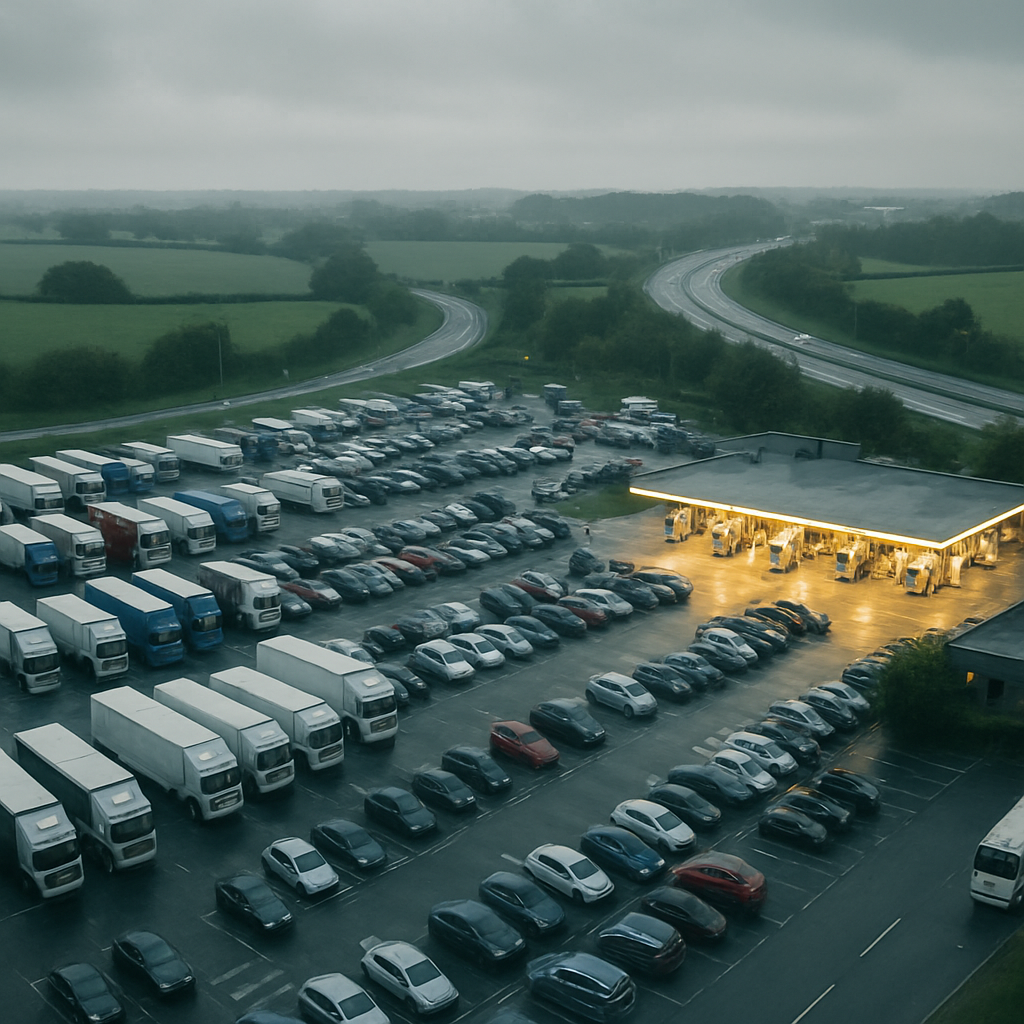
Why Motorway Service Station Quality Actually Matters
Driver fatigue is one of the most serious causes of road collisions in the UK. According to the Department for Transport’s road safety guidance, fatigue is a contributory factor in around 20% of serious crashes on major roads, with motorways disproportionately represented. So a proper stop, a stretch of the legs, something decent to eat and a real coffee rather than a vending machine travesty genuinely matters.
Beyond safety, fuel prices at services vary wildly. On some stretches you’re looking at 10-15p per litre more than a supermarket forecourt. Knowing which services have more competitive pricing, or at least which have enough going for them to justify the premium, is practical motoring intelligence.
The M6: Charnock Richard vs Stafford North
The M6 is a punishing drive. Long, often congested, and straddling some of the least scenic sections of England’s motorway network. Two services that get heavily debated amongst regular users are Charnock Richard and Stafford North.
Charnock Richard Services, operated by Moto, sits just north of junction 27 in Lancashire. It’s large, reasonably well maintained, and the food court offers more variety than average, with a Burger King, Greggs, and a WH Smith for provisions. The fuel prices here tend to run around 12-15p above local pump prices, which is roughly standard for a motorway site. Toilets are generally clean, which counts for more than people admit. I’ve stopped here a dozen times on drives up to the Lake District and it’s reliable, if not exciting.
Stafford North, further south on the same road, is a different story. The facilities feel tired, the car park layout is awkward, and peak-time queues at the food outlets are long relative to the space available. Fuel is no cheaper. If you’re southbound and can wait until Cannock or push on to Hilton Park, do it.
The M1: Newport Pagnell and Trowell
Newport Pagnell holds the distinction of being the oldest motorway service station in Britain, having opened in 1959. That heritage is not always a selling point from a facilities standpoint. The layout is dated, and whilst upgrades have been made over the years, it still feels like it’s working against the clock. That said, it’s a convenient stop on a long southbound run, and the site’s history as the original Forte Services does give it a certain nostalgic charm for those who care about that sort of thing.
Trowell Services on the M1 in Nottinghamshire is considerably better. There’s a decent selection of food options, the forecourt is well organised, and the EV charging provision has improved significantly in the past couple of years. With more drivers making the switch to electric, this matters. Rapid chargers from bp pulse are now on site, and the waiting area is acceptable rather than the grim afterthought it once was. If you’re looking at the best motorway service stations UK-wide for EV infrastructure, Trowell’s northbound site has quietly become one of the more competent examples on the M1.
The M5: Strensham and Michaelwood
The M5 is one of the UK’s great driving roads when it’s flowing. The southbound run towards the West Country passes through genuinely attractive landscape, and the service stops reflect a slightly different crowd: holidaymakers heading to Devon and Cornwall, caravans in tow, families with roof boxes strapped to the top of their Volvo estates.
Strensham Services, split across both northbound and southbound carriageways just south of junction 8, is operated by Extra. The southbound site in particular stands out as one of the more pleasant stops on any UK motorway. There’s a Waitrose food-to-go section, which immediately lifts the quality ceiling considerably. The toilets are above average, the seating areas aren’t the usual depressing fluorescent-lit affair, and the fuel prices, whilst still elevated, are competitive for a motorway site. This is genuinely one of the best motorway service stations UK drivers on the South West corridor can find.
Michaelwood, further south between junctions 13 and 14, is a solid mid-tier stop. Nothing special, but it’s clean, staffed properly, and has a reasonably stocked shop for provisions. The Costa outlet here is consistently better-maintained than at some other sites. Worth knowing if you’re pushing through on a long run down towards Bristol or beyond.
Fuel Prices: What to Expect and How to Minimise the Hit
Motorway fuel is almost always more expensive than petrol stations off the motorway. There’s no getting around it. The operators pay premium lease costs for those sites and they pass it on. On an average fill of 50 litres, the difference between a motorway price and a supermarket forecourt can easily reach £6-8. Apps like Zap-Map (for EV) and Petrol Prices can help you plan fuel stops before you even leave home, identifying whether it’s worth pushing to a junction with a supermarket forecourt nearby.
If you do need to fuel at services, Euro Garages-operated sites have generally been more price-competitive than some of the larger Moto-operated sites in my experience. Not by a massive margin, but when you’re stopping four times in a weekend it adds up.
The Verdict on Which Service Stations Are Actually Worth Stopping At
Strensham southbound is the clearest winner across these three routes. Trowell earns respect for its improving EV provision. Charnock Richard is dependably adequate for an M6 run. Newport Pagnell has history but not much else to recommend it in 2026. Stafford North is, bluntly, one to avoid unless you’re desperate.
The broader picture across the UK’s motorway network is one of slow improvement. Extra-operated sites consistently outperform the field on cleanliness and food quality. Moto’s estate is patchy, with some well-invested sites and others coasting on captive custom. Welcome Break sits somewhere in the middle. None of them are cheap. None of them are destination dining. But the gap between the best and the worst is wider than many drivers realise, and knowing it in advance makes a long motorway run fractionally less grim.
Frequently Asked Questions
Which are the best motorway service stations UK drivers rate most highly?
Based on driver feedback and facilities, Extra-operated sites such as Strensham on the M5 and Gloucester on the M5 consistently rank highly for cleanliness, food quality, and overall experience. Moto’s Trowell on the M1 has also improved significantly with better EV charging infrastructure.
How much more expensive is fuel at motorway service stations compared to regular petrol stations?
Motorway fuel is typically 10-15p per litre more expensive than supermarket forecourts or local petrol stations. On a 50-litre fill this can translate to £5-8 extra per stop, so planning ahead and fuelling before joining the motorway can make a noticeable difference over a long trip.
Which motorway service station operator is generally the best in the UK?
Extra is widely considered the best operator for overall quality, with sites like Strensham and Cobham frequently cited for cleanliness, food choice, and facilities. Moto and Welcome Break have more mixed reputations, varying considerably from site to site.
Do UK motorway services have EV rapid chargers?
Yes, most major motorway service stations now have rapid EV chargers, with providers including bp pulse, Osprey, and Pod Point represented across the network. Coverage and speed vary significantly between sites, so checking apps like Zap-Map before setting off is advisable for electric vehicle drivers.
Are you legally required to stop at motorway services every two hours?
There is no legal requirement to stop every two hours, but Highway Code rule 91 recommends taking a 15-minute break every two hours on long journeys to combat driver fatigue. Fatigue is a factor in a significant proportion of serious motorway collisions, so regular stops are strongly advised even if not mandated.
Leave a Reply