The 24 Heures du Mans is one of those bucket-list events that every serious motorsport fan has rattling around in their head. Eighty-odd thousand spectators, prototype machinery screaming down the Mulsanne straight at night, the smell of racing fuel hanging in the air at 3am. If you’ve decided that 2026 is finally the year you’re going, and that you’re making the journey by car, you’ve made the right call. Driving to Le Mans from UK shores gives you the freedom that a flight and rental simply cannot, and it turns the trip into a proper road adventure rather than just a race weekend.
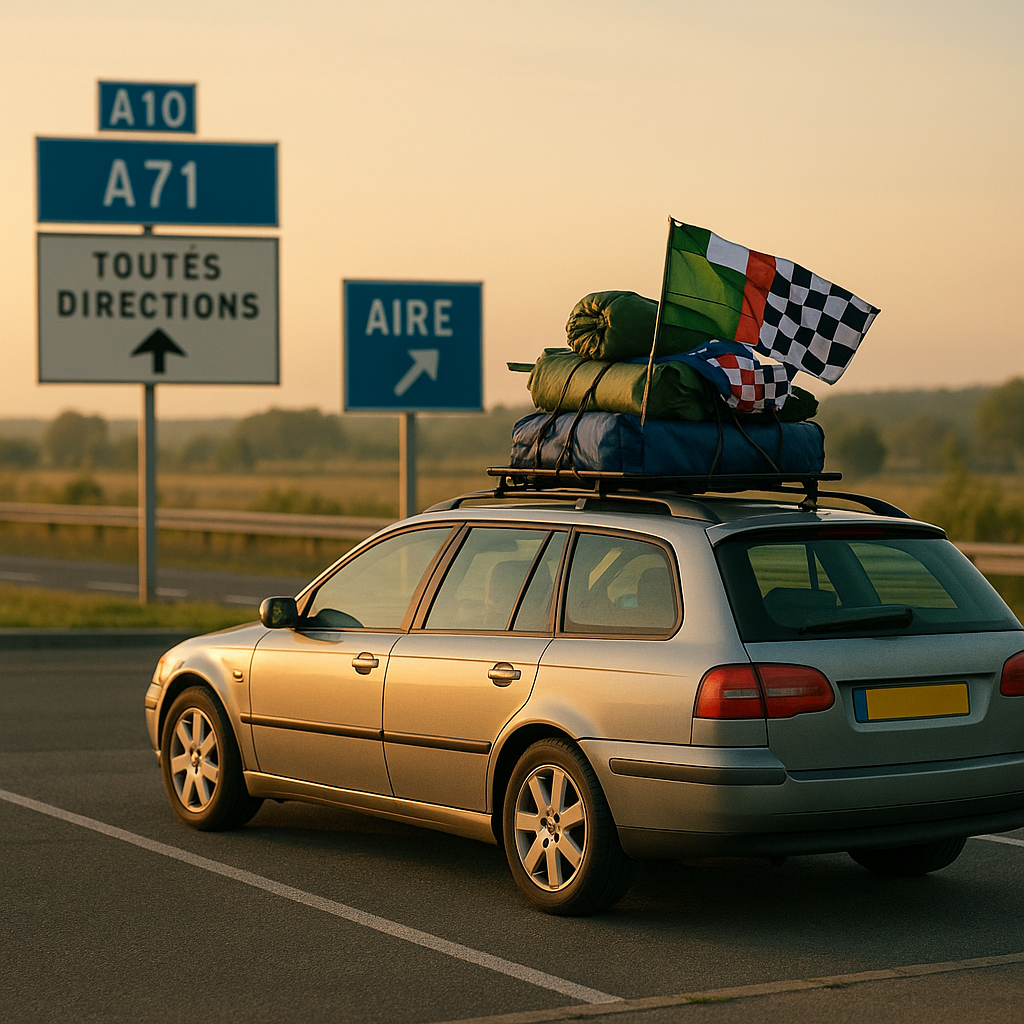
Ferry Options: Which Crossing Works Best for the Le Mans Run
The vast majority of UK fans heading to La Sarthe by car go through one of two crossing options: Dover to Calais with P&O or DFDS, or Portsmouth to Caen (or occasionally Portsmouth to Le Havre) with Brittany Ferries. Each has a genuine argument in its favour depending on where you’re setting off from.
If you’re in the South East, Dover to Calais is the obvious choice. The crossing takes roughly 90 minutes and you can get crossings from as little as £60-£80 each way per vehicle if you book months in advance, though prices spike hard in race week. Budget £150-£200 return if you’re booking late. From Calais, the drive south to Le Mans is approximately 360 miles and runs along the A10 and A11 toll motorways. Clean roads, manageable traffic most of the way, though expect it to thicken considerably as you approach the circuit in the final 20-30 miles.
If you’re coming from the Midlands, the North, or the West Country, the Portsmouth to Caen overnight crossing with Brittany Ferries is worth the premium. You board in the evening, sleep on the ferry, and wake up in Normandy already refreshed. Le Mans is then only around 100 miles from Caen along the A28 and A81. It costs more, around £200-£350 return for a vehicle with a cabin, but you arrive fresh rather than exhausted from a pre-dawn start through Kent. For a trip built around endurance racing, irony notwithstanding, arriving tired is not the plan.
Book ferry crossings as early as humanly possible. Le Mans week is one of the busiest periods of the year on these routes, and the best sailings and price brackets fill up quickly.
What French Driving Law Requires You to Carry
French authorities are serious about in-car documentation, and getting stopped without the right kit is not the way you want to start race weekend. By law, you are required to carry the following in your vehicle when driving in France.
Your driving licence, the vehicle’s V5C registration document (or a VE103 letter if the car is hired), valid insurance documents, and your passport. Beyond that, you need a GB sticker or a GB identifier on your number plates (the EU blue roundel with GB is no longer sufficient since Brexit). A warning triangle and a reflective high-visibility jacket must be kept accessible in the car cabin, not buried in the boot. A breathalyser kit (unused) is technically recommended, though the law requiring it is no longer enforced with a fine; most Le Mans regulars carry one anyway as a matter of habit.
Speed cameras are prevalent throughout France, and average-speed systems are common on the autoroutes. Speed limits are 130 km/h on dry motorways, dropping to 110 km/h in rain. In urban areas the limit is 50 km/h. Your UK satnav may need a map update to show French cameras correctly, and devices that actively alert you to camera locations are technically illegal in France, though the law focuses on devices that help you avoid them rather than simply show them.
For the full official advice on driving in France, the gov.uk foreign travel guidance page is worth reading before you leave: gov.uk foreign travel advice for France.
Parking Near the Le Mans Circuit
Parking at Le Mans is a world of its own. The circuit surrounds a huge area and there are multiple designated camping and parking zones, most of which need to be reserved in advance through the official ACO (Automobile Club de l’Ouest) ticketing system. If you’re driving to Le Mans from UK and you want to park close to the action, the key zones to know are the Maison Blanche and Ford Chicane areas for those who want trackside access, while the central camping village areas off the Circuit de la Sarthe are for those who plan to stay on-site for the full race weekend.
On-site camping with your vehicle, the full festival experience, requires a camping pass linked to your grandstand or general access ticket. These are not cheap, typically €60-€120 for a car pitch for the weekend, but they are unbeatable for immersion. You’re metres from the circuit, surrounded by tens of thousands of fellow fans, and you can walk to the Dunlop Bridge or Tertre Rouge in minutes.
If you’d rather base yourself in Le Mans town centre and drive in for specific sessions, the park-and-ride system operates from several outlying car parks. Traffic management is significant in race week, and getting in and out at peak times (qualifying day, Sunday afternoon) takes patience. I’ve heard stories of two-hour queues to exit on Sunday evening post-race. Factor that into your plans.
Fuel Costs and Running Costs on the Route
French motorway tolls catch a lot of first-timers off guard. The run from Calais to Le Mans along the A10/A11 will cost roughly €30-€45 in tolls each way depending on the exact route. Keep a mix of cash and a contactless card with you because not all toll booths take every payment method, and queues build fast when drivers fumble at the barriers.
Petrol (or diesel) in France tends to sit marginally cheaper than UK pump prices, currently around €1.65-€1.80 per litre depending on the grade and whether you’re on a motorway service station or a supermarket forecourt (the latter being significantly cheaper). If you’re driving a performance car or towing a trailer with kit, factor fuel consumption carefully and plan stops at supermarché fuel stations rather than autoroute services wherever possible.
Must-Have In-Car Kit for the Le Mans Drive
Driving to Le Mans from UK is a serious road trip by any measure. You’re looking at roughly 5-7 hours of driving each way from the South East, more from further north. Your car needs to be sorted before you leave.
Check tyre pressures, fluid levels, and brake condition before departure. If your tyre tread is marginal, replace them; breaking down in rural France in race week is genuinely grim. A portable tyre inflator and a basic breakdown kit (jump leads, tow rope, reflective triangle, torch) are sensible additions. A European breakdown cover policy through a provider like the AA or RAC is strongly recommended; check that your standard UK cover does not automatically include France before buying separately.
For the cabin, a properly mounted phone holder keeps your satnav visible and legal. A 12V USB hub or a quality wireless charging pad keeps devices topped up across a long run. Bring a physical European road atlas as a backup; mobile signal drops out in parts of rural Normandy and the Sarthe. A small cooler box behind the passenger seat for drinks and food saves time and money on autoroute service stations.
If you’re planning to watch through the night (and you absolutely should), pack layers. Le Mans nights in June can feel surprisingly cool compared to the daytime heat, particularly in the early hours between 2am and 5am. Having that kit in the car ready means you don’t have to lug it around the circuit all day.
A Few Things Worth Knowing Before You Go
The drive back is the bit nobody talks about. Post-race Sunday evening, you’re running on broken sleep, adrenaline fumes, and whatever food you managed at the circuit. Many experienced Le Mans regulars schedule a night in Le Mans town or a nearby hotel before driving back on Monday morning. It’s far safer and, honestly, the town has a brilliant atmosphere on the Sunday night anyway.
Make sure your motor insurance covers European travel. Many comprehensive UK policies include it automatically, but only for a limited number of days. Check your policy documents; if you need an extension, sort it before you leave rather than discovering the problem at the ferry terminal.
French authorities also require your headlights to be adjusted or beam deflectors fitted if you’re driving a right-hand drive UK car in France, to avoid dazzling oncoming drivers. Stick-on beam benders cost about £3-£5 from any UK motor accessory shop and take five minutes to fit. Small detail, but the gendarmerie have been known to flag UK cars for it.
Le Mans rewards preparation. Get the logistics right, and everything else, the racing, the atmosphere, the experience, takes care of itself.
Frequently Asked Questions
How long does it take to drive to Le Mans from the UK?
From the South East of England via Dover to Calais, the total journey including the ferry crossing is typically 7-9 hours. From further north in the UK, or using the Portsmouth to Caen overnight crossing, total travel time varies but the overnight ferry option means you arrive in France already rested, with around 100 miles left to drive.
Do I need a Green Card or special insurance to drive in France after Brexit?
A Green Card is no longer a legal requirement for UK drivers in France, though it can still be useful as proof of insurance if you’re stopped. You should carry your full insurance documents and confirm with your insurer that your policy covers European driving. Many UK comprehensive policies include a short period of European cover, so check the number of days allowed.
What documents do I legally need to carry when driving in France?
You must carry your driving licence, vehicle registration document (V5C or VE103 for a hire car), passport, and proof of insurance. You are also required to have a reflective high-visibility jacket accessible in the car cabin and a warning triangle in the vehicle. A GB identifier on your number plates is mandatory since Brexit.
Can I park on-site at the Le Mans circuit with my car?
Yes, but on-site vehicle parking and camping pitches must be reserved in advance through the official ACO ticketing system. Pitches typically cost €60-€120 for the race weekend and are linked to your race ticket. Availability is limited so book as early as possible, especially for prime camping zones near the circuit.
Leave a Reply